

Last updated October 31, 2026
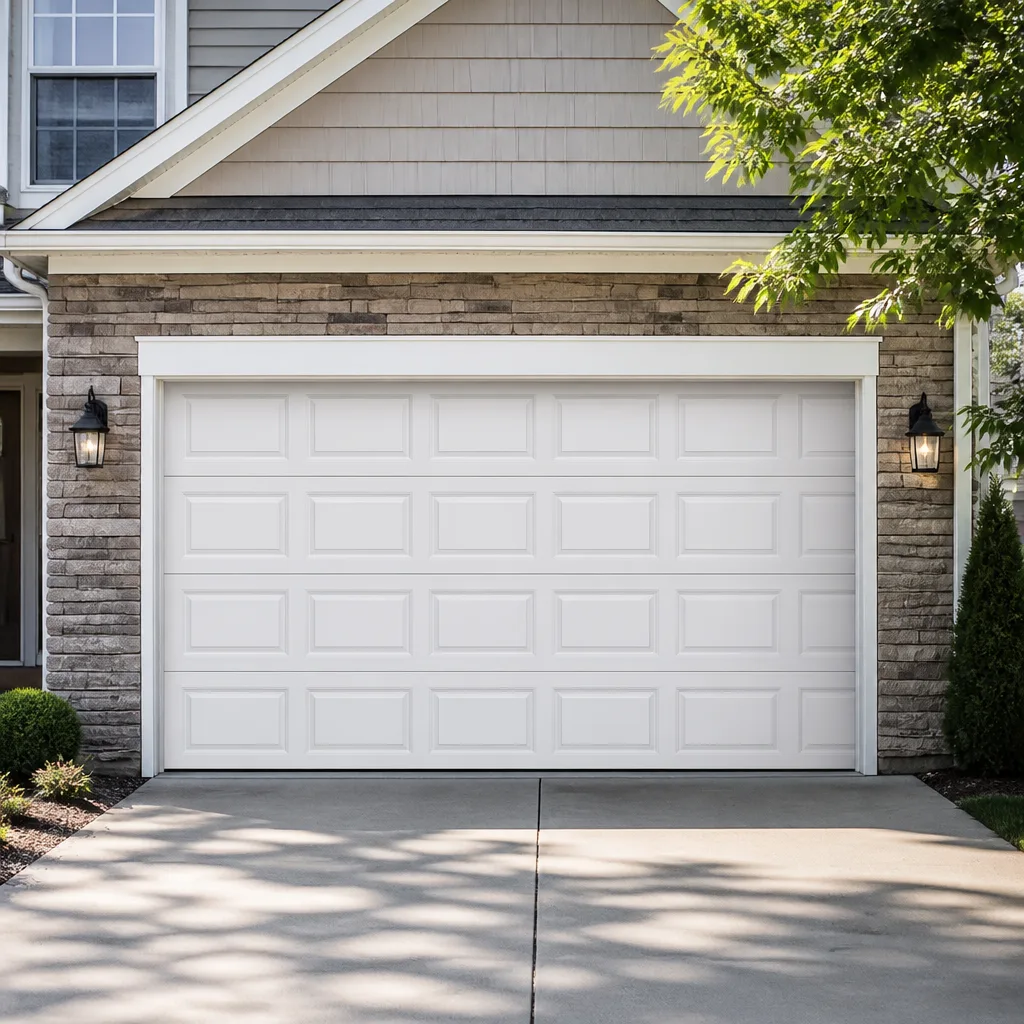 Raised-panel steel
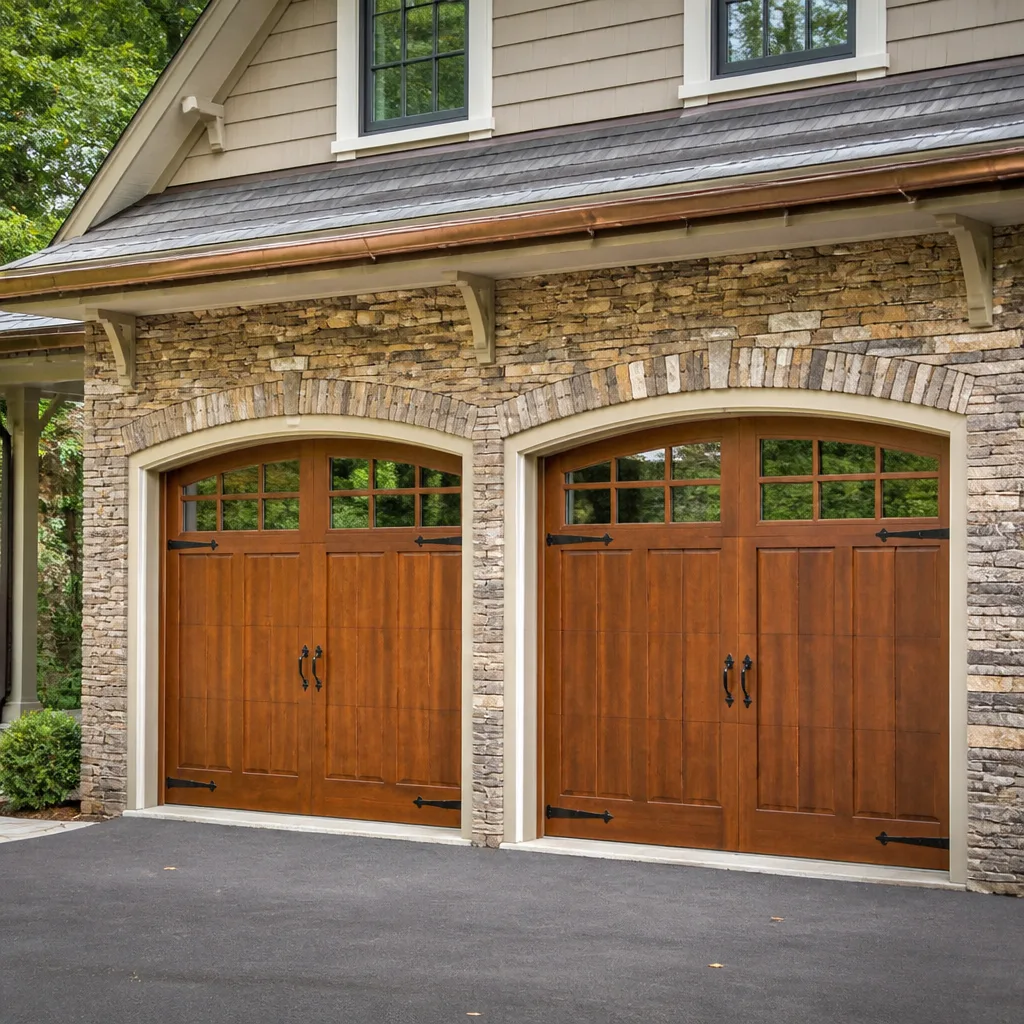 Carriage house
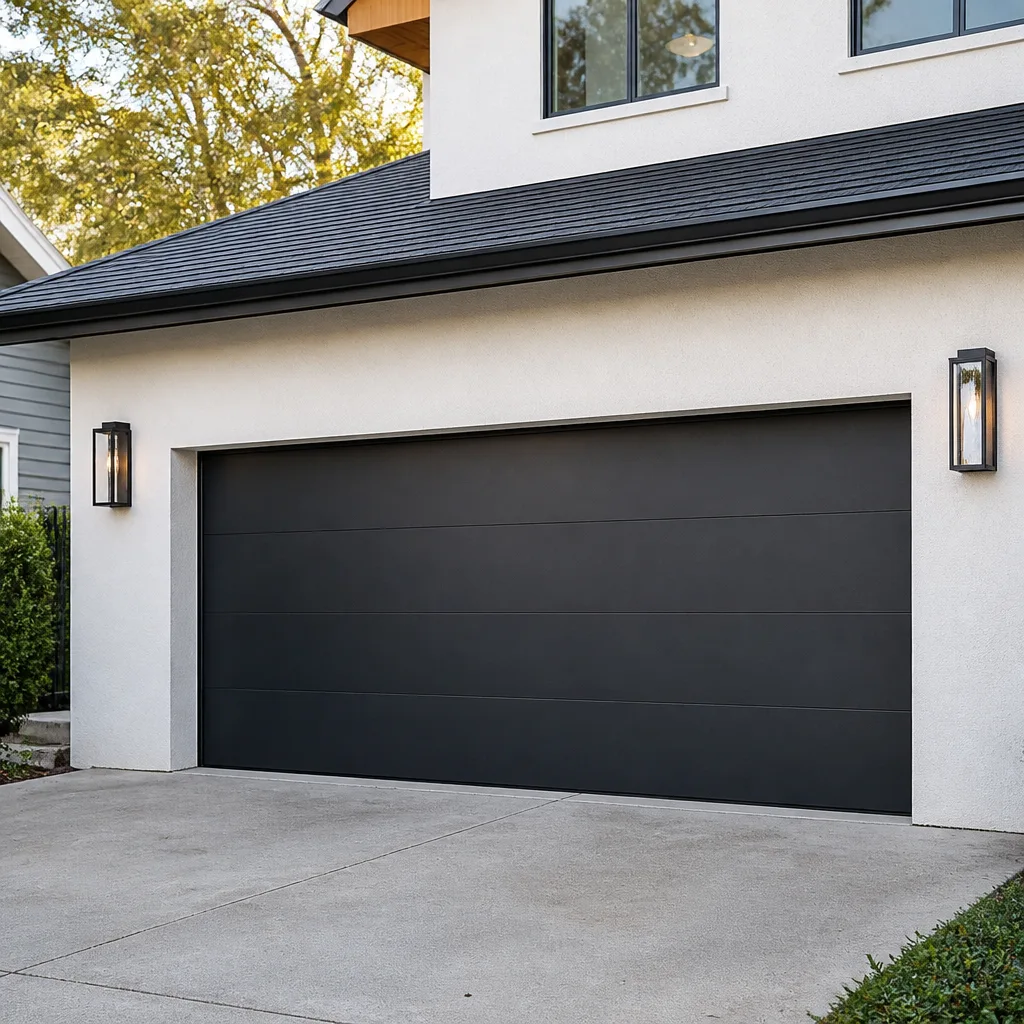 Modern flush
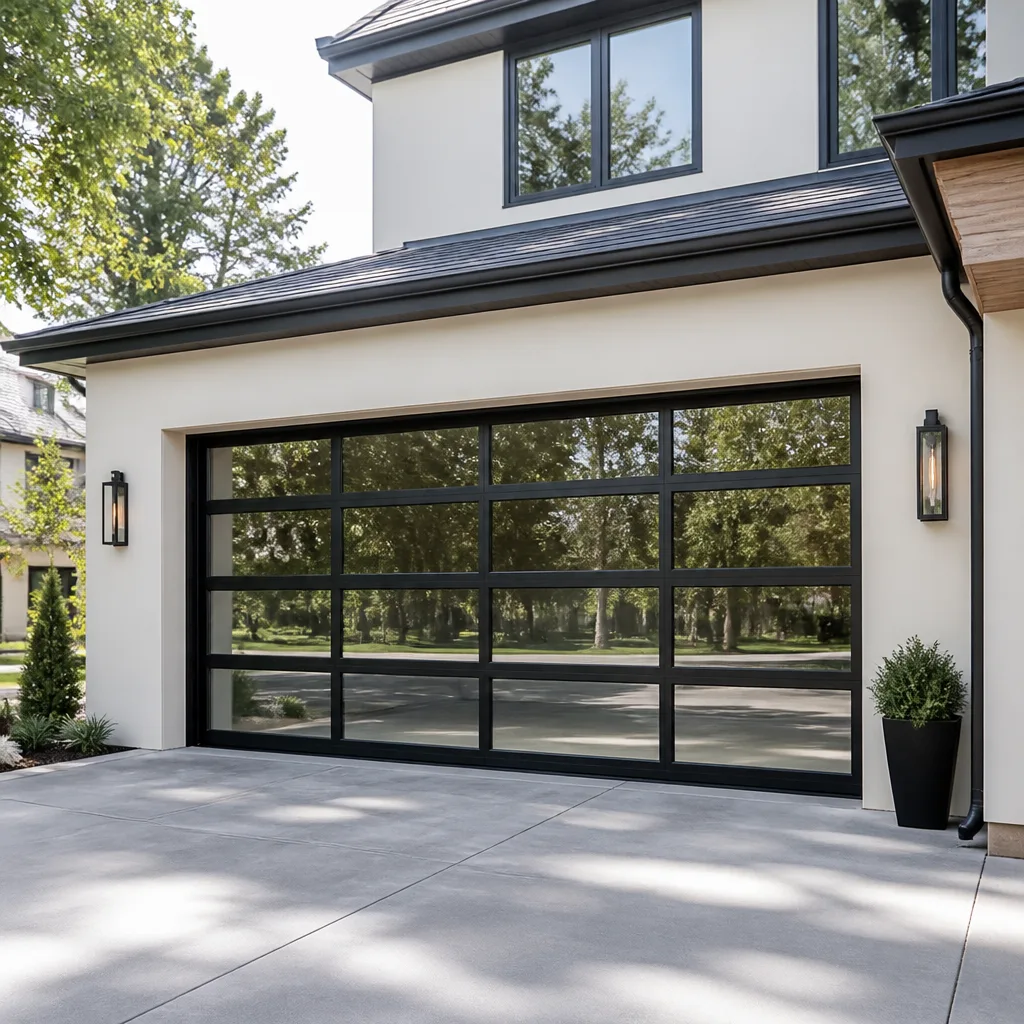 Full-view glass
 LiftMaster openers
 Chamberlain openers
Full 25-point door and opener safety check with every visit - springs, cables, rollers, tracks, and your LiftMaster or Chamberlain opener included
You get a price before we start. It does not change when the truck arrives.
Get your free estimateSeasonal Garage Door Care for San Diego: Year-Round Homeowner’s Guide
Telling a San Diego homeowner to winterize their garage door in November is like telling them to shovel the driveway. The advice is real somewhere, just not here. What San Diego actually has is a five-phase weather cycle that most national maintenance guides never mention: the marine layer cycle, the June Gloom-to-UV-peak transition, peak solar expansion season, Santa Ana wind events, and the coastal corrosion constant. Each phase stresses a different component of your garage door system. This guide replaces the generic four-season template with San Diego’s actual weather patterns and the specific maintenance action each one demands, so you’re working on the right part at the right time. For The Complete Guide to Garage Door in San Diego, see our main resource page.
Quick Answer
Seasonal garage door care in San Diego means aligning maintenance with five local weather phases rather than calendar seasons. The priorities shift from moisture control during June Gloom to thermal expansion checks in peak UV months to wind-hardening before Santa Ana season, with a year-round corrosion watch for coastal zip codes. Most homeowners can handle the basic inspections in under 30 minutes per phase, but spring tension and opener diagnostics should involve a trained technician. For deeper repair scenarios, see The Complete Garage Door Repair Guide for San Diego Homeowners.
Styles & brands we work with
Table of Contents
- Phase One: The Marine Layer Cycle (Year-Round Coastal Watch)
- Phase Two: June Gloom (May – July) – Moisture Management Before the Heat
- Phase Three: Peak UV Season (July – September) – Thermal Expansion and Spring Tension
- Phase Four: Santa Ana Wind Prep (October – January)
- Phase Five: Post-Santa Ana Inspection and Recovery
- Common Mistakes to Avoid
- When to Call a Professional
- Frequently Asked Questions
Phase One: The Marine Layer Cycle (Year-Round Coastal Watch)
If you live west of Interstate 5 in San Diego, you don’t have seasonal humidity. You have daily humidity. The marine layer that rolls in most evenings and burns off by mid-morning deposits a fine salt-laced moisture film on everything exposed, including your garage door hardware. In neighborhoods like Point Loma, Ocean Beach, La Jolla, and Coronado, this cycle repeats 200-plus nights per year. That’s not a seasonal problem. It’s a constant one.
We’ve repaired doors in coastal San Diego where the bottom bracket looked like it had been pulled from a shipwreck after only five years of exposure. The homeowner had done everything right by a standard maintenance calendar. The issue was that nobody told them coastal corrosion doesn’t follow a season.
What the marine layer actually does to your door:
- Galvanized steel hardware eventually gives up its zinc coating and begins rusting, starting with the hinges and bottom brackets, which sit closest to ground moisture.
- Roller bearings collect that fine salt grit and wear faster, which translates to a louder, rougher door operation.
- Wood doors in coastal zones absorb moisture at night and release it during the day, a cycle that gradually opens the joints and invites rot from the inside out.
- Electrical connections on the opener’s safety sensors and wall console develop light corrosion, which can cause intermittent failures that masquerade as sensor misalignment.
For coastal zip codes, we recommend a monthly two-minute visual inspection, not a seasonal one. Run your finger along the bottom bracket and hinge plates. If you feel grit or see white powdery oxidation forming, wipe it down with a dry cloth and apply a light silicone spray to the hardware. Do not use WD-40 as a lubricant. It’s a solvent, not a lubricant, and it will strip whatever protective film is there.
The year-round corrosion watch protocol:
- Once a month, visually check all visible hardware: hinges, brackets, track bolts, and the bottom seal retainer.
- Wipe down any white oxidation or rust bloom with a dry rag. If rust has already pitted the metal, note it and monitor it. Pitted hinges fail eventually.
- Spray hinges, rollers, and bearing plates with a silicone-based or lithium-based garage door lubricant. Two seconds per hinge is enough. Wipe the excess so it doesn’t attract grit.
- Test the auto-reverse function by placing a 2×4 flat on the ground under the door and closing it. The door should reverse within two seconds of contact. Salt corrosion on sensor wiring is a common reason this safety feature degrades silently.
If your door is 10-plus years old and lives within two miles of the ocean, the hardware has likely been losing material for years even if it looks acceptable from six feet away. That’s the point where a specialist inspection pays for itself. Ask us to check the spring system and bearing plates specifically. Garage Door Repair in Rancho Santa Fe covers the inland side, but Admiral services the full San Diego coastal corridor, where these corrosion patterns are most concentrated.
Phase Two: June Gloom (May – July) – Moisture Management Before the Heat
San Diego’s grayest stretch of the year, the May-through-July period when the marine layer refuses to burn off until early afternoon, is also the quietest time for garage door failures. That’s exactly why it’s the best time to act. The failure you prevent in June is the one that would have happened in August, when the heat loads peak and every component is under maximum stress.
June Gloom gives you a narrow window before the thermal expansion season kicks in. The air is saturated, the UV index is still moderate, and wood doors are at their maximum moisture content. This is the only time of year when you can treat wood door joints effectively before summer heat pulls that moisture out and the wood shrinks.
For wood garage doors specifically, here’s what June Gloom maintenance should include:
- Inspect the panel joints and the seams where the panels meet the stiles. Look for hairline gaps that have widened from winter rain absorption. If water has been sitting in those joints, you’ll see dark staining at the edges.
- Check the bottom panel closely. This is the panel that sits nearest the slab and absorbs the most moisture from ground evaporation and splash-back. Wood rot in San Diego almost always starts in the bottom panel, not the top.
- If you catch joint separation early, apply a wood-specific exterior sealant to the joint while the wood is still swollen from June moisture. The sealant will be drawn slightly into the gap as the wood dries, creating a better bond than any summer application could achieve.
- Refinish or seal wood doors now, before the July sun bakes the existing finish and makes surface prep harder. The marine layer keeps daytime temperatures mild enough that sealants cure properly instead of skinning over in the heat.
For everyone, not just wood-door owners, June Gloom is also the right time to address track and roller lubrication. The cooler, damp weather means lubricant stays in place longer instead of thinning in the heat. A proper lubrication pass in June will carry you through the entire UV season.
One common San Diego assumption to correct: many homeowners think June Gloom is harmless because the sun is hidden. The reality is that the moisture is actively working on untreated metal and wood for hours every morning. By the time the sun comes out and dries everything, the damage has already been done for the day. Repeated across six to eight weeks, that’s a full corrosion and wood-swelling cycle that could have been neutralized with a single afternoon of maintenance.
Phase Three: Peak UV Season (July – September) – Thermal Expansion and Spring Tension
San Diego’s peak UV season runs from roughly the Fourth of July through late September, and it is the most mechanically stressful period of the year for your garage door. Temperatures in inland neighborhoods like Rancho Bernardo, Scripps Ranch, and Santee routinely cross 90°F for days at a time. The metal expands. The springs lose some of their effective tension. The panels shift. And every loud noise or sticky spot your door developed earlier in the year gets worse under heat load.
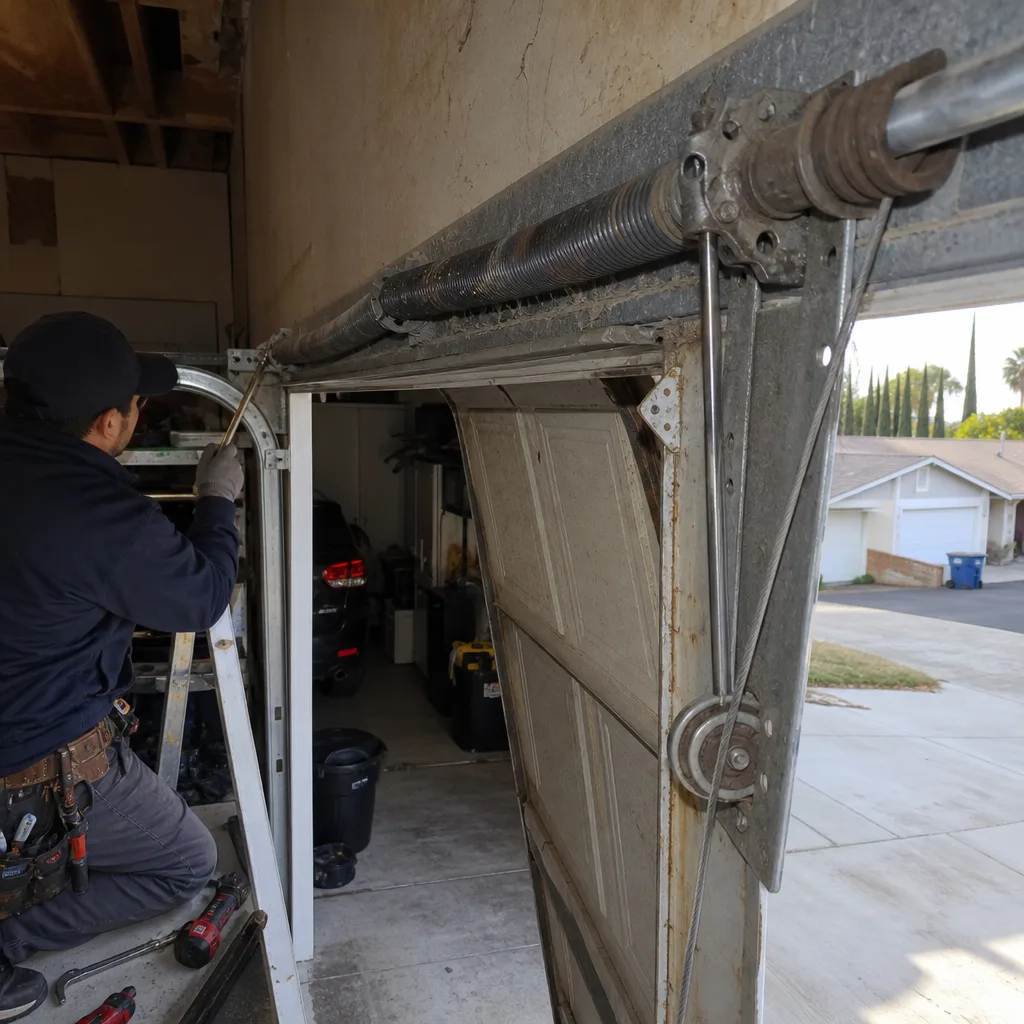
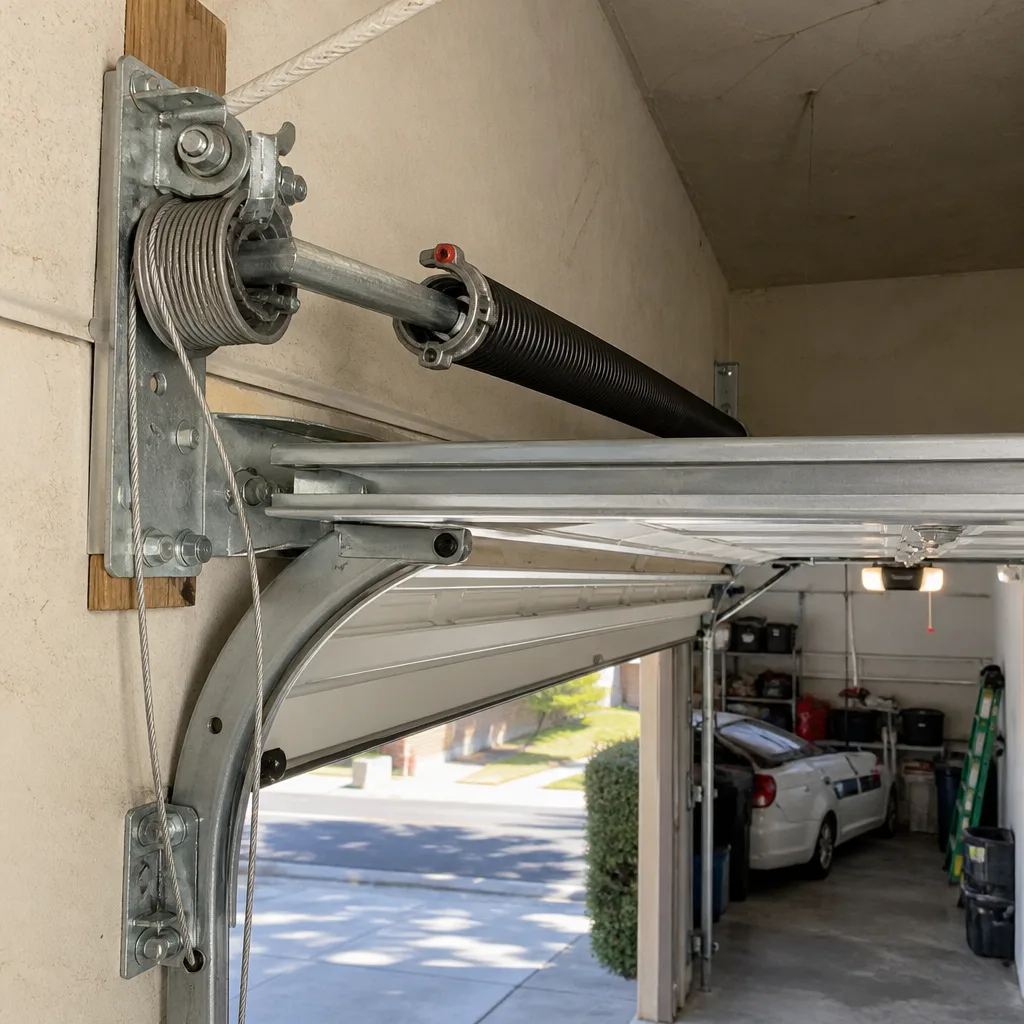
The critical component to understand here is the torsion spring. Your garage door’s torsion spring is calibrated to lift a specific door weight at a specific temperature. When the ambient temperature in your garage climbs from 70°F to 95°F, the spring steel expands and its effective lift capacity drops slightly. That means a door that was balanced in May may be slightly heavy in August. A heavy door strains the opener motor, wears the gears faster, and shortens the life of the spring itself.
This is why we tell San Diego homeowners to test their door balance every August. It’s a simple test:
- Close the door and pull the red emergency release cord so the door operates manually.
- Lift the door halfway by hand and let go. It should stay roughly in place. If it creeps down, the springs are under-tensioned for the current heat conditions.
- If it drops or slams down, the springs are either significantly under-tensioned or failing. Do not operate the door under motor load until a professional has inspected it. The springs are under high tension and adjusting them without the correct tools and training can cause serious injury.
- Lift the door to full open and lower it manually. It should move smoothly without binding. If it sticks at a particular point, look for track misalignment or a worn roller, both of which worsen with thermal expansion of the track.
Panel gap alignment is another heat-specific check. Metal and composite panels expand in direct sunlight, especially if the door faces west and catches the late-afternoon sun. If the gaps between panels look wider on the sun-facing side than the shaded side, the door is absorbing uneven heat. Minor variance is normal. Gaps that open enough to see daylight through are not, and they signal that the panel fasteners or the track alignment need attention.
For openers, peak UV season is when we see the most thermal-related circuit board failures. Excessive garage heat stresses the capacitors and solder joints on the opener’s logic board, especially on older units. If your opener starts running erratically in July and August, giving an intermittent open or refusing to close fully, the heat is likely a contributing factor. That’s an opener diagnosis, not a door diagnosis, and the two need to be separated. At Admiral, opener repair is its own service line because misdiagnosing an opener problem as a door problem wastes your time and money. Garage Door Opener Repair in Rancho Santa Fe walks through what that diagnostic process looks like on the inland side, and the same logic applies across San Diego.
If you have a LiftMaster or Chamberlain opener that’s been running hot, a simple first step is to make sure the unit’s ventilation slots aren’t blocked by ceiling insulation or dust accumulation. Unplug the unit, use a can of compressed air to clear the vents, and give it a test run. If the problem persists, the logic board may be heat-fatigued, and that’s a replacement conversation.
Phase Four: Santa Ana Wind Prep (October – January)
Santa Ana winds are San Diego’s version of a winter storm, and they arrive every year with enough regularity that preparation should be routine. From October through January, offshore winds push dry desert air toward the coast at sustained speeds that regularly hit 30 to 50 mph, with gusts in the 60 to 80 mph range in the foothill canyons. For a garage door, that’s a lateral load the door was never designed to resist. The risk isn’t just cosmetic. A wind-driven impact on a poorly maintained door can knock it off its tracks, bend the horizontal track sections, or blow accumulated debris into the moving parts.
Santa Ana prep should happen before the first major wind event of the season, which in San Diego typically arrives in October. Here’s the pre-wind checklist we recommend for every homeowner:
- Inspect the bottom seal, also called the astragal. This is the rubber strip along the bottom edge of the door. Santa Ana winds drive dust, leaves, and fine desert grit under the door if the seal is cracked, brittle, or missing. A compromised seal also lets embers and smoke into the garage during fire season, which is a safety issue for homes in canyon-adjacent areas.
- Clear the track area. The horizontal tracks just inside the garage collect leaves, small branches, and debris that blow in through gaps. A single twig riding between the roller and the track during a wind-driven door operation can bind the door or force a roller out of alignment.
- Check the emergency release. During a Santa Ana, you want to know you can open the door manually if power goes out or if you need to secure the door quickly. Pull the emergency release cord and confirm the door moves freely by hand. If it’s stiff, address that before the wind event, not during it.
- Inspect the weather stripping along the sides and top of the door frame. The vertical strips, called jamb seals, keep driven dust and wind out. If they’re flattened or pulling away, warm Santa Ana air and fine dust will enter the garage, which matters for anyone using the space for storage or a workshop.
- Test the opener’s force settings. During high winds, a door that’s slightly heavier than normal from wind pressure can trigger the opener’s force limiter, causing the door to reverse mid-cycle. If your opener has an adjustable force setting, verify it’s set correctly for normal conditions. Do not crank the force up to fight the wind. That defeats the safety reverse function.
The bottom seal deserves special attention because it does double duty in San Diego. It’s not only a wind barrier. During fire season, the gap under your garage door is one of the primary entry points for wind-driven embers. A solid, intact bottom seal and proper jamb seals dramatically reduce the chance of ember intrusion. For homes in Ramona, Alpine, Poway, or anywhere in the wildland-urban interface, this check should be considered mandatory before October.
Wayne Dalton and Clopay doors typically use an aluminum retainer channel that holds the rubber astragal. Craftsman and Raynor doors often use a T-style seal that slides into a channel and can be replaced without tools. Knowing which system you have makes the replacement faster and prevents ordering the wrong part. If you’re not sure what type of seal your door uses, we can identify it from a photo. We work on all of the major brands, and that includes the seal systems, which vary more than most homeowners expect.
Phase Five: Post-Santa Ana Inspection and Recovery
After a major Santa Ana event, the correct sequence is to inspect before you operate. We see a recurring pattern in San Diego after every high-wind period: a homeowner opens the garage door by remote from inside the car, the door has shifted a quarter inch on its tracks, and the opener then yanks the door through a misalignment, bending a roller bracket or damaging a hinge. The wind doesn’t cause that damage. The operation under motor load after the wind does.
Here’s the post-wind protocol:
- Walk around the outside of the door before opening it. Look at the gap between the door sections and the jamb on both sides. If the gap is wider on one side, the door has shifted laterally.
- Visually check the top of the door and the curved track sections for debris. Wind-driven palm fronds are heavy and can lodge in the track curve, and you won’t see them from inside the car.
- Pull the emergency release and lift the door by hand. It should move smoothly through the full travel. If it catches, scrapes, or feels heavier on one side, do not reconnect the opener yet.
- Check the bottom seal for tearing. High winds can peel a partially detached seal back further, or a driven branch can slice it. A torn seal loses its dust and ember barrier function.
- Reconnect the opener and run one full open-close cycle. Watch the door edges as it moves. Listen for new scraping or grinding sounds that weren’t there before the wind event.
Santa Ana winds also carry abrasive desert dust that settles into the track lubricant. After a significant wind event, wipe the tracks down with a dry cloth and re-lubricate the rollers and hinges. That dust, once trapped in the lubricant, becomes a grinding paste that accelerates roller wear.
One more San Diego-specific note: post-Santa Ana, check the ceiling-mounted opener’s mounting brackets. Sustained vibration from wind buffeting against the door transmits through the tracks and into the opener mount. Loose mounting bolts are common after a high-wind season, and they cause the opener to shake and rattle during operation. Tightening them is a five-minute job that prevents longer-term mounting failure.
Common Mistakes to Avoid
- Following a generic four-season calendar. San Diego’s weather phases don’t align with a national maintenance schedule. A homeowner who “winterizes” in November and ignores June Gloom has missed the actual moisture window, and the corrosion or wood damage from May through July was already done before the winter check happened.
- Using WD-40 on garage door hardware. This is the most common garage door maintenance mistake in San Diego, and it actively makes things worse in coastal zones. WD-40 is a solvent that strips the protective film and attracts dust. Use a silicone or lithium spray made for garage door components.
- Ignoring the bottom seal until it’s visibly gone. In San Diego, the bottom seal is doing four jobs at once: dust barrier, moisture barrier, ember barrier during fire season, and pest deterrent. If it’s cracked, split, or flattened, it has already failed even if it’s still attached. Replace it before October.
- Adjusting spring tension as a DIY project. Torsion springs are under enough tension to cause severe injury or death if mishandled. The winding bars need to be sized correctly, the spring needs to be wound to an exact fraction of a turn, and the process requires training. No amount of YouTube research makes this a safe DIY job.
- Oiling the tracks. Garage door tracks should be clean and dry, not lubricated. Lubricating the track surface causes the rollers to slide instead of roll, which creates flat spots on the rollers and makes the door noisier over time. Lubricate the roller bearings, hinges, and spring, never the track surface itself.
- Reconnecting the opener immediately after a wind event without checking the door. The most expensive post-Santa Ana repairs we see are caused by running a shifted door under motor power. Take two minutes to inspect and test manually first.
- Treating the opener and the door as one system. A door that doesn’t move could be a spring failure, a track issue, or an opener logic board problem. Replacing the opener won’t fix a broken spring, and changing the spring won’t fix a failed circuit board. The diagnosis has to come first, and it has to be aimed at the right component.
When to Call a Professional
Any work on torsion springs, cables, or the spring anchor hardware qualifies for a professional call, no exceptions. Those components are under high tension and the risk of serious injury from an improper repair is well documented. If your door is off its tracks, if a cable has broken or frayed, or if the door is binding at a specific point during travel, stop using it and call a technician. If the door has been hit by a vehicle or by wind-driven debris, the track alignment and panel integrity need to be assessed before the door is safe to operate.
Opener problems are also a professional diagnostic. Intermittent failures, reversed safety sensors that won’t stay aligned, and grinding gear sounds inside the opener unit are all signs that the opener itself, not the door, needs attention. A generalist who replaces parts until something works will cost you more than a focused diagnosis would have. If you’re in San Diego and you want a door or opener diagnosis, Admiral Garage Door Repair home covers full-service repair, opener repair, and installation. Call (833) 467-4069 for a free estimate.
Frequently Asked Questions
In coastal San Diego, lubricate the rollers, hinges, and springs every three to four months. Inland, twice a year is usually sufficient. The marine layer’s salt content accelerates wear on hardware west of I-5, so coastal doors benefit from a quarterly schedule. Use a silicone or lithium spray, never WD-40, and keep the tracks themselves clean and dry.
The bottom seal is the single most important pre-Santa Ana check in San Diego. It blocks wind-driven dust and embers, and it directly affects how much debris ends up inside the garage and in the track system. A cracked or missing bottom seal before October should be replaced as soon as possible. Call (833) 467-4069 for a quote if you’re not sure which replacement seal your door needs.
Yes. Torsion springs expand slightly in high temperatures, which reduces their effective lift capacity. A door that was perfectly balanced in May can test heavy during a 95-degree inland stretch in August. This is why we recommend a balance test every August in San Diego. If the door creeps down during the manual test, the springs need a professional tension adjustment.
In most cases, yes. If you have a T-style seal that slides into a channel, replacement is straightforward and tool-free. If you have a Wayne Dalton or Clopay door with an aluminum retainer channel, the process is still manageable for most homeowners. The challenge is ordering the correct seal profile, which varies by manufacturer. If you’re unsure which type you have, we can identify it from a photo and supply the right part.
Summer heat causes thermal expansion in the metal tracks and door panels, which can create slight binding and make existing roller wear more audible. The heat also thins the lubricant on the rollers and hinges, reducing its cushioning effect. If the noise is new and persistent after a re-lubrication, the rollers are likely at end of life and need replacement.
We work on all eight major brands: LiftMaster, Chamberlain, Genie, Clopay, Amarr, Wayne Dalton, Craftsman, and Raynor. Our technicians are trained on the specific quirks and part tolerances of each manufacturer, which means the diagnosis is aimed at the right component from the start. Garage doors are all we do, and opener repair is its own diagnosis, so you’re not paying for a generalist to guess.
The Bottom Line
San Diego’s weather doesn’t follow a four-season calendar, and your garage door maintenance shouldn’t either. The marine layer cycle demands a year-round corrosion watch for coastal homes. June Gloom is your narrow window to treat wood doors and re-lubricate before the heat arrives. Peak UV season is when spring tension and panel gaps need checking, and Santa Ana season requires bottom seal integrity and a pre-wind inspection. After the winds pass, inspect before you operate. For everything beyond routine maintenance, call (833) 467-4069, or explore more guides & resources on our blog. Estimates are free, and we’ll tell you exactly what’s wrong before any work begins. Written by the team at Admiral Garage Door Repair, serving San Diego since 2015.
See the difference
 Before
 After
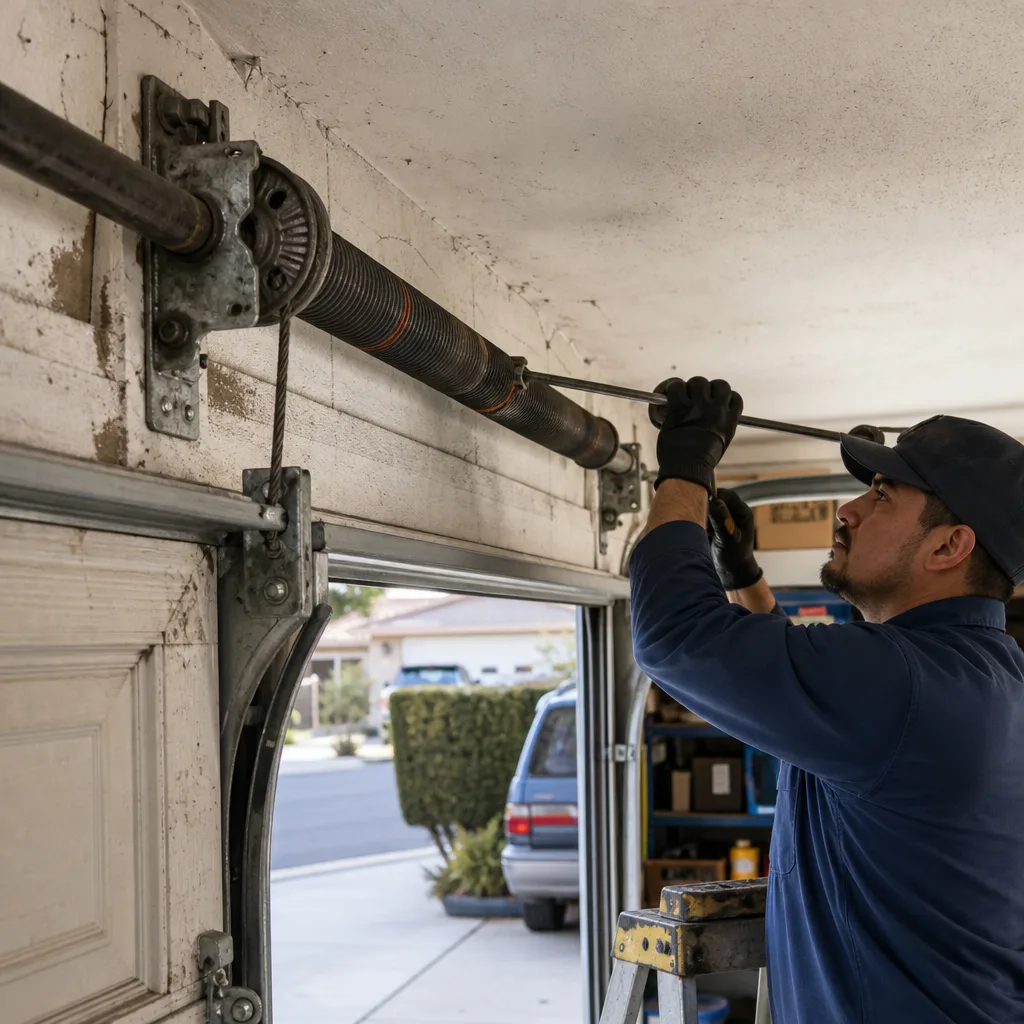 Before
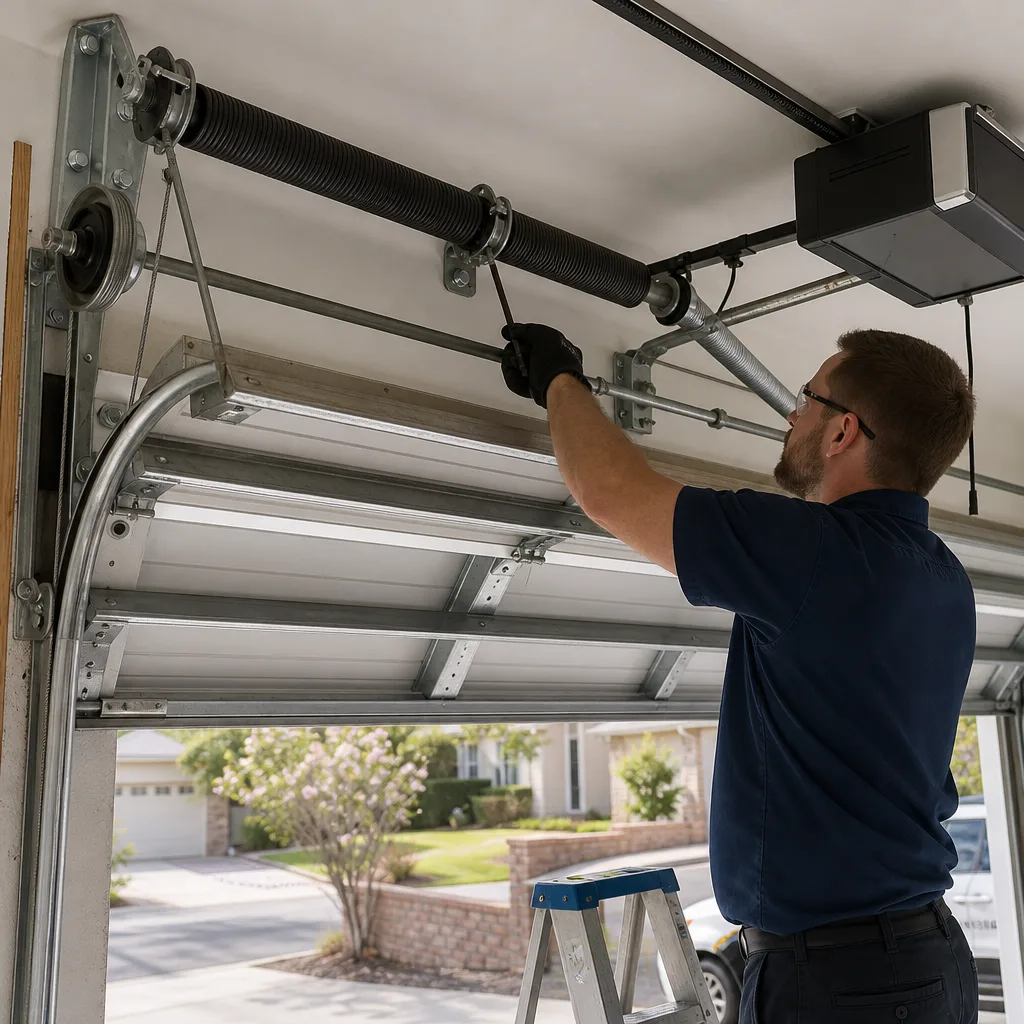 After
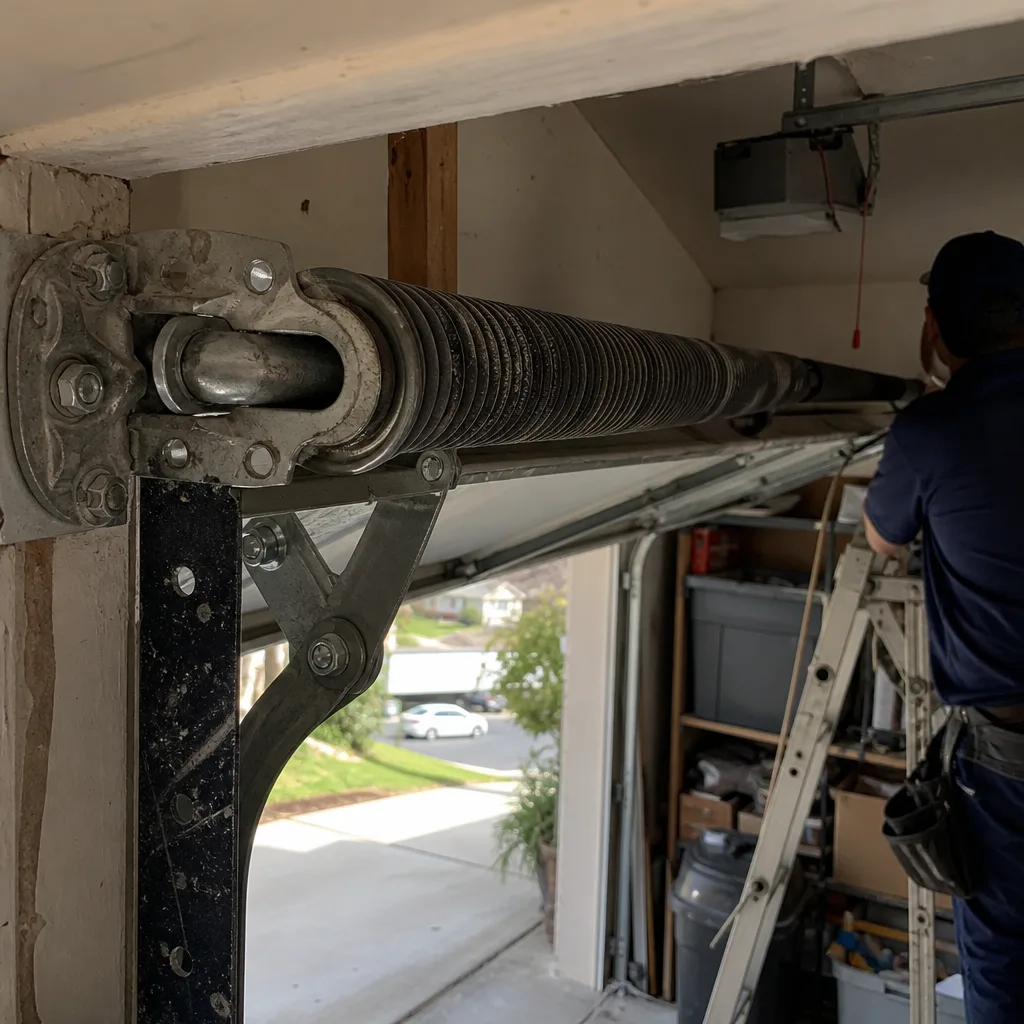 Before
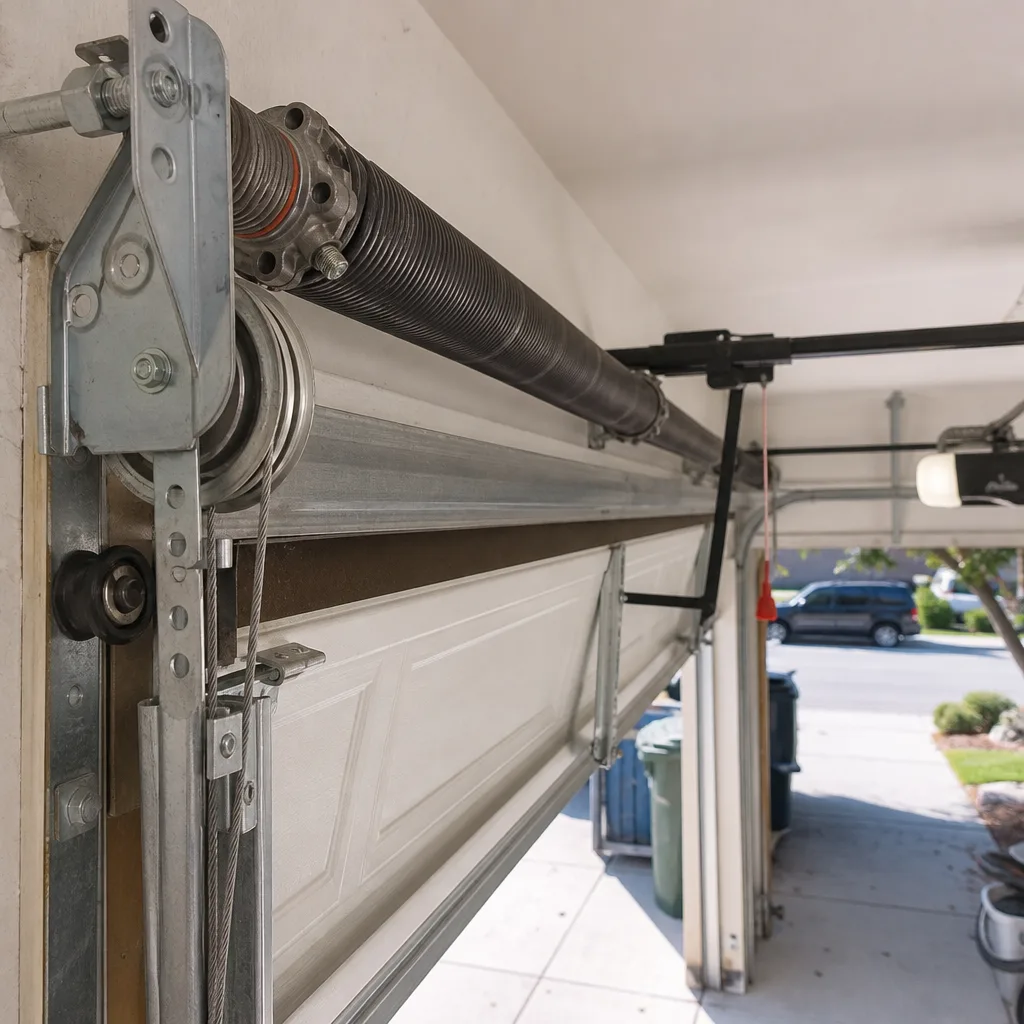 After