

Last updated October 31, 2026
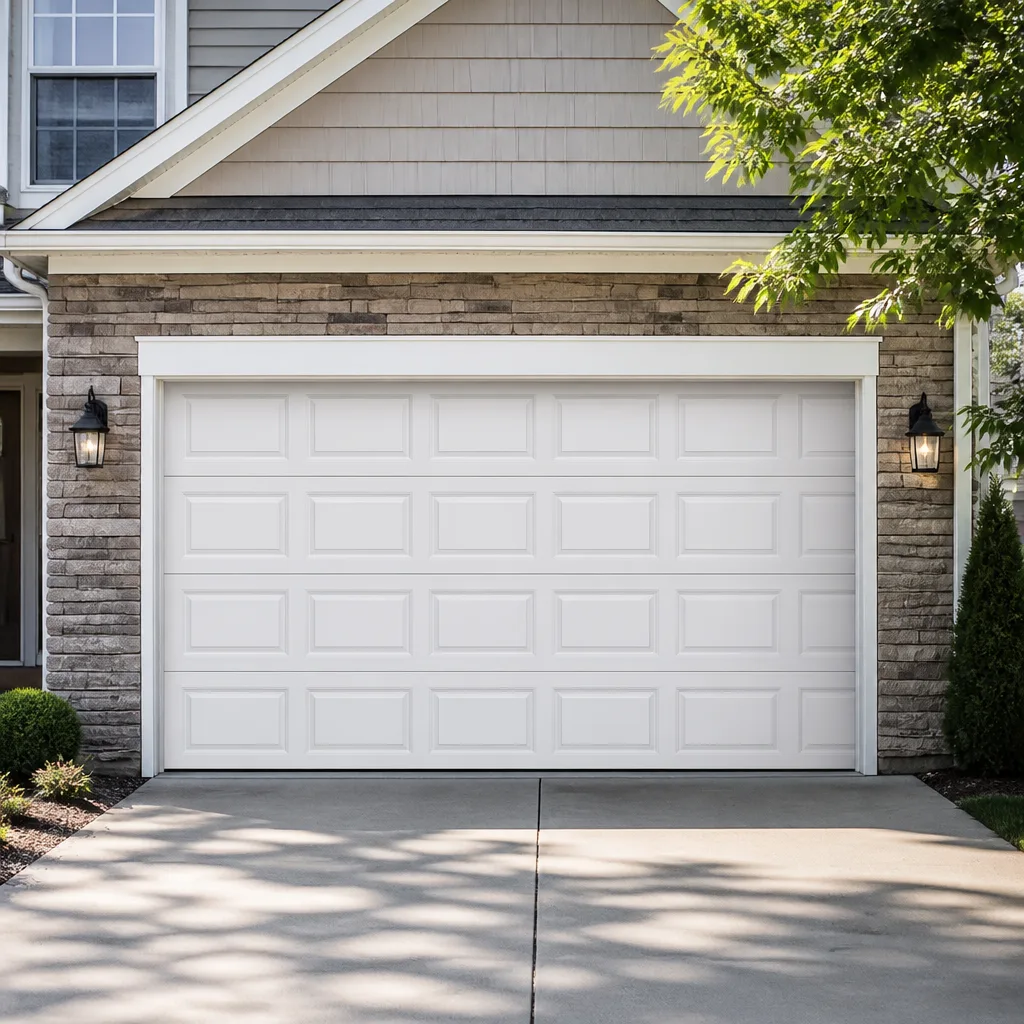 Raised-panel steel
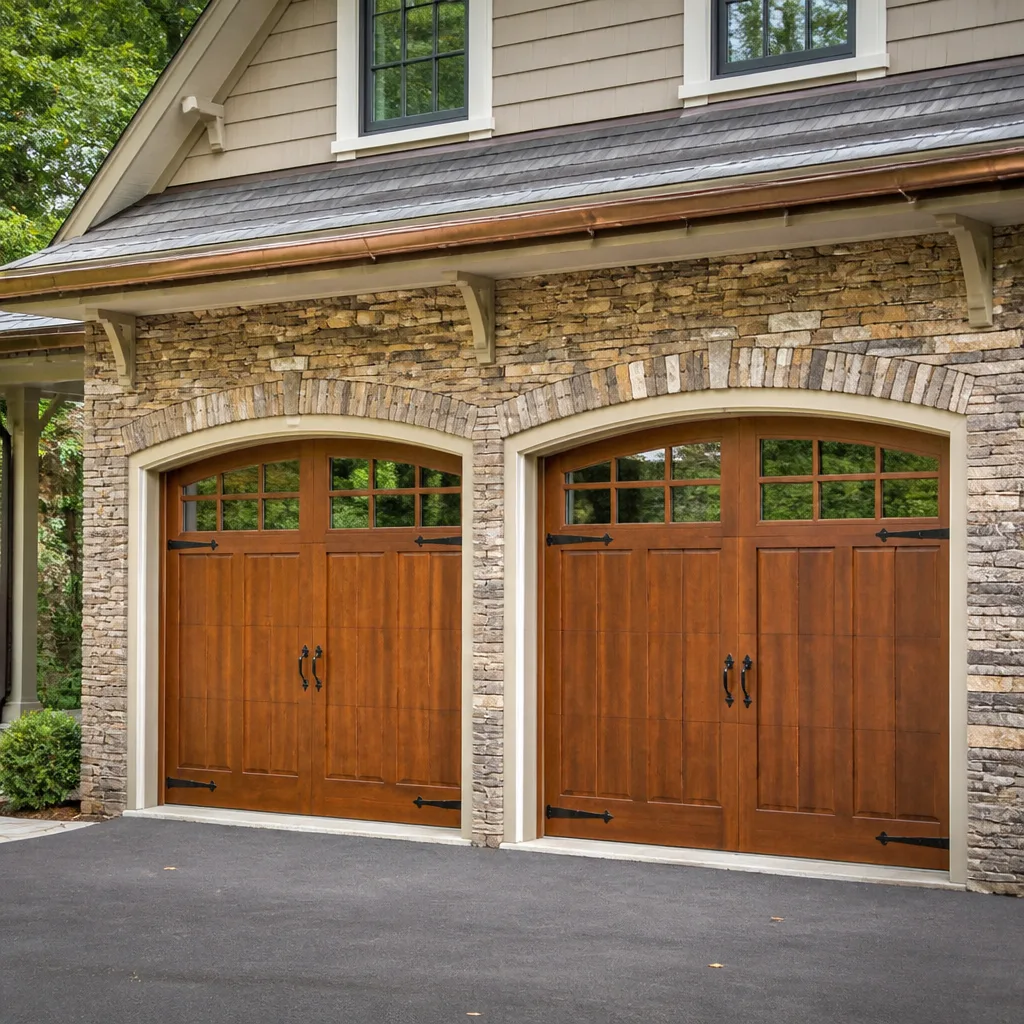 Carriage house
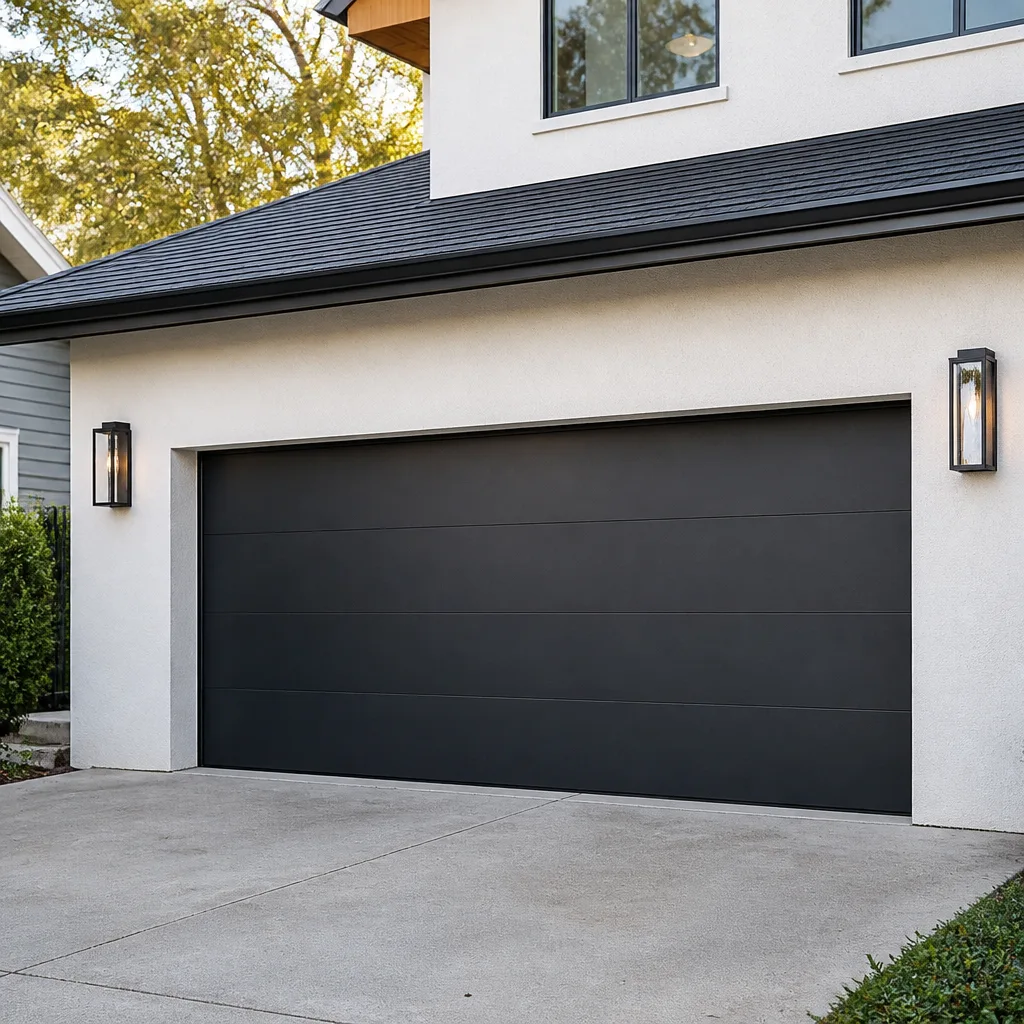 Modern flush
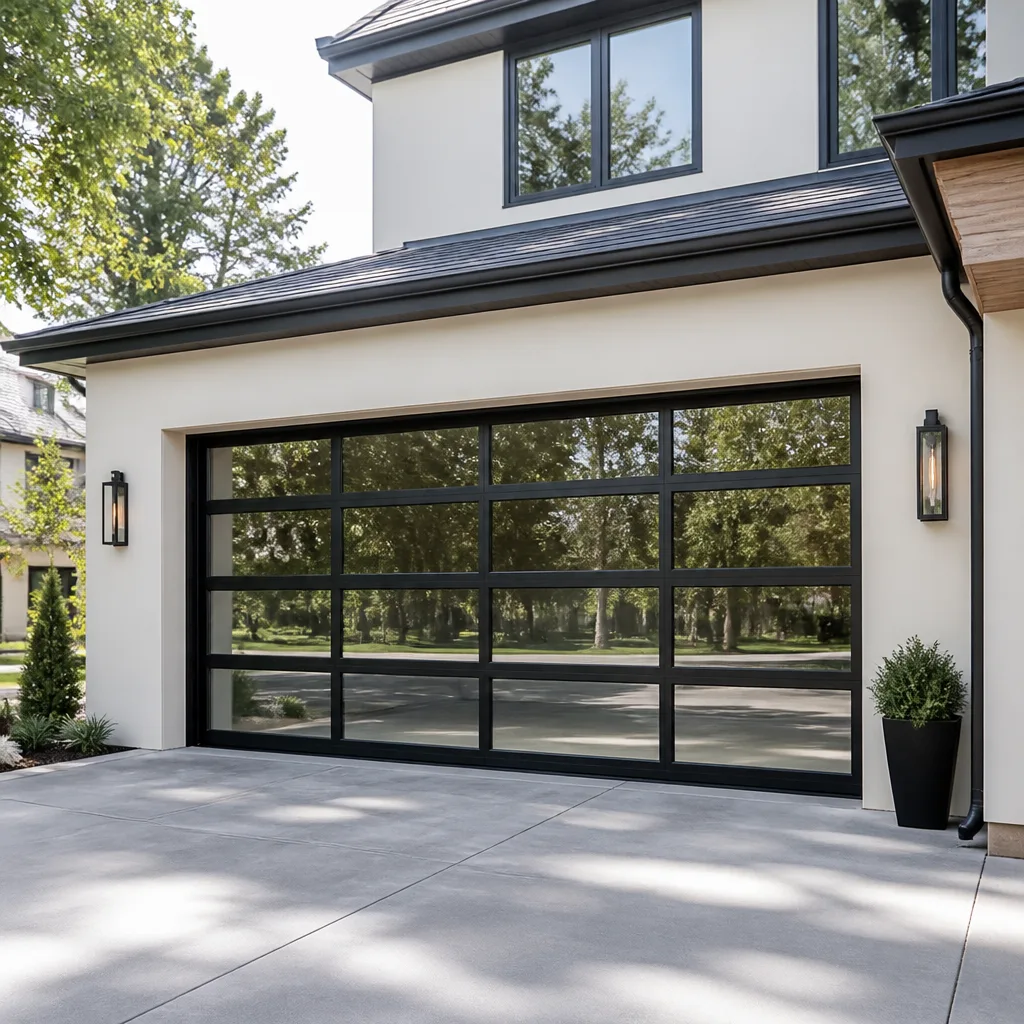 Full-view glass
 LiftMaster openers
 Chamberlain openers
Full 25-point door and opener safety check with every visit - springs, cables, rollers, tracks, and your LiftMaster or Chamberlain opener included
You get a price before we start. It does not change when the truck arrives.
Get your free estimateThe Complete Garage Door Repair Guide for San Diego Homeowners
Most garage door repair guides were written for Chicago or Atlanta. They talk about snow load, freeze-thaw cycles, and road salt. San Diego has none of those things, which sounds like good news until you realize the advice doesn’t transfer. Our salt air corrodes springs faster than any Midwest winter. Our UV index, consistently among the highest in the continental United States, breaks down finishes and weather seals on a timeline those guides never account for. Our coastal marine layer delivers six months of nightly humidity to metal components, followed by bone-dry Santa Ana conditions that bake whatever the fog left behind. This guide is built around what actually breaks in San Diego specifically, why it breaks here, and what to do about it.
Quick Answer
Our Garage Door Repair services in San Diego typically cost between $125 and $400 for common fixes like spring replacement, cable repair, and sensor realignment, with opener repair running $150 to $350 and full door replacement ranging from $1,200 to $4,500 depending on material and insulation. Most repairs take under two hours when the technician carries the right parts. The single most important thing a San Diego homeowner can do is schedule spring and cable inspections every 12 to 18 months, because coastal corrosion fails these components before any visible warning sign appears.
Styles & brands we work with
Table of Contents
- What San Diego’s Climate Does to Your Garage Door
- Spring Repair: The Most Common San Diego Failure
- Cable and Roller Failures Along the Coast
- Opener Repair: A Separate Diagnosis
- UV Damage, Panels, and Finish Failure
- A San Diego Maintenance Calendar That Actually Fits
- How to Vet a Garage Door Company in San Diego
- Common Mistakes to Avoid
- When to Call a Professional
- Frequently Asked Questions
What San Diego’s Climate Does to Your Garage Door
San Diego’s climate is often described as ideal, and for people it mostly is. For garage door hardware, it’s a corrosive cocktail that works in cycles. Here’s the pattern we see across thousands of service calls from Rancho Santa Fe to the coast and inland through the valleys.
The marine layer is the biggest factor most homeowners never consider. From May through August, coastal and near-coastal neighborhoods including Rancho Santa Fe, Del Mar, La Jolla, and Point Loma get nightly fog that pushes humidity levels above 85 percent for hours at a time. That moisture condenses on cold metal surfaces inside the garage, especially torsion springs, cables, and bearing plates. Then the morning sun burns it off. This wet-dry cycle repeats three hundred times a year within ten miles of the coastline, and each cycle leaves a microscopic layer of oxidation on unprotected steel.
Add salt air to that equation and corrosion accelerates dramatically. Airborne salt particles from ocean spray travel surprisingly far inland, especially during onshore flow patterns. Springs that might last twelve years in Temecula routinely fail at seven or eight years in coastal Rancho Santa Fe and Solana Beach. The failure is rarely dramatic. Springs develop pitting from rust, stress concentrates at those pits, and one morning the door simply won’t lift.
The second San Diego-specific factor is temperature swing. Inland areas like Poway, Santee, and El Cajon routinely see thirty-degree spreads between daytime highs and nighttime lows. Metal expands and contracts. Fasteners work loose. Aluminum tracks shift slightly. None of this happens quickly, but over five years it compounds into misalignment that causes rollers to bind and openers to strain against increased resistance.
Then there’s UV. San Diego averages over 260 sunny days a year with UV indices regularly hitting 8 to 11 in summer. That radiation degrades the plastic weather stripping along the bottom of the door, the rubber seals around panels, and the polymer gears inside some opener models. We’ve replaced bottom seals on doors in Rancho Santa Fe that had turned brittle and crumbly within eighteen months of installation because the garage faces west and takes direct afternoon sun.
The takeaway is simple: San Diego doesn’t have a single harsh season. It has continuous mild assault. The components that fail first are the ones that sit in the path of salt, moisture, or sunlight, and those failures happen on a schedule no generic guide will tell you about.
Spring Repair: The Most Common San Diego Failure
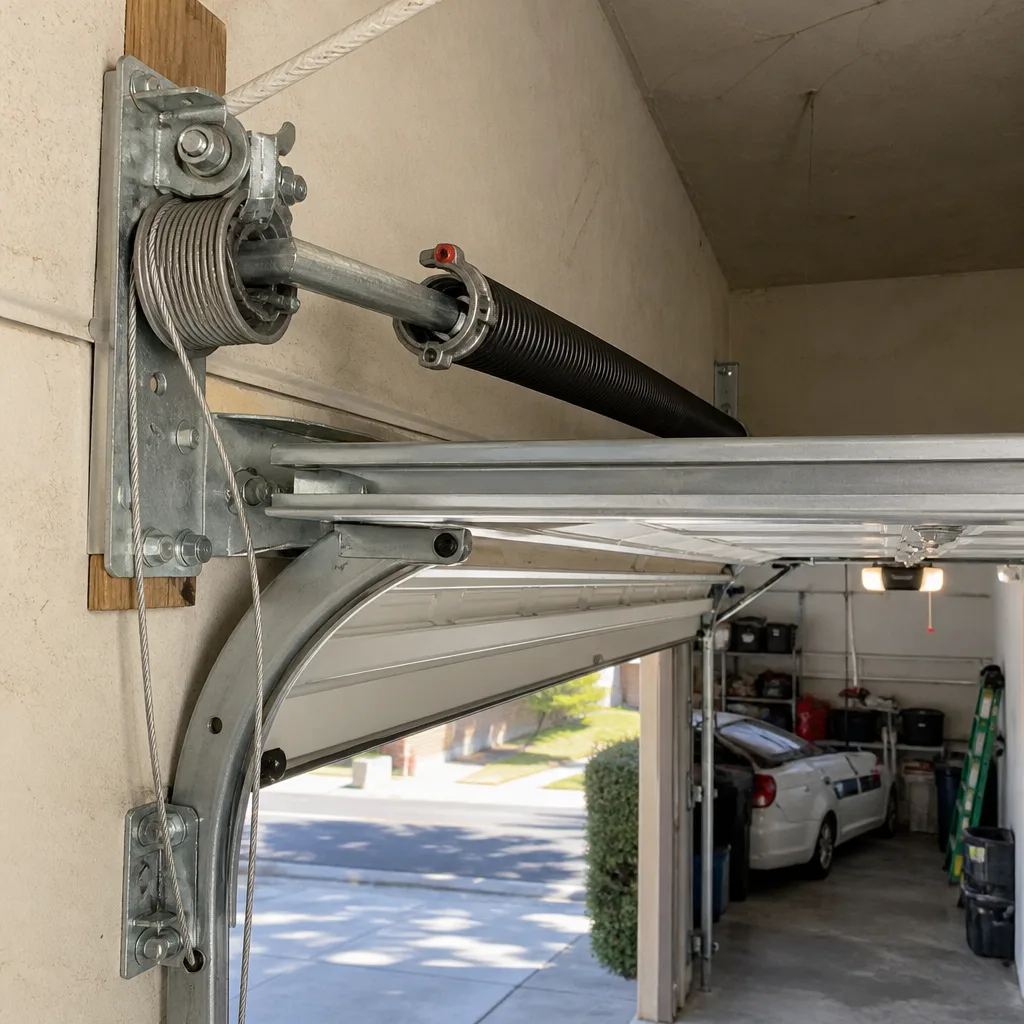
Garage door spring repair in San Diego accounts for roughly half of all service calls we handle. Torsion springs do the heavy lifting every time the door opens. They’re wound under extreme tension, and in San Diego’s coastal environment they’re also fighting corrosion.
A standard torsion spring is rated for 10,000 cycles. That’s roughly seven to ten years of normal use for most households. But that lifespan assumes the spring stays clean and dry. In coastal San Diego zip codes, salt air and marine-layer moisture cut that lifespan by twenty to thirty percent. We regularly see spring failures in Rancho Santa Fe and La Jolla at the six or seven year mark, even when the door itself looks fine.
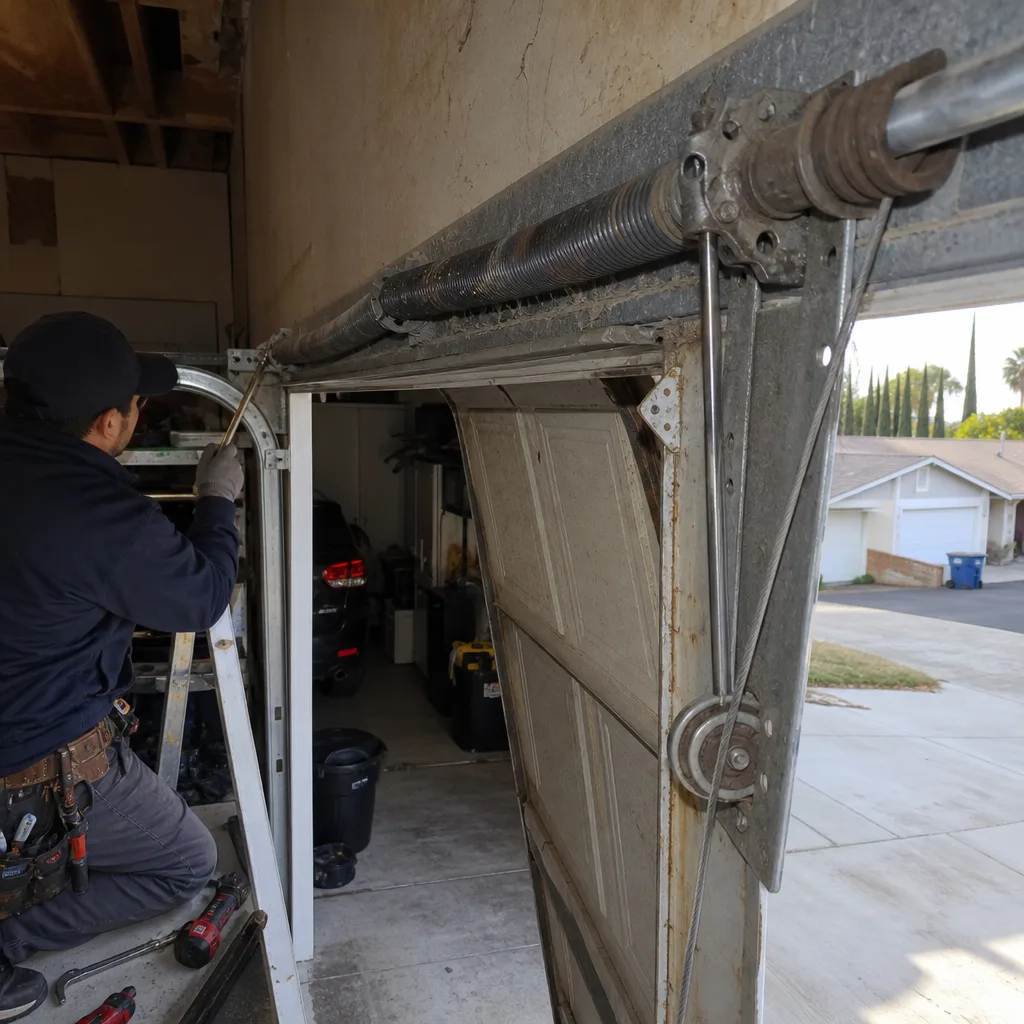
Here’s how the failure actually happens. The spring sits above the door, exposed to whatever humidity the garage holds. Over years, surface rust forms. Rust isn’t a cosmetic problem on a spring. It creates stress risers, tiny points where the metal is microscopically thinner. Each cycle loads and unloads the spring, and eventually the metal fatigues at one of those points. When it snaps, it sounds like a gunshot. The door becomes dead weight, and if the safety cables aren’t in place, a snapped spring can send fragments across the garage.
This is the one repair we always recommend leaving to a trained professional. Torsion springs are wound with enough stored energy to cause severe injury or death if released improperly. There are no safe shortcuts here. The winding bars, the correct number of quarter-turns, and the spring’s torque rating all have to be right, and a mistake doesn’t just damage the door. It can seriously injure the person standing under it.
What you can do as a homeowner is watch for warning signs. A door that feels heavier than it should, opens unevenly, or sags on one side may have a spring that’s losing tension. If you see visible rust along the spring coils or gaps in the coil spacing, that spring is on borrowed time. In San Diego’s coastal neighborhoods, we recommend a spring inspection every twelve months, even if everything seems fine. Catching corrosion before failure saves you the cost of an emergency call and the inconvenience of a door that won’t open.
Spring replacement itself is straightforward for a qualified technician. The spring gets matched by weight, torque, and cycle rating, not just by brand. We work on springs from LiftMaster, Chamberlain, Genie, Raynor, and every other major manufacturer, and we always match the replacement to the door’s actual weight and usage pattern, not just the label on the old spring.
Cable and Roller Failures Along the Coast
If springs are the muscle of your garage door, cables are the tendons. They connect the spring system to the door itself, and in San Diego they fail in predictable ways that homeowners in other climates rarely experience.
Garage door cables are made of braided steel strands. In most of the country they last as long as the door. In San Diego’s coastal zones, salt air works its way between those strands and corrodes them from the inside out. A cable that looks perfectly fine on the outside can be dangerously weakened internally. When it snaps, the door drops suddenly on one side, and that sudden drop can bend the track, damage panels, and in the worst case pull the door off its rollers entirely.
We see this pattern most often in garages within ten miles of the ocean, including the Rancho Santa Fe area, where coastal influence still reaches on foggy mornings. The fix is preventive: inspect cables for fraying with a flashlight every six months, and if you see any broken strands, stop using the door and call a professional. A frayed cable is a failed cable. It just hasn’t snapped yet.
Rollers tell a similar story. San Diego garages that face south or west take direct afternoon sun, and that heat accelerates wear on nylon roller bearings. A worn roller creates drag, the door starts to shimmy, and that vibration works back through the system until something else fails. We replace more rollers for heat and UV-related wear in San Diego than we do for cold-weather damage anywhere else in our service history.
Both repairs are relatively inexpensive when caught early. A full cable and roller replacement typically runs between $150 and $250 in San Diego before parts pricing, and it extends the life of the entire door system by years. The key is the timing: coastal homeowners should think of cable and roller inspection as a yearly ritual, not a reactive repair.
Opener Repair: A Separate Diagnosis
Here’s a distinction most homeowners never hear, and it matters more than you’d think. When your garage door won’t open, the problem is either mechanical (the door itself, springs, cables, tracks) or electrical (the opener, sensors, logic board, remote). These are two different systems with two different failure modes, and treating them as one problem leads to exactly the kind of misdiagnosis that costs homeowners hundreds of dollars in unnecessary parts.
Opener repair is its own diagnosis. A door that’s heavy because of a failing spring will eventually burn out the opener’s motor, because the opener is working against resistance it was never designed to handle. If a technician replaces the opener without checking the spring, you’ve spent $300 to $400 on a new motor that will fail again within a year for the same reason. This is the most common avoidable expense we see in San Diego garages.
That’s why we separate opener diagnosis from door-panel diagnosis on every service call. When we arrive, we check the door’s balance first. We disconnect the opener and open the door by hand. If it doesn’t move smoothly, the mechanical system needs attention before we touch the opener. If it moves freely, then we look at the operator: the motor, the drive mechanism, the sensors, the circuit board, and the remote signal path.
Opener failures in San Diego follow some interesting patterns. Inland heat shortens the life of capacitor-based motor start circuits, which is why openers in Poway and Santee tend to fail more often in late summer. Marine-layer moisture contributes to logic board corrosion in coastal garages, where the opener sits in a humid environment for months at a time. And UV exposure can degrade the plastic safety sensor housings, causing intermittent failures that look like electrical problems but are actually physical damage.
We work on openers from LiftMaster, Chamberlain, Genie, and Raynor, among others. Each brand has its own failure modes and its own repair economics. A Chamberlain belt-drive opener typically has replaceable gears and a modular logic board. A LiftMaster has a similar architecture but different part tolerances. A Genie screw-drive opener has a completely different mechanical design, and a technician who’s never worked on one will waste time diagnosing what a specialist recognizes in minutes.
That brand familiarity is the real argument for using a garage door specialist rather than a general handyman. When opener repair is treated as its own specialty, the diagnosis is faster, the parts are more likely to be on the truck, and the repair is less likely to require a second visit.
UV Damage, Panels, and Finish Failure
San Diego’s sun is relentless, and your garage door takes more UV exposure than almost any other surface on your house. The front-facing door absorbs direct radiation for six to eight hours a day, three hundred days a year. If you live in Rancho Santa Fe, where many homes have south or west-facing garages, that’s a decade of sun damage compressed into five years.
The damage starts with the finish. Powder-coated steel panels hold up well for the first few years, but UV breaks down the resin bond eventually. You’ll see fading first, then chalking, then tiny cracks that let moisture reach the steel underneath. Once that happens in a coastal environment, rust isn’t far behind. We’ve seen doors in La Jolla and Del Mar with rust spots forming inside the panel seams at the five-year mark, a failure pattern you simply don’t see in less sun-intensive climates.
Weather stripping suffers even faster. The rubber bottom seal on a San Diego garage door typically lasts eighteen to twenty-four months before UV exposure makes it brittle. A cracked bottom seal lets in dust, debris, and in coastal areas, salt-laden air. The side and top seals fail on a similar timeline, and once they go, the garage loses its thermal envelope and its protection against the marine layer’s nightly moisture.
Material choice matters here more than anywhere else in the country. Steel panels with a high-quality factory finish hold up reasonably well, but they need periodic refinishing. Aluminum panels resist rust but dent more easily. Vinyl and composite doors handle UV better than metal in many cases, but they have their own heat-related expansion issues in inland areas. Fiberglass doors can look great but tend to fade unevenly in direct sun.
If you’re replacing a door in San Diego and you want maximum UV resistance, look for a factory-finished steel door with a polyester or fluoropolymer topcoat, or a wood-composite door with a UV-stable exterior. We install doors from Clopay, Amarr, Wayne Dalton, Raynor, and others, and for coastal and high-sun exposures we usually recommend specific finishes that hold up to San Diego conditions better than the basic options.
For existing doors, the maintenance equation is simple: wash the door surface twice a year to remove salt residue and dust, inspect the seals every spring and fall, and touch up any chips or scratches in the finish before they become rust sites. Small prevention now saves a full panel replacement later.
A San Diego Maintenance Calendar That Actually Fits
Generic garage door maintenance guides tell you to lubricate in spring and check the weather seal before winter. That’s a four-season calendar written for places with snow. San Diego’s maintenance calendar looks different, and it’s built around our specific climate patterns.
Late Spring (May-June): Marine Layer Prep. This is when the nightly fog pattern settles in along the coast. Clean your door surface and apply a corrosion-inhibiting lubricant to all metal moving parts: hinges, rollers, springs, and bearing plates. Check the bottom seal for cracks that would let moist air into the garage. If you live within ten miles of the coast, including parts of Rancho Santa Fe, inspect cables for any sign of fraying before the humidity season starts.
Late Summer (August-September): Peak Heat and UV Check. The sun has been hammering your door for three months. Inspect all weather stripping for brittleness. Check the door balance by disconnecting the opener and lifting manually. Listen for grinding in the opener, which often indicates heat-stressed gears. Inland areas like Poway and El Cajon should check opener motor operation carefully during this window, as heat-related component failures peak in late summer.
Late Fall (October-November): Santa Ana Season Reset. Dry Santa Ana winds bring dust and low humidity. Dust works its way into roller tracks and opener mechanisms. Vacuum the tracks, wipe down the sensors, and reapply light lubrication where the dry air has evaporated the last application. Fall is also a good time to test the auto-reverse safety feature, which should be checked monthly but often gets neglected.
Winter (December-February): Rain Season Inspection. San Diego’s rainy season is short but meaningful. Check the bottom seal while the ground is wet; any gaps will be visible as water intrusion lines inside the garage. Inspect the door surface for new rust spots, which form quickly when rain water sits on exposed steel. And check that the drainage around the garage door is still working, because standing water accelerates corrosion on the bottom panel and track hardware.
This four-point calendar takes about an hour per year and catches most failures before they become emergencies. For The Complete Guide to Garage Door in San Diego covers additional regional considerations. For coastal homeowners, the spring and winter checks are the most critical, and if you can only do two inspections a year, those are the ones.
How to Vet a Garage Door Company in San Diego
The San Diego garage door market has a problem. Because the climate is mild and the work seems straightforward, general handymen and unlicensed operators flood the space. A homeowner looking for garage door repair in San Diego has to sort through dozens of listings, many of which are general contractors who also do doors, or unlicensed individuals working out of a truck. See our more guides & resources for additional homeowner tips. Here’s how to cut through it.
First, check for single-trade focus. Garage doors are all we do at Admiral Garage Door Repair, and that’s not a slogan. A company that also does plumbing, electrical, and landscaping is dividing its training, its tooling, and its parts inventory across unrelated trades. When a generalist arrives at a garage door problem, they diagnose from a shallow knowledge base, and the misdiagnosis rate is meaningfully higher. Opener problems get blamed on springs. Spring failures get blamed on openers. Parts get replaced until something works, and you pay for every wrong guess.
Second, ask about brand experience. A technician who’s factory-familiar with LiftMaster, Chamberlain, Genie, Raynor, and the other major brands knows the specific part tolerances and failure modes of the equipment in your garage. That’s the difference between a twenty-minute diagnosis and a two-hour exploratory session. When you call a company, ask directly: “What brands do you work on regularly?” If the answer is vague, call someone else.
Third, insist on an upfront price. In San Diego, reputable garage door companies quote the repair price before work begins, in writing, with no hidden fees. The price should be agreed before any parts are installed or labor is performed. If a company won’t give you a firm number, that’s a signal to end the conversation. Our estimates are free, and the quoted price is what you pay.
Fourth, look for full-system capability. A company that handles new installs, mid-life repairs, and opener-specific service has seen everything your garage door can do wrong. That depth shows up in diagnostics. Companies that only do simple repairs often don’t have the experience to handle complex installs or unusual system configurations, and their advice reflects that limitation.
Finally, trust your instincts on communication. A specialist can explain what’s wrong in plain language and show you the problem before recommending a fix. If a technician can’t or won’t explain what they’re doing, that’s a red flag regardless of price.
Common Mistakes to Avoid
- Ignoring rust on springs and cables. In San Diego’s coastal air, visible rust on a torsion spring means the spring has already lost structural integrity. Waiting for it to fail guarantees an emergency call and often a damaged door from the sudden drop.
- Lubricating with the wrong product. WD-40 is not a garage door lubricant. It’s a solvent that strips the existing lubrication and leaves moving parts drier than before. Use a silicone-based or lithium-based lubricant designed for garage door systems.
- Replacing the opener before checking the door balance. If the door is heavy from a failing spring, a new opener will burn out the same way the old one did. Always test door balance by disconnecting the opener before authorizing opener replacement.
- Mixing old and new springs. Both torsion springs wear at the same rate. Replacing only the broken one leaves a weakened spring on the other side, which will fail soon and throw the door out of balance. Always replace springs in pairs.
- Skipping the monthly auto-reverse test. The auto-reverse safety feature, mandated by federal law since 1993, should be tested monthly by placing a 2×4 under the door and confirming it reverses on contact. In San Diego, where UV degrades sensor housings, this test matters even more.
- Believing a silent door means a healthy door. Garage doors don’t always announce their failures. Corrosion works silently inside cables and springs. Regular inspection, not listening for noise, is the only reliable early warning system.
- Hiring on price alone. San Diego’s mild climate means anyone with a truck can claim to fix garage doors. The cheapest quote usually means a generalist with no brand training and no specialized parts inventory, and the repair often costs more in follow-up work than the original problem.
When to Call a Professional
Some garage door problems are safe to diagnose yourself. Others are not. If you hear a loud snap from the garage and the door won’t open, that’s a broken torsion spring, and the stored energy in that spring system can cause serious injury if mishandled. Do not attempt to open the door, and do not stand under it. Call a professional immediately.
Frayed cables are equally dangerous. A snapped cable drops the door with enormous force, and a door that falls on a person, a car, or a pet causes damage you don’t want to imagine. If you see broken strands on any cable, stop using the door and call for service.
Opener problems that involve the circuit board, electrical wiring, or any component you’d have to open the motor housing to reach are professional territory. Same goes for any repair that requires the door to be removed from its tracks or the springs to be unwound. These are not DIY projects, and the San Diego generalist with a YouTube tutorial is not a safer option than a trained specialist.
Admiral Garage Door Repair offers free estimates throughout San Diego. Call (833) 467-4069 and we’ll send a specialist who knows your brand, diagnoses the real problem, and quotes the price before any work begins.
Frequently Asked Questions
Most garage door repairs in San Diego run between $125 and $400, with spring replacement typically costing $180 to $350, cable replacement $150 to $250, and sensor realignment $100 to $175. Opener repair usually falls between $150 and $350. The key variable is parts: brand-specific components from LiftMaster, Chamberlain, Genie, or Raynor carry different prices, and we quote the full cost upfront before any work starts. Call (833) 467-4069 for an exact estimate on your door; estimates are free.
Coastal San Diego homeowners should schedule a professional spring and cable inspection every twelve months, and inland homeowners can stretch that to eighteen months in most cases. The marine layer, salt air, and UV exposure accelerate component wear in ways generic maintenance schedules don’t account for. A yearly inspection catches corrosion before it becomes a failure, which is substantially cheaper than emergency repair.
In most cases, yes. We carry a comprehensive parts inventory for the major brands we service, including LiftMaster, Chamberlain, Genie, and Raynor, which means our technicians can often complete a repair on the first visit without ordering parts. Call (833) 467-4069 and we’ll confirm same-day availability for your specific problem.
No. We quote the repair price before any work begins, and that price is what you pay. If we find an additional problem during diagnosis, we’ll show you the issue, explain the options, and get your approval before adding anything to the scope. There are no surprise charges after the fact.
The most common reason is a door balance problem that’s been straining the opener for months, followed by opener-specific failures in the motor, gears, or logic board. That’s why we separate opener diagnosis from door-panel diagnosis on every call. A heavy door from a failing spring will burn out opener motors repeatedly until the mechanical issue gets fixed, and no new opener will solve that underlying problem.
We work on the major brands found in San Diego garages, including LiftMaster, Chamberlain, Genie, Clopay, Amarr, Wayne Dalton, Craftsman, Raynor, and others. Our technicians are factory-familiar with these eight leading brands, meaning we know the specific quirks and part tolerances of the equipment already in your garage. We service what you have, not just what we prefer to sell.
Corrosion-related spring and cable failure is the most common pattern we see within ten miles of the coast, including the Rancho Santa Fe area. The combination of nightly marine-layer moisture, salt air, and rapid morning drying creates ideal conditions for metal fatigue. Homeowners in these zones should inspect springs and cables every six months and expect a shorter component lifespan than the national average.
The Bottom Line
San Diego’s garage doors fail differently than garage doors anywhere else in the country. The marine layer, coastal salt air, intense UV, and wide daily temperature swings create a specific combination of corrosion, sun damage, and mechanical wear that generic guides don’t address. What this means for homeowners is simple: maintain on a San Diego calendar, not a generic one, and choose a repair company that understands the local failure patterns. Springs and cables need yearly inspection along the coast. Openers need balance checks before replacement. And every estimate should be firm, free, and delivered before work begins. Garage Door Repair in Rancho Santa Fe and surrounding San Diego communities is our specialty, from spring to sensor. For Garage Door Opener Repair in Rancho Santa Fe or anywhere in the county, call (833) 467-4069. If you’re considering a new door, we also handle Garage Door Installation in Rancho Santa Fe with the same brand-specific expertise.
Written by the team at Admiral Garage Door Repair, serving San Diego since 2015.
See the difference
 Before
 After
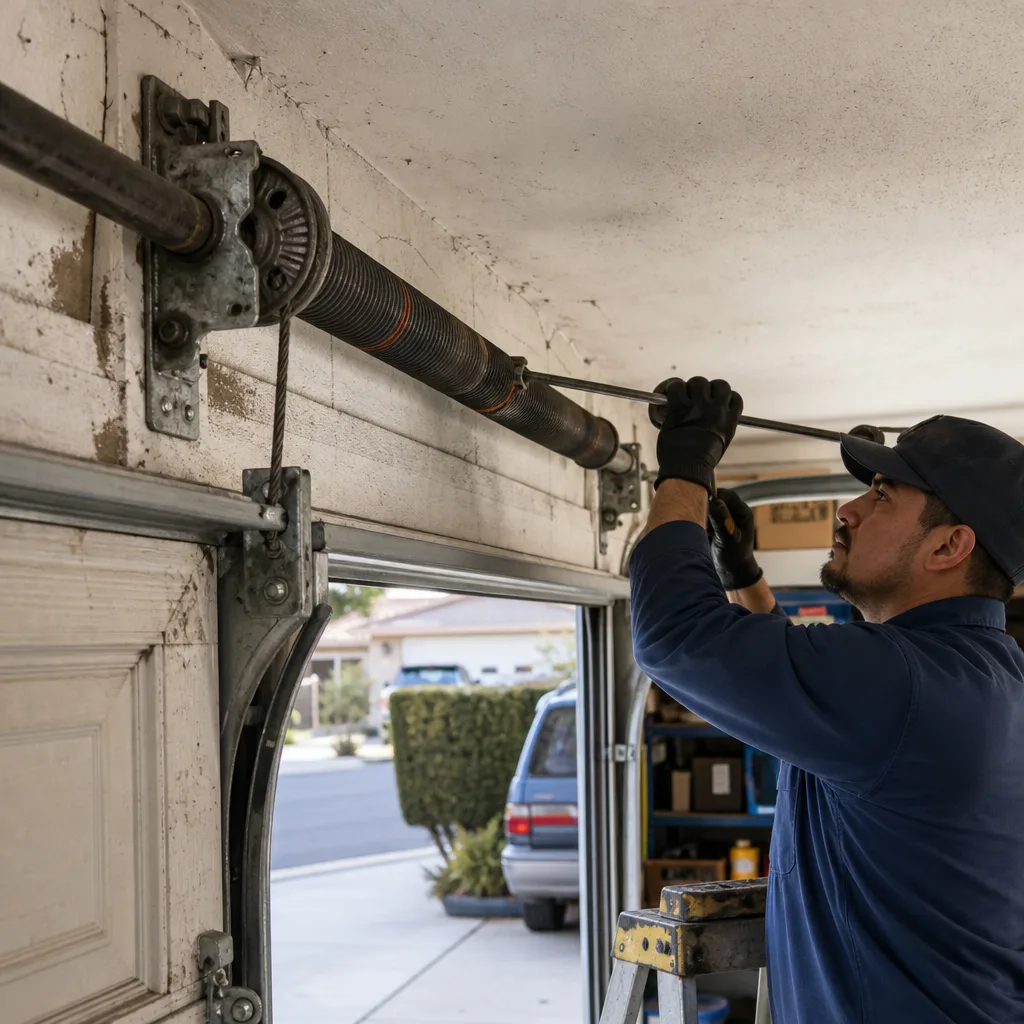 Before
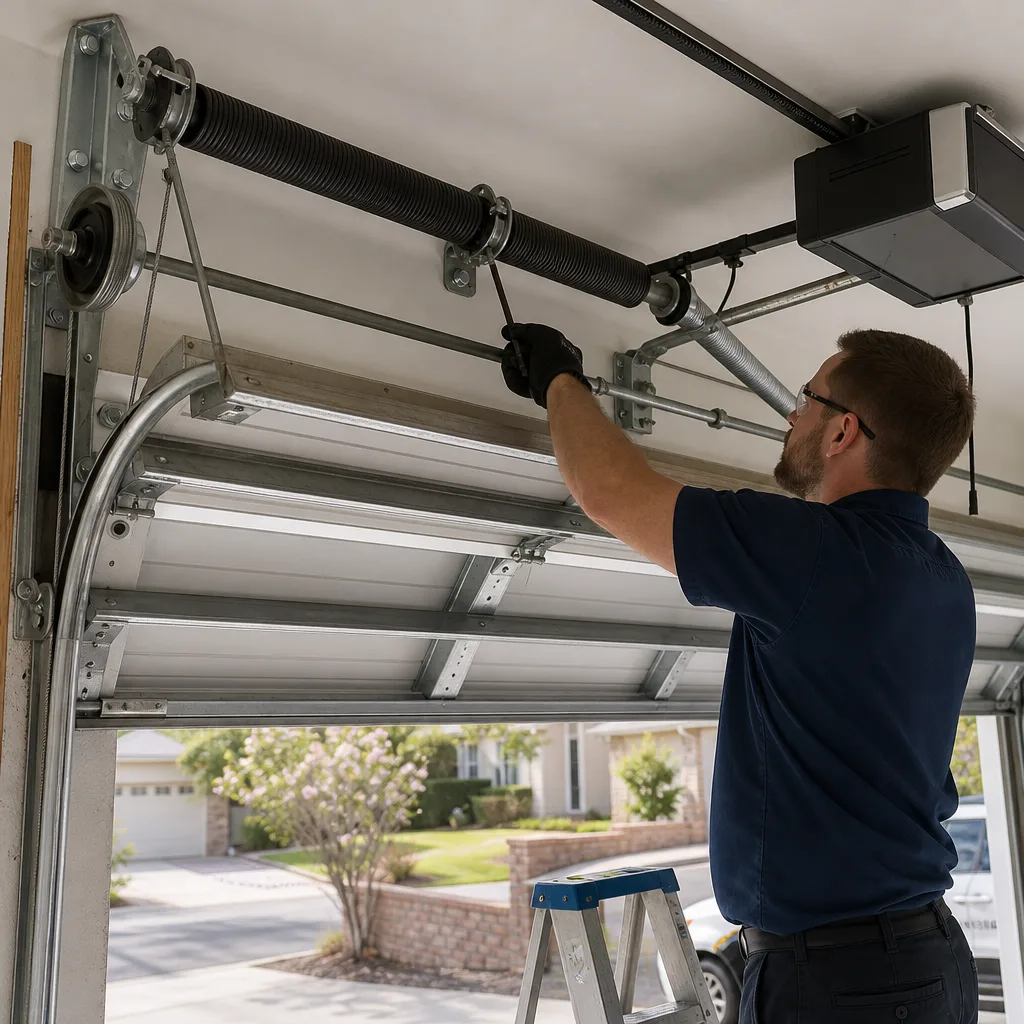 After
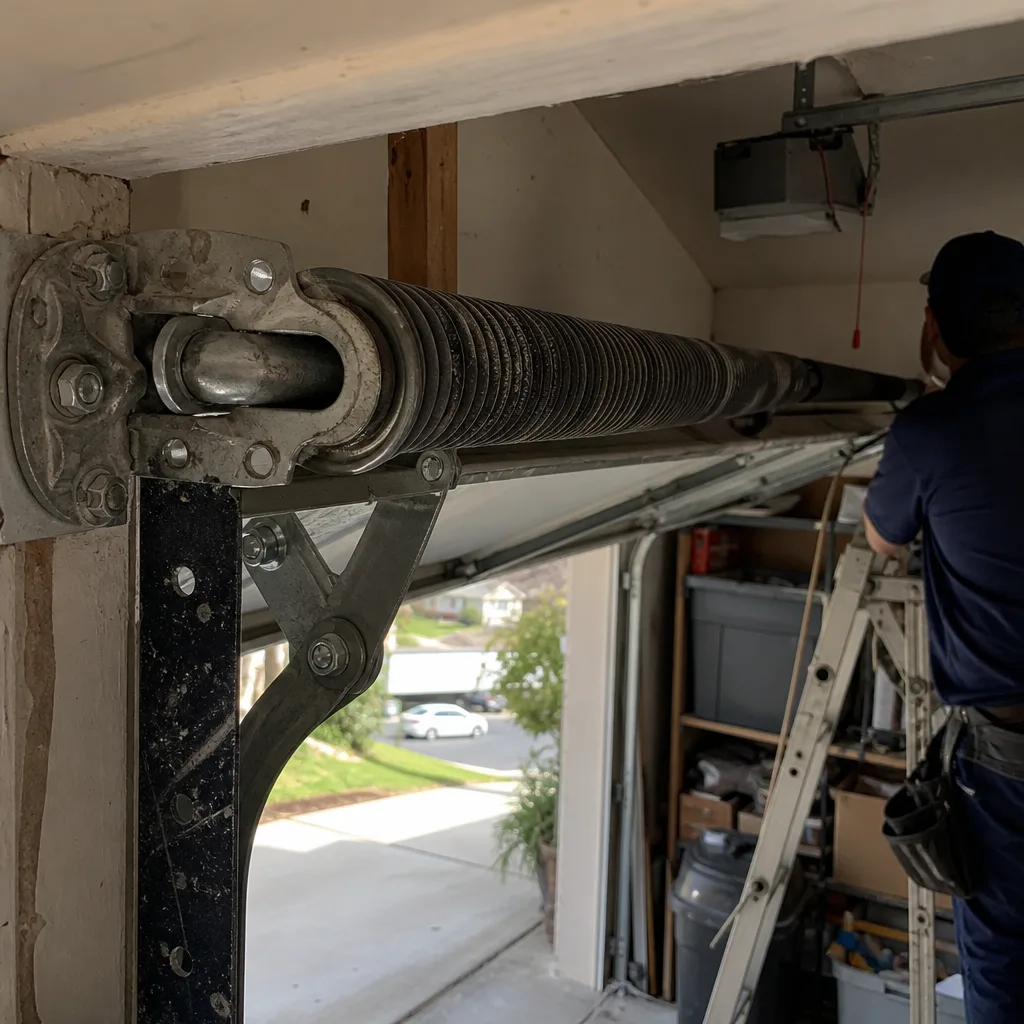 Before
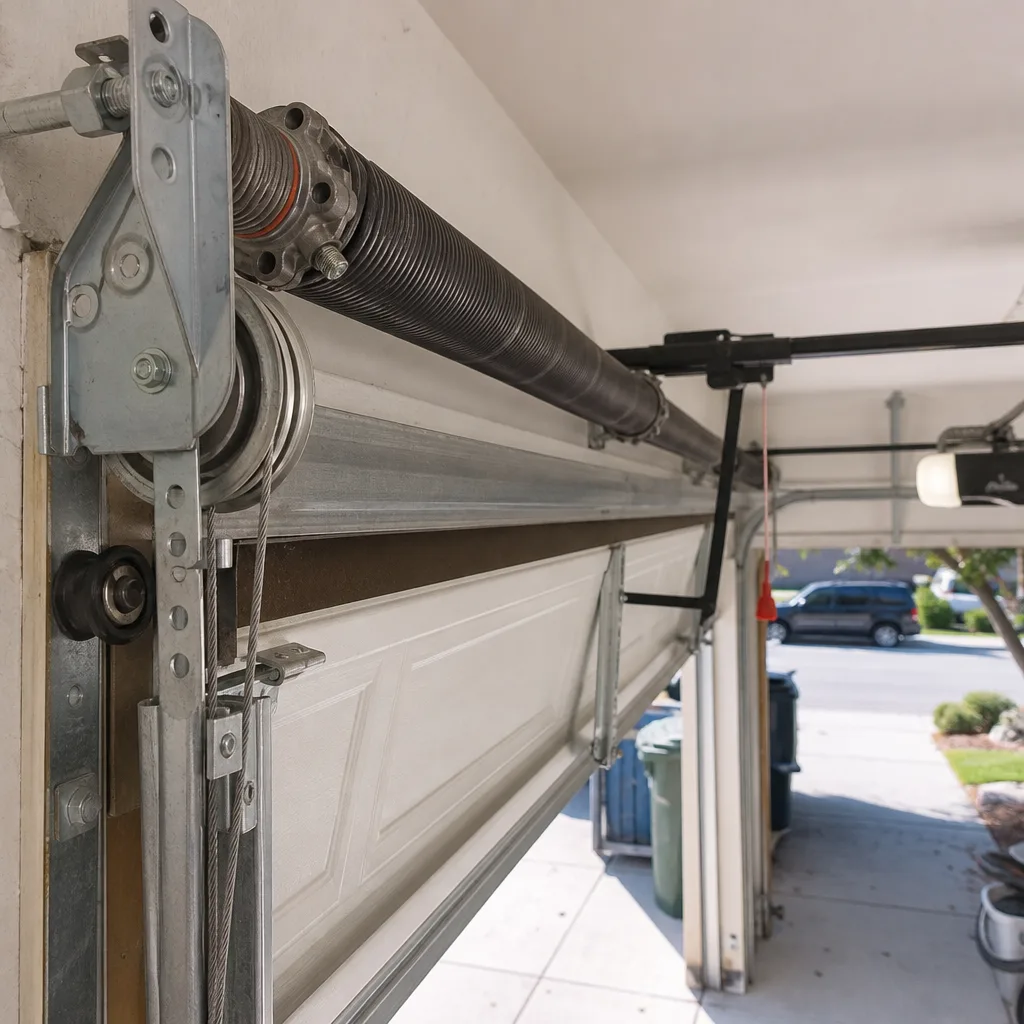 After