

Last updated October 31, 2026
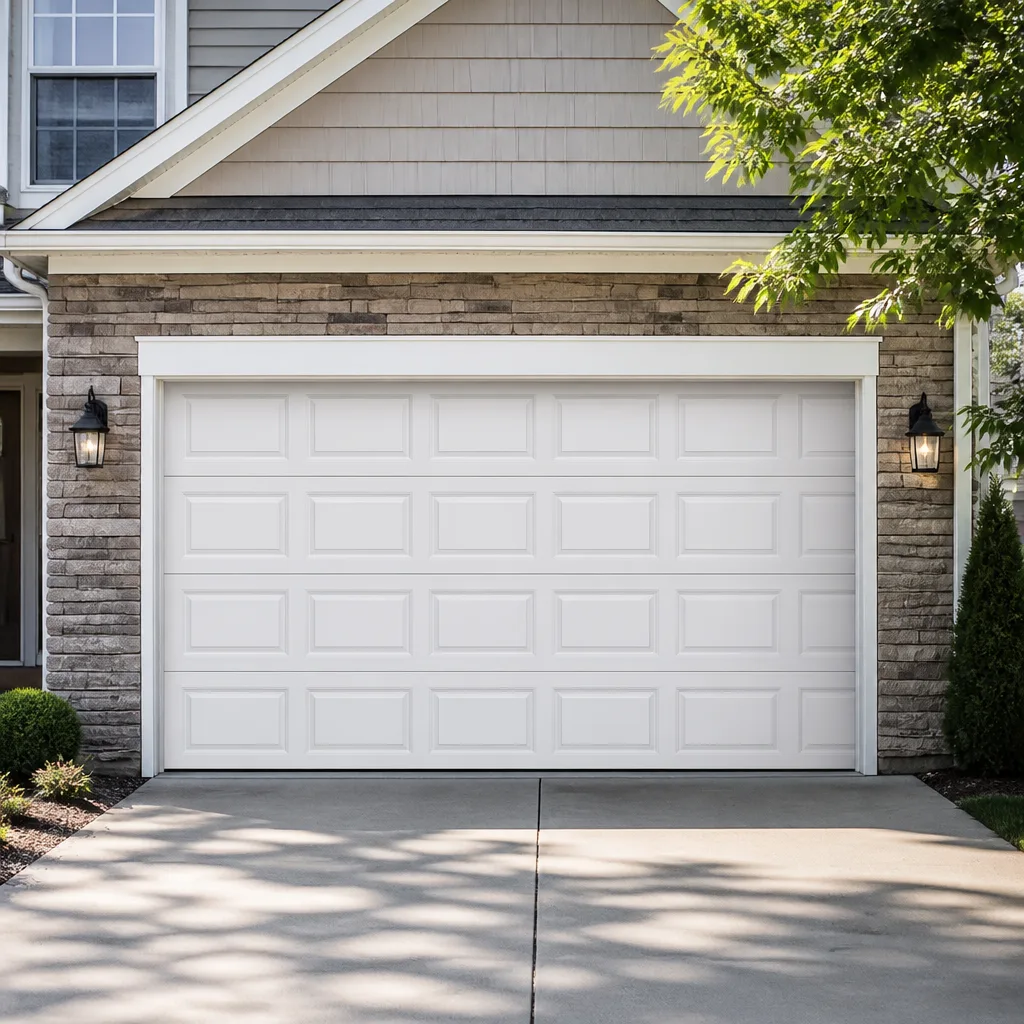 Raised-panel steel
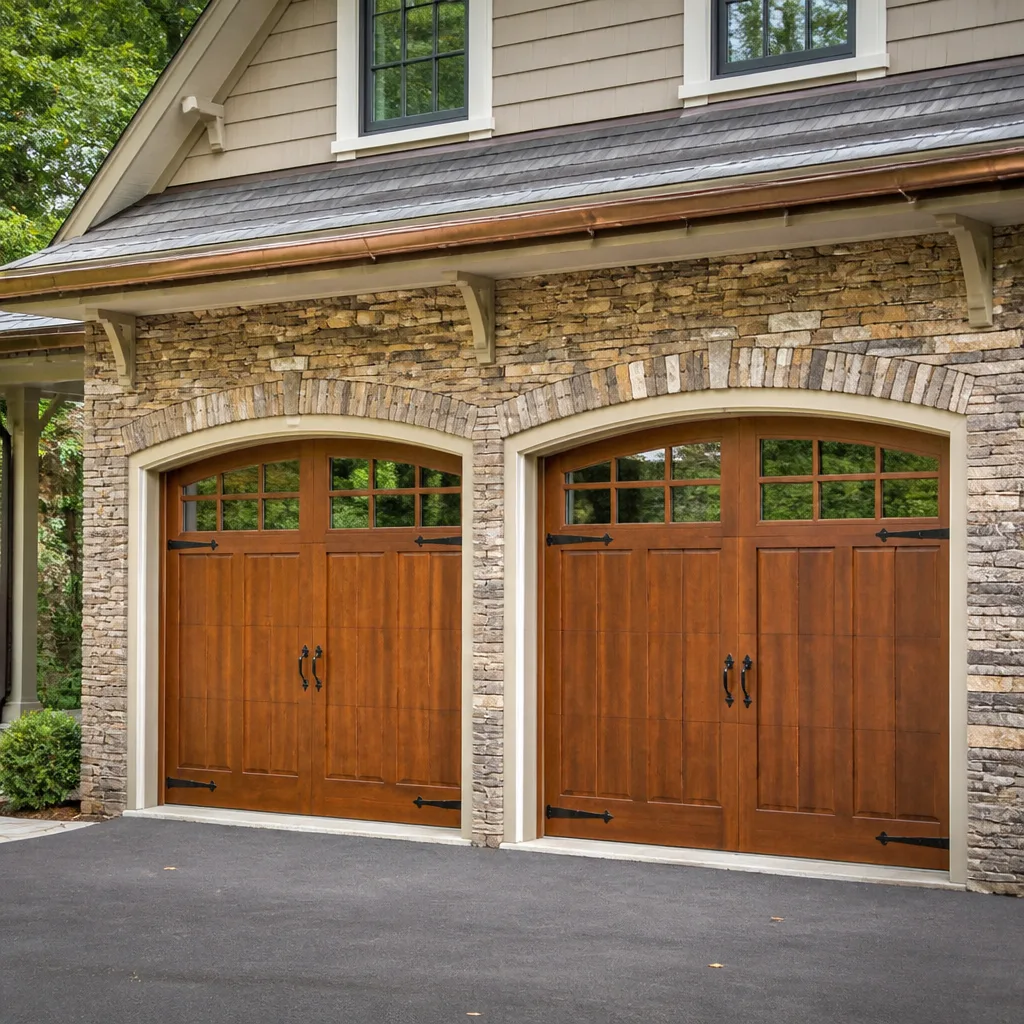 Carriage house
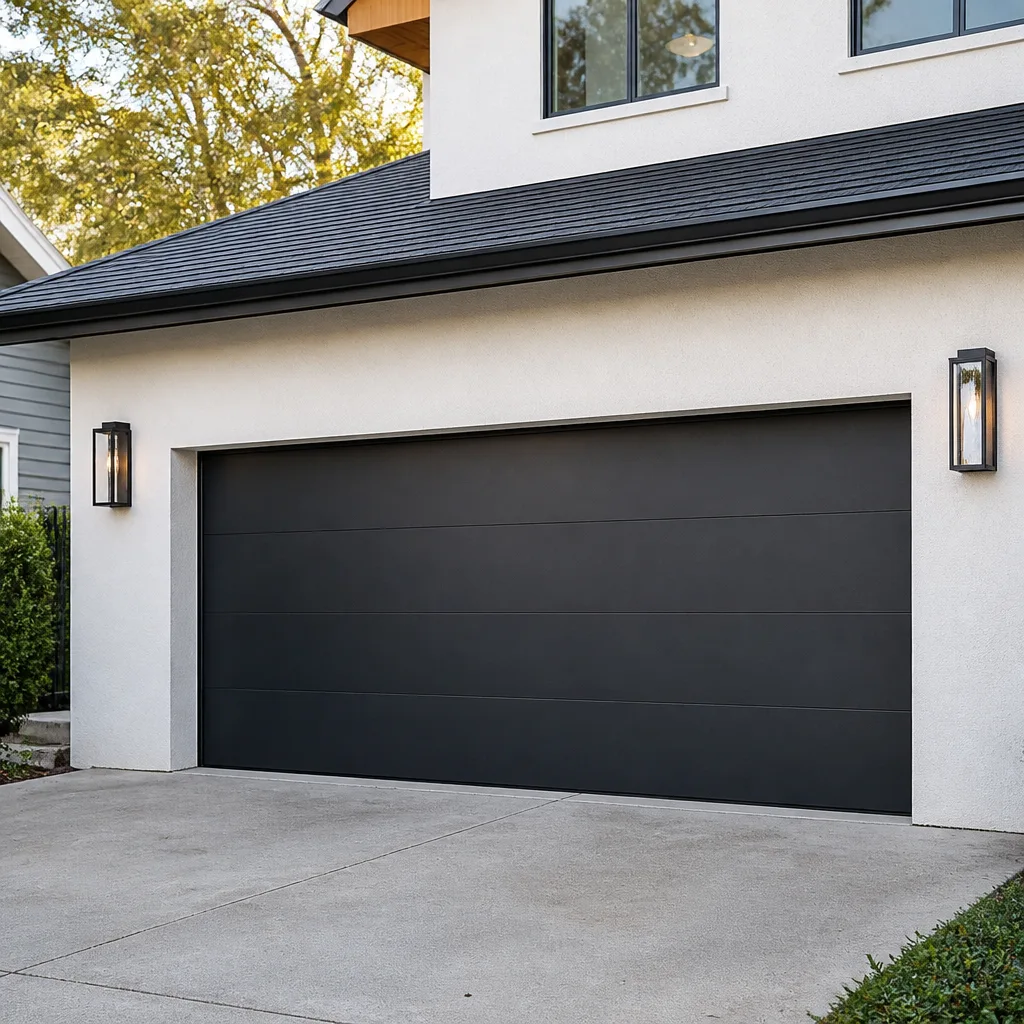 Modern flush
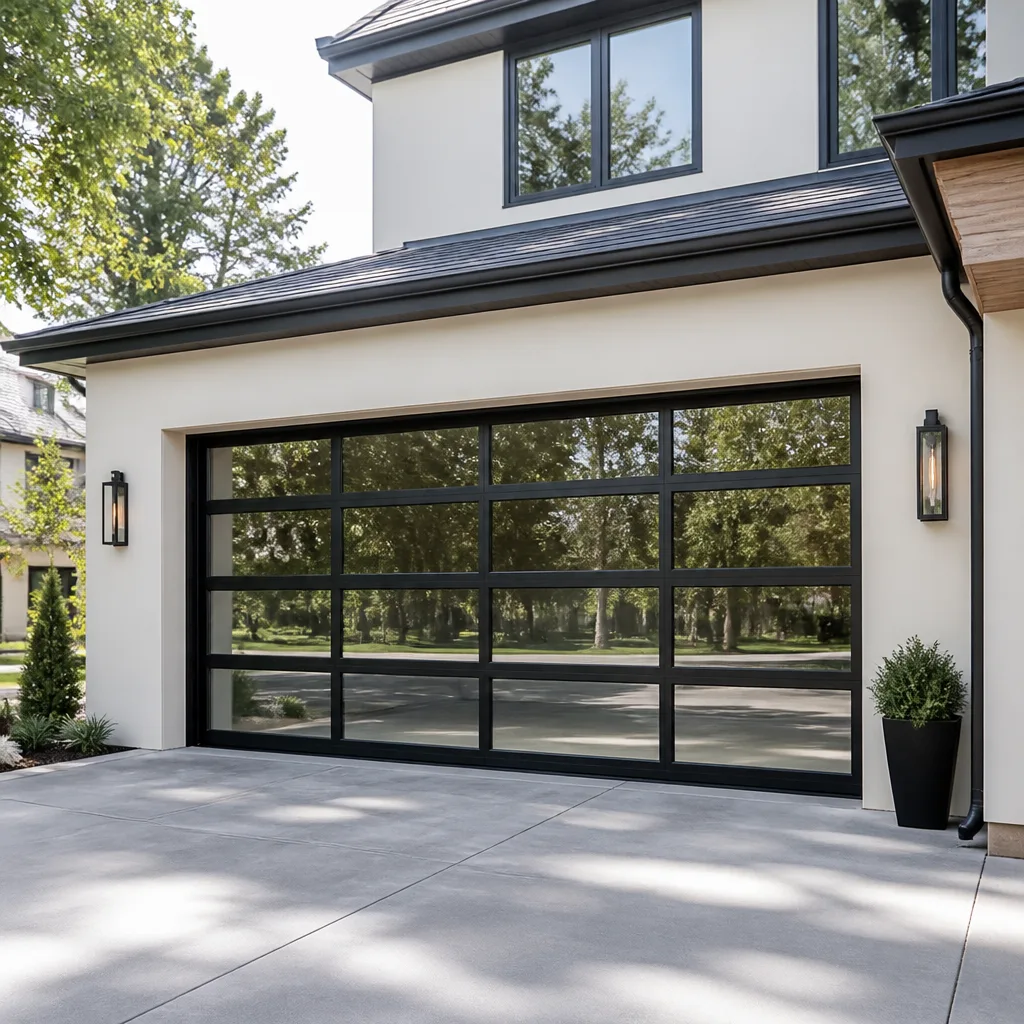 Full-view glass
 LiftMaster openers
 Chamberlain openers
Full 25-point door and opener safety check with every visit - springs, cables, rollers, tracks, and your LiftMaster or Chamberlain opener included
You get a price before we start. It does not change when the truck arrives.
Get your free estimateHow to Hire a Garage Door Contractor in San Diego: A Step-by-Step Guide
A Google search for “garage door repair San Diego” surfaces dozens of companies that have no local office, no licensed employees, and a five-star rating built on reviews from other markets. The garage door service industry in San Diego has a specific predatory pattern: bait-and-switch spring quotes, unlicensed technicians dispatched by lead-generation call centers with local-looking phone numbers. This guide gives you the three verification steps that expose these operations before they arrive at your driveway, plus the questions that separate a trained specialist from a generalist handyman. By the time you finish reading, you’ll know exactly how to vet any San Diego garage door contractor and what a legitimate estimate must include under California law.
Styles & brands we work with
Quick Answer
To hire a garage door contractor in San Diego, verify their CSLB license number at cslb.ca.gov (it takes 60 seconds and the classification matters), confirm the company has a real local footprint rather than a lead-generation call center, and get a written estimate that itemizes parts, labor, and any required permits before work begins. Look for a specialist who works on your existing brand – whether that’s LiftMaster, Clopay, Amarr, or Genie – rather than a generalist who plans to learn on the job. Our Choosing the Right Garage Door Brand: A Buyer’s Guide for San Diego explains why brand familiarity matters. Your final check: call the number on the estimate and confirm the same company answers.
Table of Contents
- Step 1: Verify the CSLB License Number in 60 Seconds
- Step 2: Spot the Call-Center Imposter Pattern
- Step 3: Separate Specialists from Generalists
- The Written Estimate: What California Law Requires
- Review Profile Red Flags: Recency Clusters, Geography, Gating
- San Diego Climate and Your Garage Door
- Common Mistakes to Avoid
- When to Call a Professional
- Frequently Asked Questions
- The Bottom Line
Step 1: Verify the CSLB License Number in 60 Seconds
Before you let anyone touch your garage door in San Diego, check their contractor license. The California Contractors State License Board (CSLB) maintains a public database at cslb.ca.gov. You enter the license number, and in under a minute you can see the business name, the license holder’s legal name, the classification, the issue date, and whether the license is active, expired, or suspended. This is the single most effective filter you have.
Here’s the part most San Diego homeowners don’t know: garage door work doesn’t fall under a generic “handyman” license in California. The relevant classifications are C-61 / D-28 (Door and Gate) for garage door installation and repair, or a general B license that covers the work as a contractor. If the license holds a classification that has nothing to do with doors – say, C-27 landscaping or C-36 plumbing – that license does not cover the mechanical spring, cable, track, and opener work you’re calling about. A company waving a contractor number that isn’t classified for door work is waving the wrong credential.
There’s a second layer to this check that catches a common San Diego trick. The license number on the technician’s truck or the estimate should match the name of the company you actually called. National lead-gen operations routinely display a third-party license or an inactive number that belongs to a different entity entirely. We’ve seen homeowners in San Diego call a company, receive a technician in a rented truck with a magnetic logo, and only discover afterward that the license on the estimate belonged to an unrelated shell company in a different county. Your 60-second lookup solves this. Write down the name on the license. If it doesn’t match the name on the invoice, end the conversation.
While you’re on the CSLB site, check the license history. The database shows past suspensions, citations, and judgments. A license that’s been active for a decade with no disciplinary entries tells you something. A license issued 14 months ago to a company that claims 20 years of combined experience tells you something else. Neither is automatically disqualifying, but the pattern matters. San Diego’s competitive market produces both long-established independents and a steady churn of rebranded operations. The license date helps you tell them apart.
In our experience, the homeowners who run this check before a job starts have already eliminated the worst operators. It takes 60 seconds. It’s free. And it works.
Action item: Ask for the license number on the phone before scheduling. Legitimate San Diego garage door contractors provide it without hesitation. Hesitation, deflection, or “we’re licensed but I don’t have the number handy” is a signal to call someone else.
Step 2: Spot the Call-Center Imposter Pattern
San Diego is a lead-generation target. The pattern works like this: a national operation buys thousands of local-looking phone numbers with 619, 760, and 858 area codes, purchases Google Ads placements for every garage door keyword in the San Diego metro, and routes calls to a script-reading call center in another state. That call center dispatches whoever is available – often an unlicensed, underinsured technician who gets the job because they answered the phone with “garage door repair.”
You can identify a call-center imposter before they ever arrive at your door. Here are the tells:
- The phone greeting is generic. Legitimate San Diego garage door companies answer with their company name. Call centers answer with “Garage door repairs, how can I help you?” – no brand, because the same phone number serves 40 different fake-local brands across California.
- They can’t answer a neighborhood question. Ask what part of San Diego they’re based in or how long it takes to reach your area. A local company answers instantly: “We’re off Miramar Road, we can be in Clairemont in 20 minutes.” A call center stumbles.
- They push an immediate dispatch without diagnosing. The script demands booking the appointment before any real question about your door. A specialist asks what brand you have, what the symptom is, whether the door moves at all. A lead-gen operator only needs your address and payment method.
- The quote is suspiciously low. “$49 service call!” or “$79 spring replacement!” advertised sight-unseen is the bait. The technician who shows up has one job: upsell you to a replacement you don’t need at a price three times market.
- No physical address on the website. Every legitimate San Diego garage door contractor has a business address, even if it’s not a storefront customers visit. A website with no address, just a service area map and a phone number, is a national operation renting local numbers.
Why does this matter for springs and cables specifically? Because those are high-tension components. A lead-gen company has no training investment in whoever shows up, no brand reputation to protect in San Diego, and no accountability when a rushed spring installation fails two months later. The technician is gone, the phone number is answered by a rotating cast of call-center employees, and no local entity exists for you to hold responsible.
One more check: look up the business name on the California Secretary of State’s business search. A real local operation has a registered entity, a registered agent, and a filing history. A lead-gen shell often doesn’t exist anywhere except as a Google Business Profile purchased through a backchannel. San Diego has a large enough population to attract these operations at scale, and the pattern repeats across every home service trade in the county.
Step 3: Separate Specialists from Generalists
The garâge door is a mechanical system with two distinct subsystems: the door itself (panels, springs, cables, tracks, hinges, rollers) and the opener (motor, drive mechanism, circuit board, sensors, remote controls). A generalist handyman may know a little about both. A specialist knows that they fail differently and need different diagnoses.
Here’s the practical test. Ask these questions and listen to how the answer is structured:
- “I have a LiftMaster opener that runs but the door doesn’t move. What’s your first suspicion?” A specialist separates the problem: could be the opener’s drive gear, could be a broken spring, could be a disconnected trolley. A generalist says “probably the motor” and starts quoting a replacement opener.
- “Do you work on all brands or do you specialize in a couple?” A specialist names the brands they’re factory-familiar with and tells you the truth about your existing equipment. A generalist says “all brands are the same.” They are not. A Wayne Dalton torque-master spring is not the same mechanism as a standard torsion spring on a Clopay door. A Raynor track profile is not interchangeable with an Amarr track. Craftsman openers from different decades have different circuit boards and different failure modes. The differences matter, and they matter more on older San Diego homes where the original equipment may have been installed 20 years ago.
- “Do you stock parts or order everything?” A specialist carries common springs, cables, rollers, and opener components on the truck. A lead-gen technician carries a sales brochure.
The spring and cable distinction is the one that separates professionals from everyone else. Torsion springs on a double garage door in San Diego – where coastal air accelerates corrosion on metal components – are under enormous tension. A broken spring on a Clopay or Amarr door isn’t a swap-it-out job. It’s a precise procedure that requires knowing the door’s weight, the spring’s wire gauge and inner diameter, and the number of turns for optimal balance. Get it wrong and you’ll be calling another company in six months, or worse, dealing with a door that crashes down because the spring lost tension.
Opener repair is its own diagnosis. We treat LiftMaster, Chamberlain, and Genie opener failures as a separate specialty from door-mechanical failures. The logic board on a newer Chamberlain is not a mechanical part. The safety sensor alignment on a Genie is not a gear problem. A generalist who throws parts at an opener until something works is expensive and dangerous. The distinction matters because San Diego garages are heavily used – many serve as secondary entrances, workshops, and gyms – and a misdiagnosed opener failure means a door that doesn’t open when you need to leave for work.
This is why Admiral Garage Door Repair focuses on garage doors exclusively. Single-trade focus means all training, tooling, and parts inventory are concentrated on this one system, from spring to sensor.
The Written Estimate: What California Law Requires
California Home Improvement Contract law (Business and Professions Code section 7159) governs what a legitimate written estimate must include for any home improvement job over $500. Garage door repair and replacement in San Diego crosses that threshold frequently – a spring replacement with labor can approach it, and a full door installation almost always exceeds it.
Here’s what a legitimate contractor provides before any work begins:
- A written contract or change order that describes the scope of work in plain language. “Replace two torsion springs on 16×7 Clopay door, includes labor, balance check, and cleanup” – not “fix door.”
- Itemized pricing separating materials from labor. If the quote says “$700 total” with no breakdown, you’re being quoted a number, not an estimate.
- The contractor’s license number, business name, and address printed on the document. Not handwritten. Not a blank template.
- A start date and completion date. For same-day San Diego garage door repairs, this may be same-day, but the document should say so.
- A payment schedule. California law caps the down payment at 10% of the total or $1,000, whichever is less. A garage door contractor who demands 50% upfront to “secure materials” for a spring replacement is out of compliance, because a spring replacement doesn’t have a materials risk that justifies a large deposit.
- Notice of your right to cancel within three business days for any home improvement contract signed at your home. This is federal and state law. Its absence is a legal violation, not just a red flag.
The estimate must be price-firm once work begins. What does that mean in practice? If the technician identifies additional work after the door is opened up – say, a damaged cable drum that wasn’t visible before – they should stop, show you the issue, and get written approval for the additional scope at an agreed price. The price quoted before work starts is the price you pay for that scope, unless you and the contractor explicitly agree in writing to a change order. This is the protection you have in San Diego, and it’s enforceable through the CSLB and small claims court if a contractor violates it.
What about verbal estimates? A verbal estimate is worth the paper it’s printed on. A legitimate San Diego garage door company documents everything. If someone quotes you over the phone and cannot produce a written estimate before starting work, you don’t have a California-compliant contractor. You have a gamble.
Review Profile Red Flags: Recency Clusters, Geography, Gating
Five-star ratings on garage door companies in San Diego are nearly meaningless because the review economy has been gamed. That’s a strong statement, and here’s how to prove it to yourself. Pull up any highly-rated garage door company’s Google Business Profile and look for these three patterns:
Recency clusters. Legitimate companies with genuine reputations accumulate reviews gradually over years: a handful per month, with natural variation. Gamed profiles show reviews in bursts. Fifteen reviews in one week, all five stars, then silence for four months, then another burst. That pattern indicates review incentives or purchased reviews. San Diego has enough competition that some operators invest in review farming as a business cost.
Reviewer geography. Click on the reviewers’ profiles. A legitimate local business accumulates reviews from local people – profiles that themselves show activity in San Diego, Chula Vista, Escondido, Oceanside, or nearby communities. Gamed profiles attract reviewers whose history shows reviews of businesses in Phoenix, Las Vegas, Dallas, and multiple other cities in the same week. A reviewer leaving five stars for a San Diego garage door company, a Phoenix plumber, and an Atlanta roofer in the same month is not an organic customer.
Review gating. This is the most deceptive tactic because the profile rating stays clean while the complaints are invisible. Gating works like this: the company’s software or calling process filters customers before asking for a review. Satisfied customers get the direct link. Unhappy customers get a different process – or no process at all – so their feedback never reaches the public profile. The result is a 4.9-star rating that doesn’t represent the customer base. You can’t always detect gating from outside, but a suspiciously clean profile with hundreds of near-perfect reviews and no neutral or negative feedback anywhere is statistically improbable for any business serving thousands of San Diego households.
One more flag: reviews that repeat the same phrases. “Prompt, professional, and courteous” appearing in 12 different reviews suggests a script. Real San Diego homeowners write specific things like “the spring broke at 7am and he was here by 9, fixed it before my meeting in Kearny Mesa.” Specifics are the mark of authenticity. Generic praise is the mark of a template.
Our advice after years in this market: read reviews for what they describe, not for the star count. A 4.6-star company with detailed, specific, recent reviews from local names is more trustworthy than a 4.9-star company with generic bursts and out-of-state reviewer histories. The star count is the easiest thing to fake. The details are not.
Pro tip: Check reviews on multiple platforms. A company with 5.0 on Google and no presence on Yelp, or a Yelp profile that’s been filtered aggressively, tells its own story. Cross-reference what you find.
San Diego Climate and Your Garage Door
San Diego’s climate creates specific wear patterns on garage door systems. The coastal marine layer brings morning moisture that accelerates corrosion on springs, cables, and hardware in neighborhoods from Point Loma to La Jolla to Carlsbad. Inland areas like El Cajon, Santee, and Ramona get dry heat that degrades rubber weather seals and causes metal expansion and contraction cycles on tracks and panels. Both environments shorten the lifespan of components compared to the manufacturer’s stated ratings, which are typically based on more moderate conditions.
What does this mean for hiring? A San Diego contractor should know that homes within a few miles of the coast need more frequent spring and cable inspections than homes in East County. They should ask about your garage’s ventilation, whether you store pool chemicals or fertilizers near the door, and whether the door faces the ocean. These are the questions that reveal whether you’re dealing with someone who works in this environment or someone who just took your call.
Corrosion is the quiet killer. We regularly see San Diego garages where the torsion spring failed not because of cycles (the number of open-and-close operations), but because surface rust from salt air created a stress point that broke the spring wire prematurely. A specialist checks for this. A generalist installs a new spring and leaves the underlying conditions that caused the failure in place. The difference shows up in the lifespan of the repair.
If you live near the coast, ask any contractor you’re considering what they do differently for coastal installations. A credible answer includes galvanized or coated springs, stainless steel cables, and hardware with corrosion-resistant finishes. A blank stare or “we just use standard parts” tells you they don’t understand San Diego’s microclimates.
Common Mistakes to Avoid
- Hiring on price alone. The $79 spring replacement in San Diego is a well-documented lead-gen tactic. The technician arrives, claims your spring is wrong, your drum is damaged, your opener is on its way out, and the final bill is $900. The $79 was never a real price.
- Not checking the CSLB license before booking. Most San Diego homeowners don’t run the license check until after something goes wrong. By then the money is spent. Run it before, not after.
- Accepting a verbal quote. A number said out loud is not a contract. In California, the written estimate is your legal protection. No writing, no protection.
- Ignoring brand fit. Calling a random company to work on a Wayne Dalton door when they’ve only ever installed Clopay is a gamble. Brands have different hardware, different spring systems, different tolerances. Ask if they work on your brand.
- Letting a generalist “try” an opener repair. Openers are electrical and mechanical systems with specific diagnostic paths. Trial-and-error replaces parts until something works – at your expense. The tech leaves, the problem returns.
- Falling for fake-local phone numbers. A 619 area code does not mean a San Diego company. Call centers buy local numbers by the thousand. Verify the physical address and the license name.
- Skipping the written change order for additional work. When a technician discovers a secondary issue mid-repair, the additional cost must be approved in writing. A smooth operator will mention it verbally and bill you for it later. Write it down or don’t authorize it.
When to Call a Professional
Some garage door issues are clear signs to stop and call someone trained. A door that won’t open at all, a spring that has snapped with a loud bang, a cable that has come off its drum, a door that sags on one side when lifting – these are not DIY situations. Torsion springs are under enough tension to cause serious injury if mishandled, and a door that falls off its track can crush whatever is underneath it. Electrical faults in openers carry their own risks. If your door makes a grinding noise during operation, that’s metal on metal somewhere in the system, and continuing to run it causes further damage. If the opener runs but the door doesn’t move, the problem could be a broken spring, and manually lifting a door with a broken spring is dangerous. Garage Door Repair in Rancho Santa Fe involves the same high-stakes mechanical work as anywhere else in the county – these are not jobs for improvisation. When in doubt, shut the door, leave it closed, and call a specialist. Garage Door Opener Repair in Rancho Santa Fe is the kind of work that rewards experience with specific brands – LiftMaster, Chamberlain, Genie – rather than generic electrical knowledge. Admiral Garage Door Repair offers free estimates in San Diego – call (833) 467-4069.
Frequently Asked Questions
Garage door repair in San Diego typically ranges from $150 to $500 for common fixes like spring replacement, cable repair, and roller replacement, with full door replacements running higher. The exact price depends on your door’s brand, size, spring type, and condition. Always get a written estimate that itemizes parts and labor before authorizing any work, and confirm the price is fixed once work begins. For additional guidance, see our more guides & resources.
No, garage door installation and repair in California requires a contractor license, and hiring an unlicensed contractor leaves you without legal protection if the work is faulty or someone is injured on your property. Unlicensed operators cannot file for payment disputes through the CSLB, and your homeowner’s insurance may not cover damage caused by unlicensed work. Check the license number at cslb.ca.gov before scheduling.
A garage door specialist focuses exclusively on garage door systems and carries the training, tooling, and parts inventory specific to that trade, while a handyman handles many trades and typically lacks deep familiarity with a specific brand’s spring, track, and opener systems. For high-tension components like torsion springs and safety-sensitive systems like opener circuits, the specialist’s focused knowledge directly affects safety and repair longevity.
A San Diego garage door company should be familiar with the major residential brands: LiftMaster, Chamberlain, Genie, Clopay, Amarr, Wayne Dalton, Craftsman, and Raynor. Each brand has specific hardware tolerances, spring configurations, and opener electronics that affect repair precision. Ask the company which brands they work on before you commit.
Most garage door repairs in San Diego can be completed the same day a technician arrives, because specialists carry common parts like springs, cables, rollers, and opener components on the truck. Installation and replacement jobs take longer because new doors and openers are measured, ordered, and scheduled. For repair situations, same-day completion is the standard.
Most straightforward garage door replacements in San Diego do not require a permit if the door fits within the existing opening and no structural modifications are made, but installations that change the opening size, add a new opening, or modify load-bearing framing require permits from the city or county. Your contractor should know the local requirements and handle any needed permits as part of the job.
A legitimate San Diego garage door contractor quotes a fixed price for the agreed scope and only changes it if you approve a written change order for additional work discovered during the repair. If the technician identifies something new, they should show you the issue, explain the cost, and get your written approval before proceeding. You always have the right to decline the additional work.
The Bottom Line
Hiring a garage door contractor in San Diego comes down to three verifications before you let anyone in your driveway: check the CSLB license and confirm the classification actually covers garage door work, verify the company has a real local footprint rather than a call center renting a 619 number, and insist on a written estimate that meets California’s legal requirements. Ask the questions that expose generalists: which brands they work on, whether they carry parts, whether they can explain the spring system on your specific door. San Diego’s climate accelerates wear, and the technician who understands that distinction saves you from repeat repairs. Review profiles are useful context but never a substitute for verification. If you want a specialist who works on your brand – from LiftMaster to Clopay to Amarr to Wayne Dalton – Garage Door Installation in Rancho Santa Fe is one of the services we handle with the same focused approach we bring to every San Diego job. Call (833) 467-4069 for a free estimate, and we’ll give you an honest assessment without the industry games.
Written by the team at Admiral Garage Door Repair, serving San Diego since 2015.
See the difference
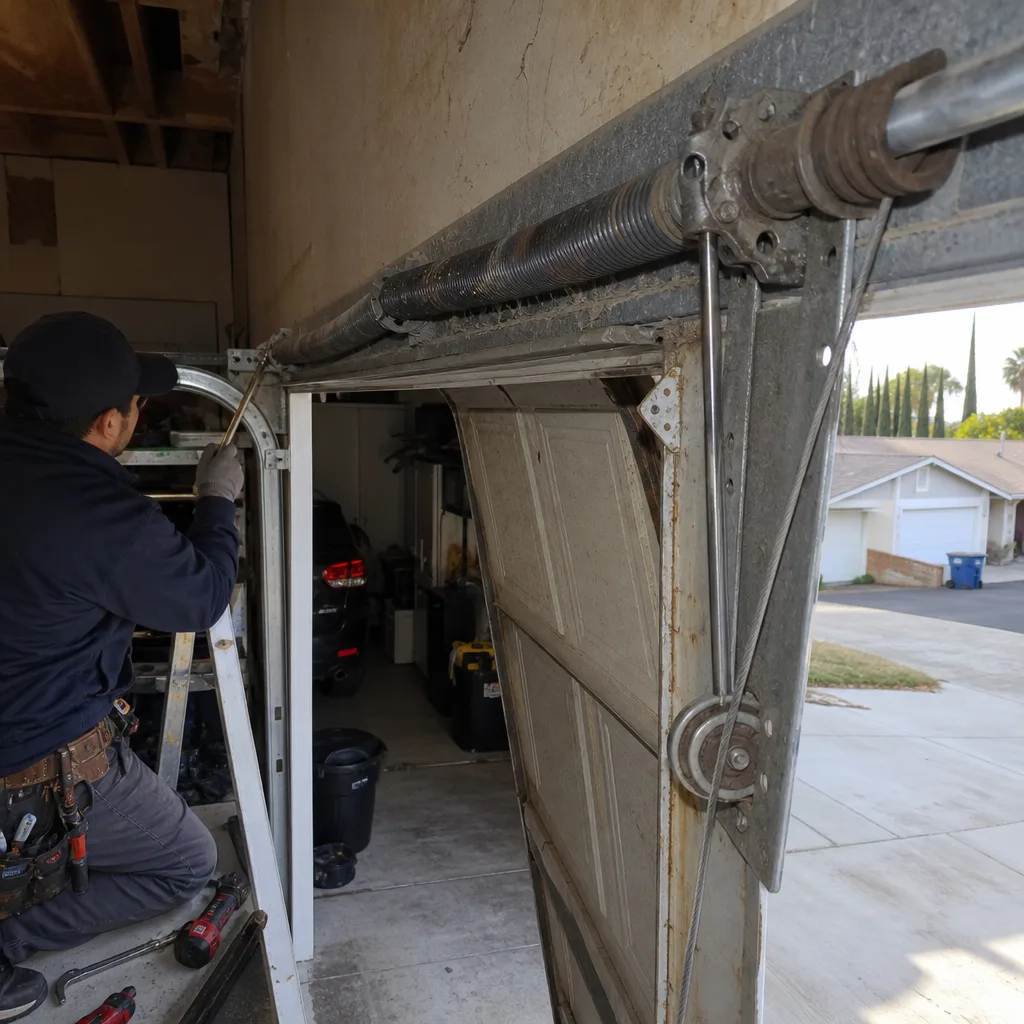 Before
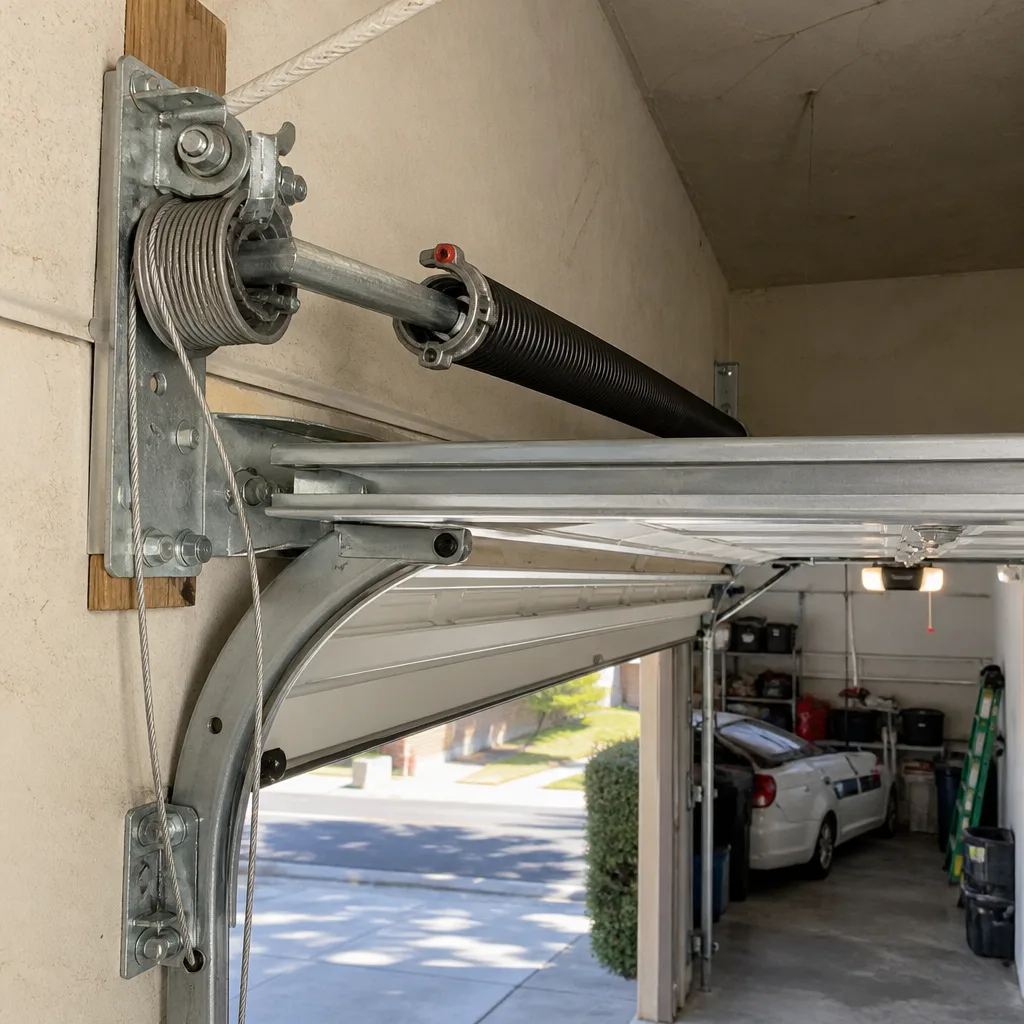 After
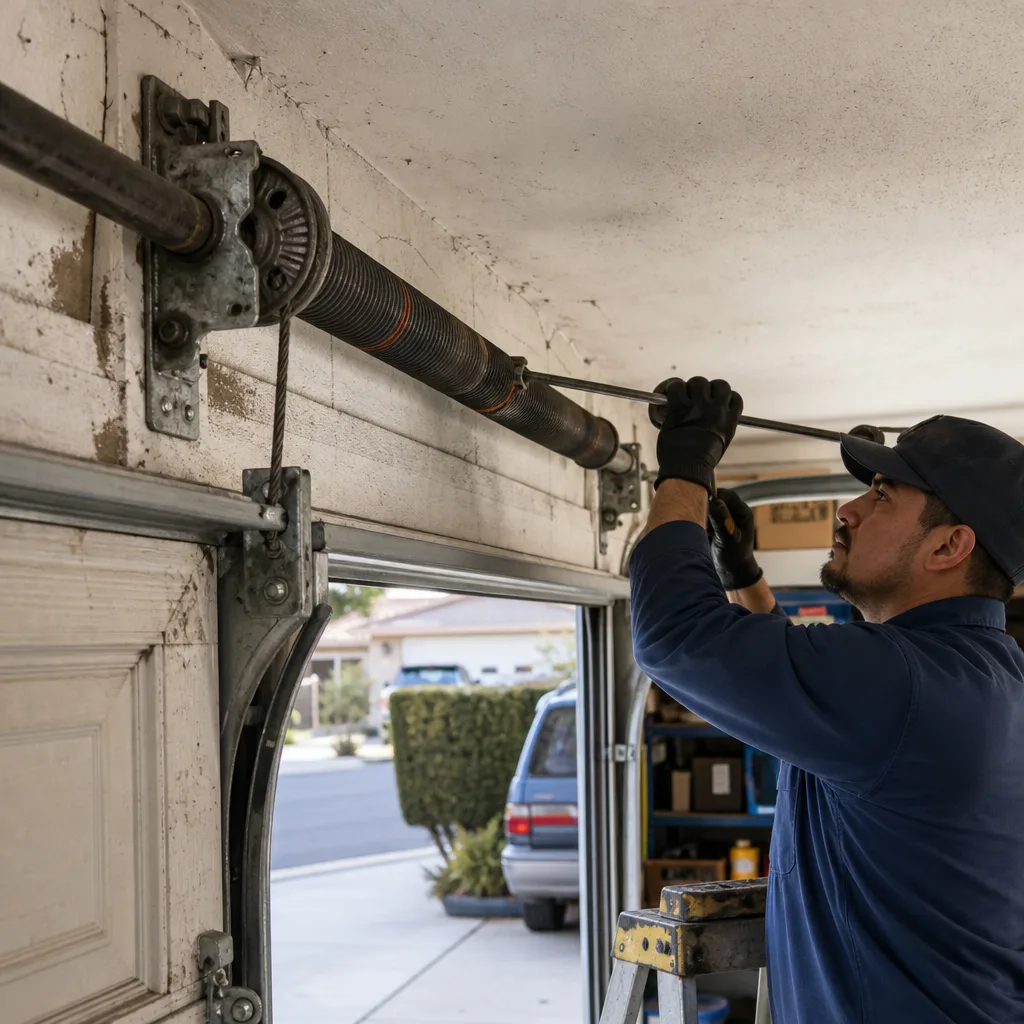 Before
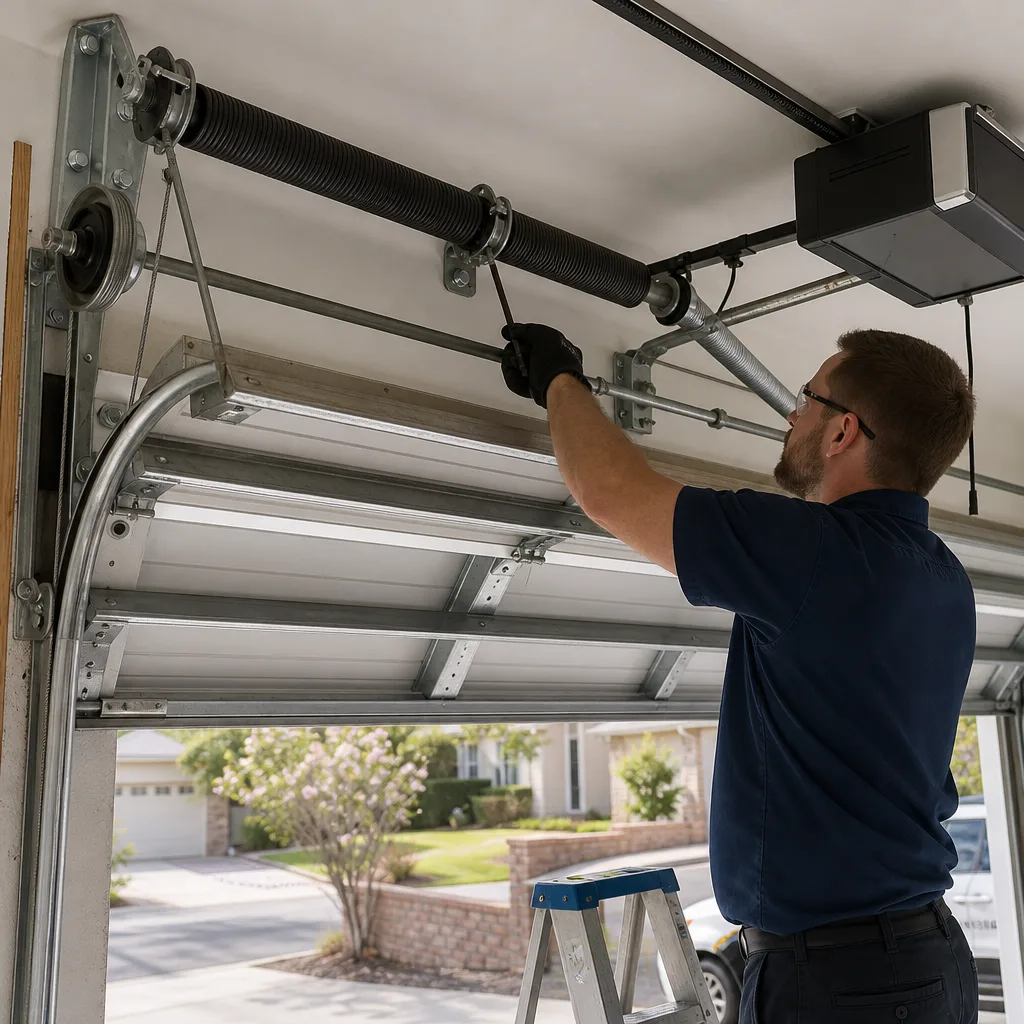 After
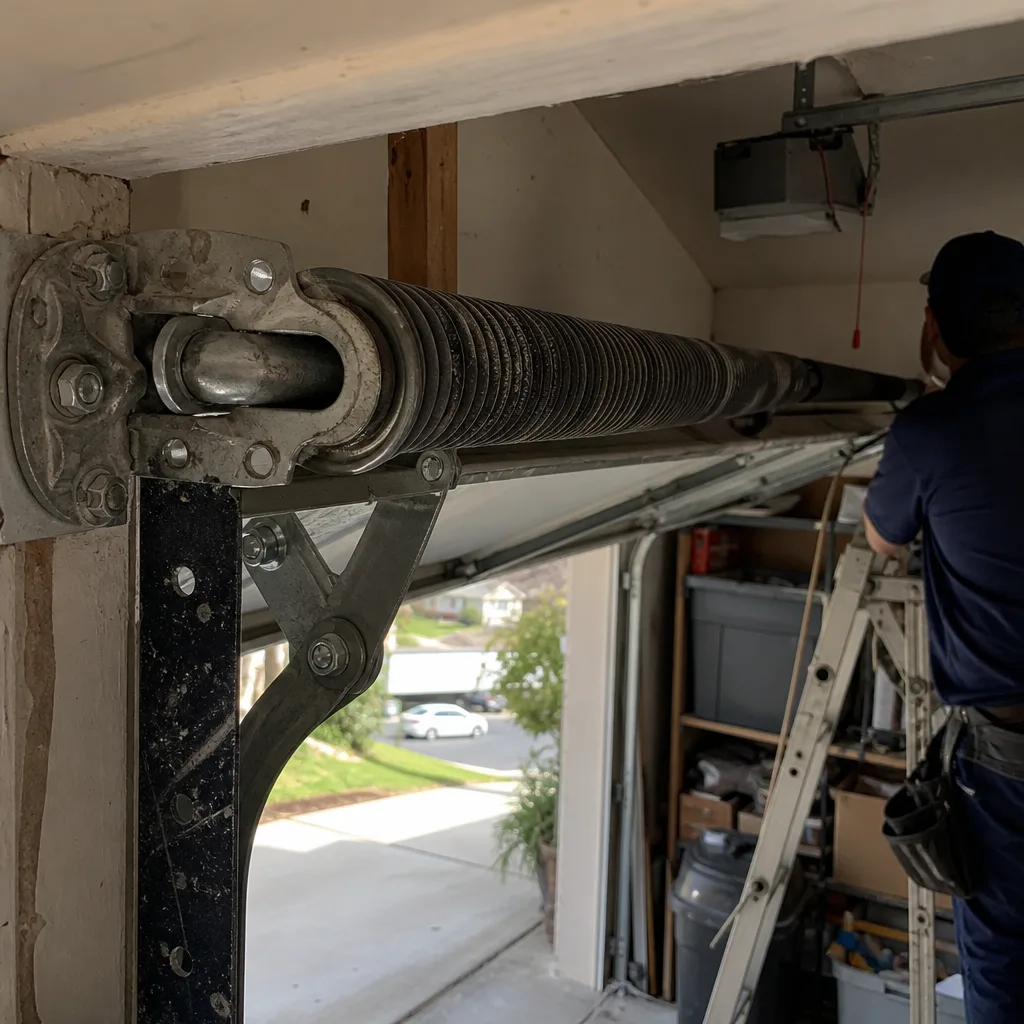 Before
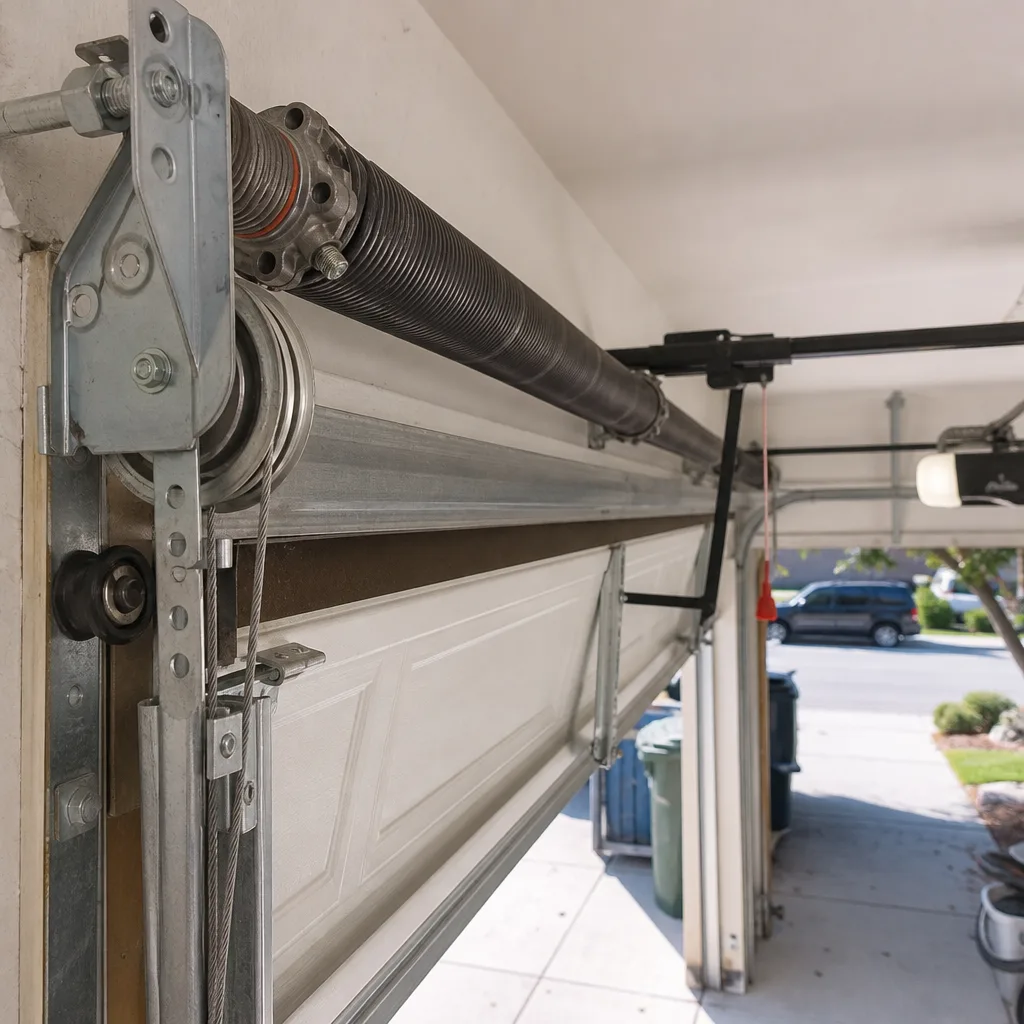 After