

Last updated October 31, 2026
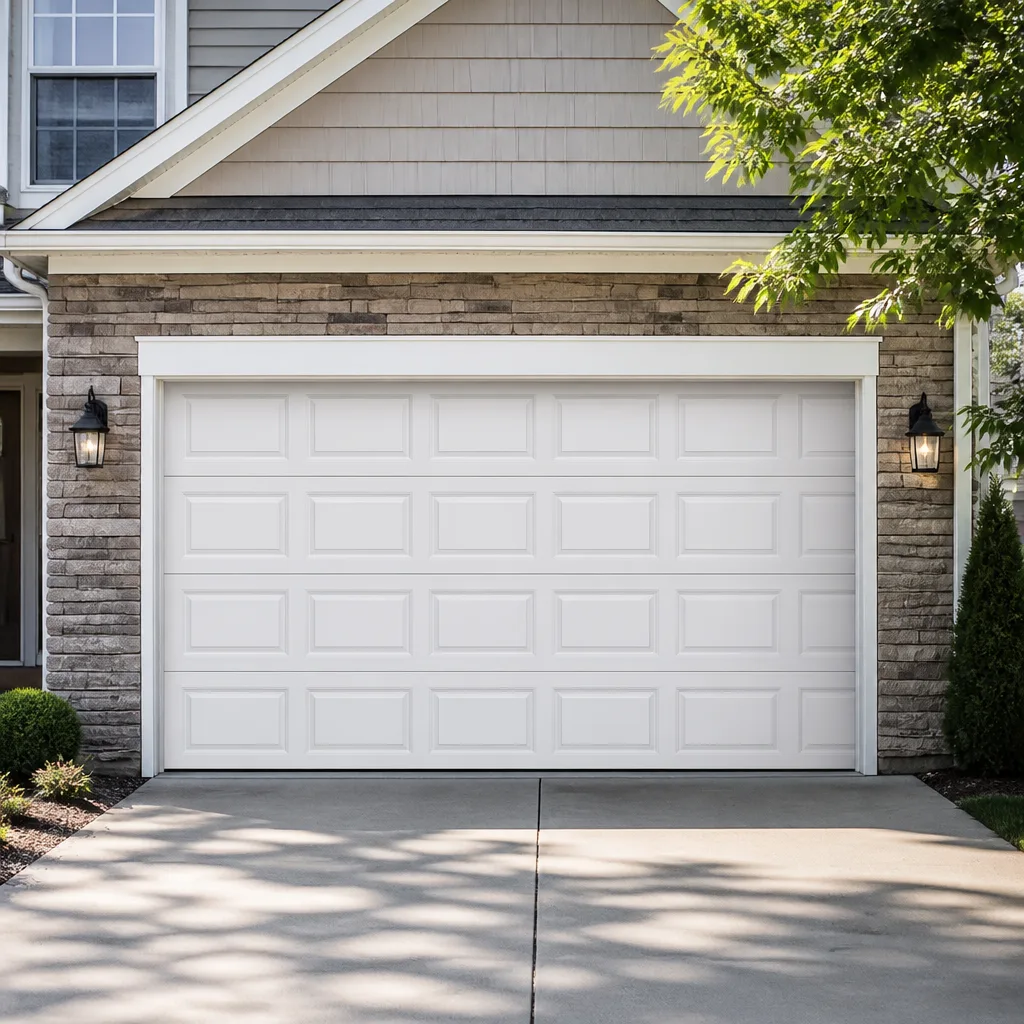 Raised-panel steel
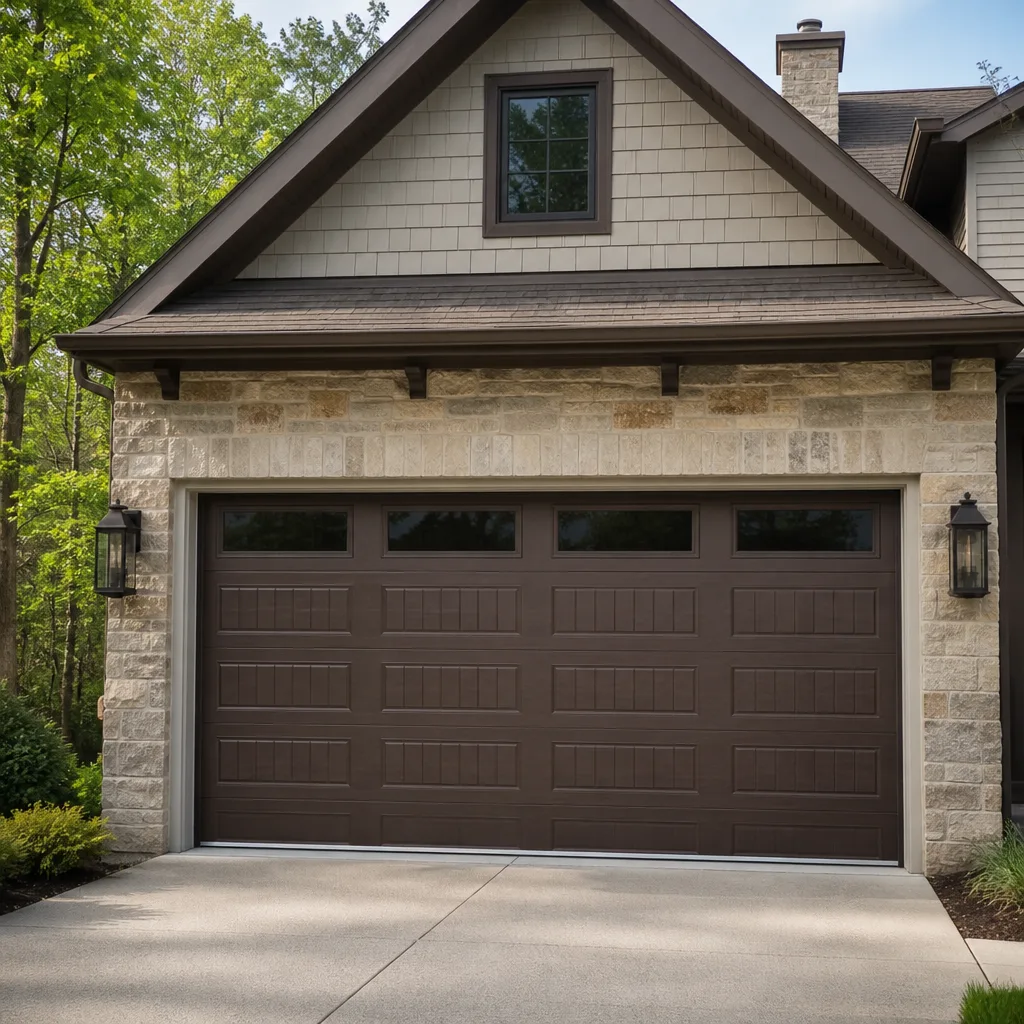
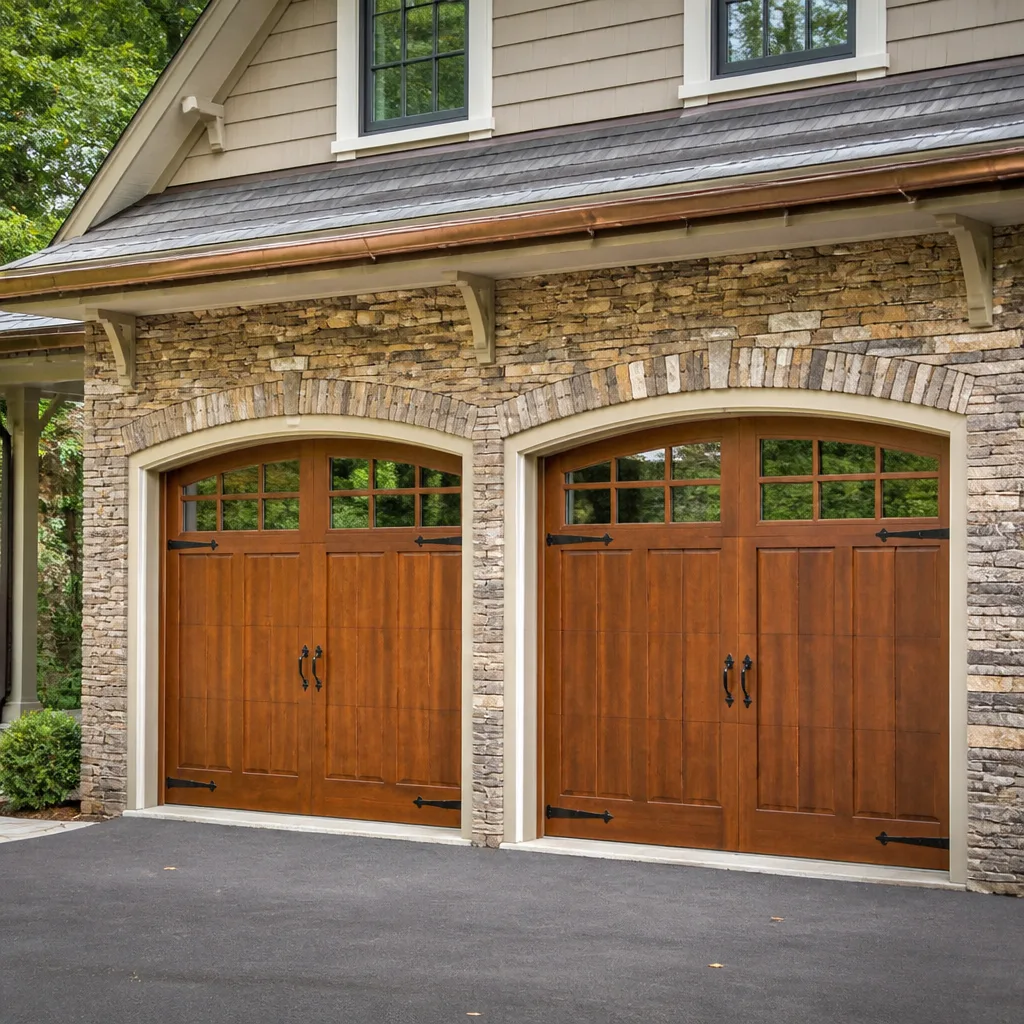 Carriage house
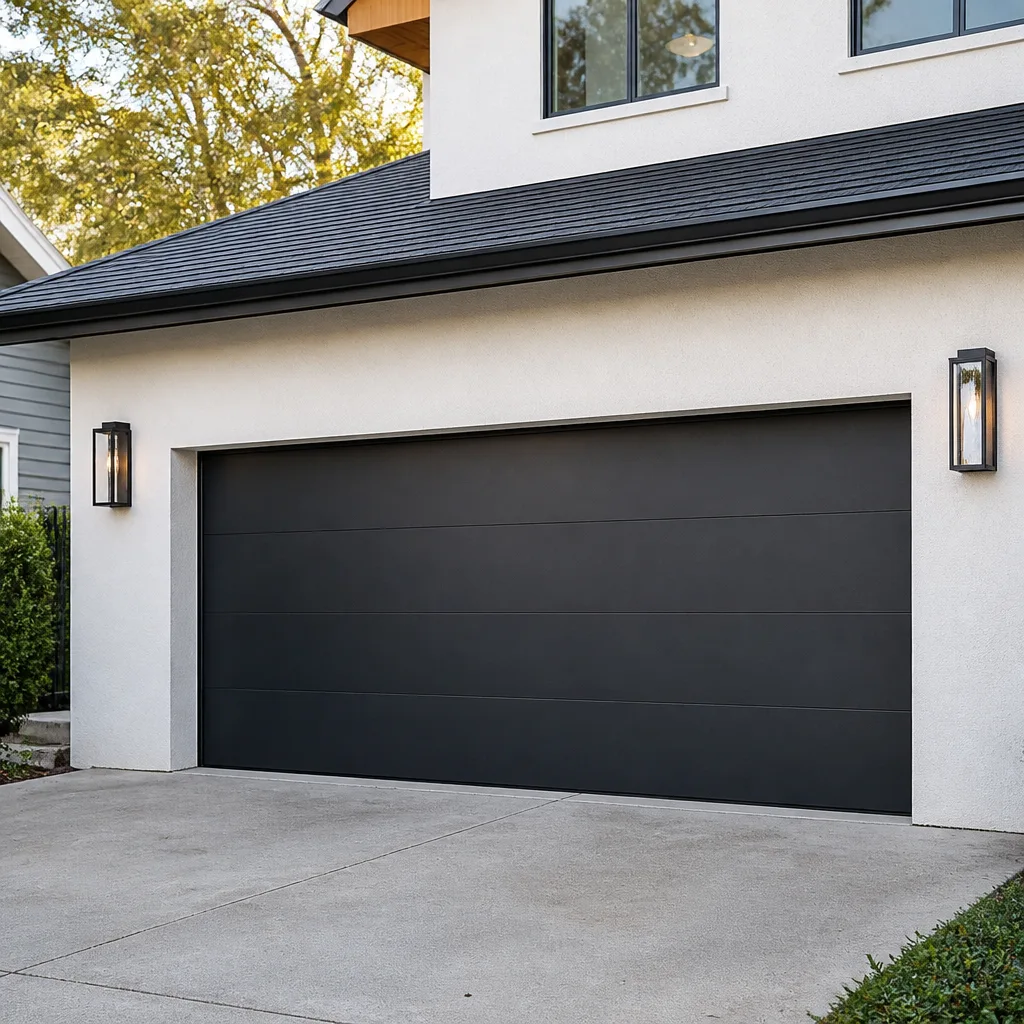 Modern flush
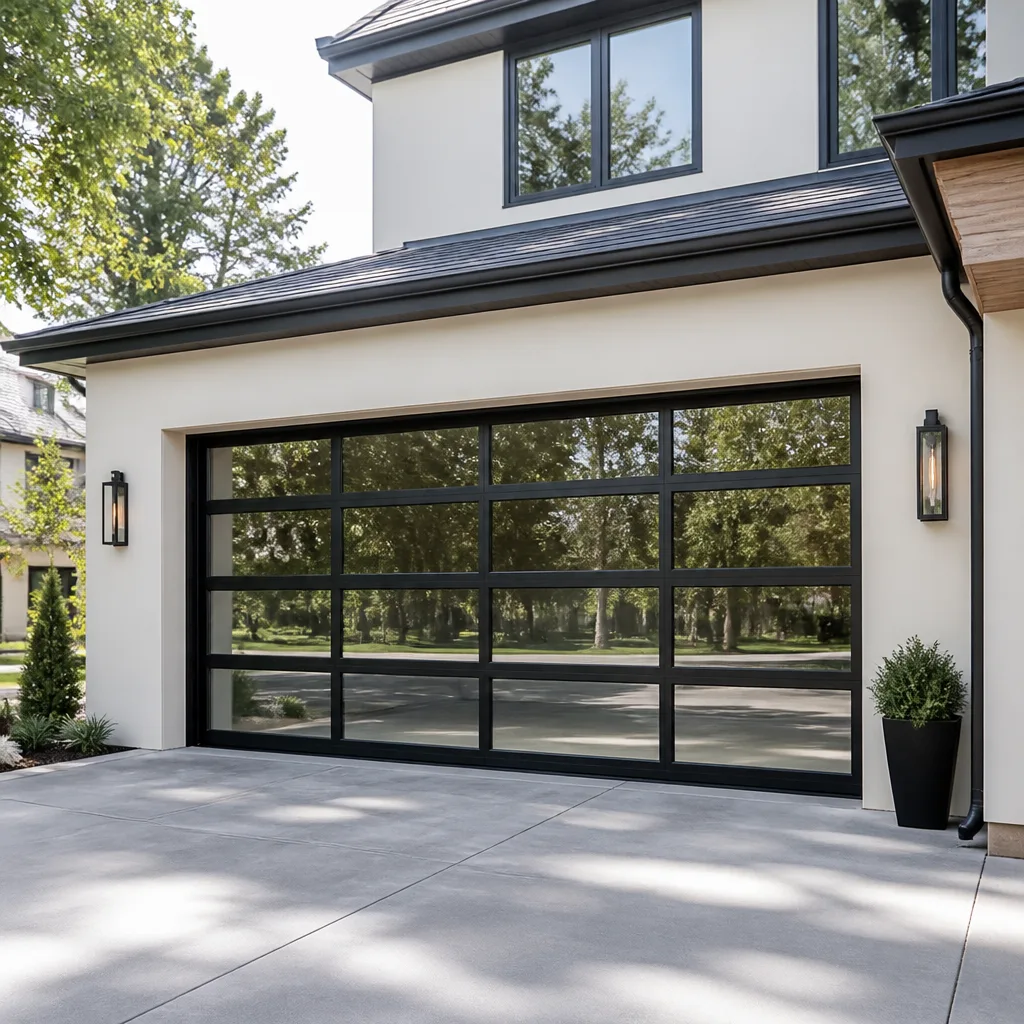 Full-view glass
 LiftMaster openers
 Chamberlain openers
Full 25-point door and opener safety check with every visit - springs, cables, rollers, tracks, and your LiftMaster or Chamberlain opener included
You get a price before we start. It does not change when the truck arrives.
Get your free estimateThe Complete Guide to Garage Door in San Diego
Most San Diego homeowners replace their garage door once every 15 to 20 years and make every material, brand, and opener decision based on advice written for Ohio or Michigan. That advice assumes snow load, sub-zero temperatures, and a garage that never sees salt. It doesn’t account for the marine layer that eats untreated steel in Del Mar, the HOA design police in 4S Ranch, or the wildfire codes that apply to homes east of Interstate 15. This guide covers every decision in the lifespan of a San Diego garage door: what to buy, how to maintain it, when to repair versus replace, what your HOA will actually approve, and which of the eight major brands we service are worth your money in coastal Southern California specifically.
Quick Answer
The right garage door for San Diego depends on three local factors: your home’s distance from the coast (which determines corrosion resistance needs), your HOA’s architectural standards if you live in a covenant community, and whether your property sits in a Wildfire Hazard Severity Zone (which may require fire-rated construction). A galvanized steel door with a factory-applied finish works for most coastal homes, while inland and backcountry properties may need insulated or fire-resistant panels. See our Garage Door Cost Breakdown: The San Diego Homeowner’s Reference for 2026 for full pricing, or budget $1,200 to $4,500 for a full door replacement in San Diego, $180 to $450 for spring repair, and $125 to $350 for opener repair depending on the make and model.
Styles & brands we work with
Table of Contents
- How San Diego’s Coastal Climate Dictates Your Door Material
- HOA Approval in San Diego’s Master-Planned Communities
- Wildfire Hazard Zones and Fire-Rated Door Requirements
- California Title 24 and Garage Door Insulation
- The Eight Brands Worth Considering in San Diego
- Repair or Replace: The San Diego Break-Even Math
- Garage Door Opener Selection for San Diego Homes
- A Seasonal Maintenance Schedule That Actually Works in SoCal
How San Diego’s Coastal Climate Dictates Your Door Material
Within one mile of the Pacific, every metal component on your garage door is in a slow race against salt. We’ve opened panels in La Jolla and Coronado where the hardware looked ten years older than the house. What accelerates the damage isn’t just the salt air; it’s the morning marine layer that condenses on metal surfaces and sits there for hours before the sun burns it off. That daily moisture cycle, combined with airborne chlorides, eats through powder-coated finishes on cheaper doors in three to five years.
Here’s what works based on proximity:
- Within 1 mile of the coast: Choose a door with a galvanized steel core or switch to a composite material. Clopay and Amarr both offer coastal-rated lines with zinc undercoating that resists the specific corrosion we see in Del Mar, Point Loma, and Ocean Beach. Avoid uncoated aluminum frames and cheap hinge hardware. Look for nylon rollers rather than metal-on-metal.
- 1 to 5 miles inland: Standard steel doors with factory-applied finishes hold up fine in neighborhoods like Clairemont, Mission Valley, and Kearny Mesa. The marine layer reaches these areas but with weaker chloride concentration. Still, quarterly rinsing of the door face and quarterly inspection of bottom seals extends life noticeably.
- 5+ miles inland: Corrosion is less of a concern in places like Rancho Bernardo, Scripps Ranch, or Eastlake. Your decision shifts to heat: dark-colored doors absorb inland summer sun and transfer that heat into the garage. Insulated doors (R-6 and up) make a measurable difference when the garage is attached to living space or used as a workshop.
One mistake we see frequently: homeowners in coastal areas buy a premium wood door for curb appeal. Real wood demands sealing every one to two years in San Diego’s damp air, and most people skip it. Within five years, the bottom rail swells, paint peels, and the door needs a rebuild. If you want wood grain without the upkeep, composite wood-look doors from Clopay fit the coastal niche far better.
HOA Approval in San Diego’s Master-Planned Communities
San Diego County has one of the densest concentrations of HOA-governed neighborhoods in the country. Communities like Rancho Santa Fe, Carmel Valley, 4S Ranch, and Otay Ranch exercise genuine architectural control over garage door replacement, and their standards are stricter than most residents expect. The approval timeline alone can stretch four to eight weeks, so if your door has failed and you’re waiting on a committee, order a temporary repair to keep the home secured while the paperwork moves.
What typically gets rejected:
- Panel style changes. If the original door was a flush panel and you apply for a raised panel or carriage-house design, many boards, especially in 4S Ranch and Rancho Santa Fe, will deny the change. Garden-variety aesthetic updates read as an alteration to the home’s street elevation.
- Color drift. Most San Diego HOAs restrict garage door colors to three or four pre-approved tones. A white door swapped for a warm beige or, worse, a dark charcoal usually gets flagged. Carmel Valley associations are notably strict here, approving paint colors at the palette level, not shade-by-shade.
- Non-standard window layouts. Even if windows improve light in the garage, if the community’s original doors have no glass and the CC&Rs don’t address it, adding windows is treated as an elevation change. Rancho Santa Fe has design-review guidelines that scrutinize glass placement closely.
- Brand mismatches. Some neighborhoods were built in phases using a single manufacturer, frequently Wayne Dalton or Amarr. HOAs sometimes retain the spec and expect replacements to match the original profile. Before you buy, ask for a copy of the community’s door standard, not just the color chips.
How to improve your odds:
- Pull the architectural guidelines for your community from the HOA office or management company before choosing a door.
- Match the original panel profile, rail count, and window pattern exactly. Committee members compare side-by-side elevations.
- Submit a photo mockup of the door on your house, not a catalog photo. Applications with a rendered image on the actual home get approved more often.
- For Garage Door Installation in Rancho Santa Fe, work with a provider who has supplied doors in your community before and knows what the review board expects.
Wildfire Hazard Zones and Fire-Rated Door Requirements
San Diego County publishes a Wildfire Hazard Severity Zone map that covers large portions of the backcountry and several incorporated areas: Ramona, Alpine, portions of Poway, Valley Center, Jamul, and communities along the 67 corridor. If your property falls in a High or Very High Fire Hazard Severity Zone, the California Building Code (referenced by local adoption) requires wildfire-resistive construction for exterior garage doors when a replacement requires a permit.
What a fire-rated or wildfire-hardened garage door actually means in practice:
- The door and frame must have a fire-resistance rating, commonly 20-minute minimum, or be constructed of non-combustible materials.
- Vents, if present, must include 1/16-inch to 1/8-inch mesh screens to prevent ember intrusion rather than the open slats common on standard doors.
- The bottom seal and weatherstripping should be flame- and ember-resistant; many stock vinyl seals melt early in a fire event.
- Windows in the door, where permitted, should be dual-pane tempered glass, never single-pane annealed, which shatters under heat differential and gives fire a direct path into the garage.
If you are outside a mapped hazard zone but within a mile or two of open chaparral, upgraded panels are a strong recommendation even if not mandated. Embers travel; the 2007 Witch Creek and 2003 Cedar fires taught San Diego County that homes west and downhill of fire origin can still ignite. In our experience in Poway and Scripps Ranch, the same protection that satisfies code also carries lower insurance costs, since many carriers now offer mitigation credits for fire-rated garage doors.
California Title 24 and Garage Door Insulation
California’s Title 24 Building Energy Efficiency Standards regulate new construction and significant remodels. Garage doors fall under the standard when the garage is conditioned space or when the door forms part of the building envelope for an attached garage below living areas, such as homes built into hillsides where the garage sits under a bedroom. In those cases, the door must meet a minimum U-factor tolerance, which for practical purposes means an insulated door of at least R-6, and frequently R-12 to R-16 in San Diego’s climate zone.
Even if your replacement doesn’t pull a permit requiring Title 24 compliance, insulation does three useful things in San Diego:
- Dampens heat transfer into living space. In east county and inland cities like Santee, El Cajon, and Escondido, a non-insulated steel door absorbs midday heat and radiates it into the garage and the rooms above. The interior face of an uninsulated door can exceed 120 degrees Fahrenheit on a typical August afternoon.
- Quiets open-close cycles. Insulated sandwich panels (steel-polyurethane-steel) significantly reduce the drum-thump of single-layer steel doors. For homes where the garage sits under a master bedroom, that’s nightly quality of life.
- Adds structural stiffness. Insulated doors resist impact from stray basketballs, wind gusts during Santa Ana events, and the occasional car-bumper kiss better than single-layer steel.
Expect to pay $400 to $1,200 more for an insulated door versus a non-insulated equivalent. In San Diego’s coastal zone, where heating and cooling loads are moderate, that premium buys comfort more than energy payback. Inland, especially if the garage is under living space, the incremental cost is justifiable and often required.
The Eight Brands Worth Considering in San Diego
We factory-familiar with eight manufacturers whose equipment is widely installed and locally serviceable: LiftMaster, Chamberlain, Genie, Clopay, Amarr, Wayne Dalton, Craftsman, and Raynor. That roster matters for a practical reason: when parts are needed, local supply matters more than brand prestige.
Here’s how availability plays out in San Diego specifically:
- Genie and LiftMaster openers have deep local distribution. Repair parts like circuit boards, safety sensors, and drive gears are commonly in Van Nuys or Riverside warehouses with next-day delivery. If your opener fails on a Tuesday, you’re running again before Friday.
- Clopay and Amarr doors are the two most stocked door lines in Southern California for panels, tracks, and hardware. Both offer coastal-rated finishes and matching replacement sections for partial damage claims.
- Wayne Dalton remains common in San Diego tract developments from the 1990s and 2000s. Its TorqueMaster spring system, while older, is still serviceable but requires specific tools; generalist technicians often misdiagnose it.
- Raynor has a smaller Western footprint. Doors are respected, but a non-stock panel can take two to three weeks if it isn’t in regional distribution. For a damaged Raynor panel, repair often beats replacement for timeline alone.
- Craftsman as a door brand has historically been a private-label arrangement, and current availability is through limited distribution. If your Craftsman door needs a major component, expect to evaluate a same-size replacement rather than a like-for-like part.
- Chamberlain is the largest opener line in U.S. homes and supplies a large share of the San Diego repair volume. We work on it constantly, including models with MyQ connectivity and belt-drive retrofit needs.
The point isn’t to say one brand wins. The point is parts access. Before selecting a door, ask whether the manufacturer has active distribution for replacement sections and hardware in Southern California. A door that’s “premium but rare” can become a six-week headache for a two-day repair. For a focused specialist in San Diego, attention to that distribution question is what separates a quick repair from a parts-roulette experience. If you’d like help sorting Admiral Garage Door Repair home details around brand selection, we’re glad to walk through what we actually stock and what we’d advise against in coastal or fire zones.
Repair or Replace: The San Diego Break-Even Math
The decision to repair or replace a garage door in San Diego follows a simple logic: if the failure is isolated to one component, repair. If the door has multiple simultaneous failures or the panel is structurally compromised, replace. Most owners reach this decision once or twice per home, so the math is unfamiliar each time—our DIY vs Professional Garage Door: The San Diego Homeowner’s Decision Guide walks through how to evaluate that choice.
Scenarios we see constantly:
- Broken torsion spring: Repair. Spring replacement on a standard two-car door in San Diego runs $180 to $450 depending on spring cycle rating and whether you’re replacing one or both springs. The door itself is usually fine. This is a high-tension component; a torsion spring under load can cause serious injury, so trained professional repair is the only safe route.
- One damaged panel from a car bump: Repair if it’s a stocked brand like Clopay or Amarr and the door is less than 10 years old. At 10-plus years, finish matching becomes hard, and the cost of one panel plus hardware approaches 30-40 percent of a full replacement.
- Opener failure on a door that still operates manually: Repair or replace the opener, not the door. The door and opener are separate systems, and a failed operator rarely means the door is compromised. See our opener guidance below.
- Multiple rust-through sections, sagging middle, or a door off its track twice in a year: Replace. When the structure is compromised, patching is a losing game.
- Noise, vibration, and cosmetic wear on a 20-year-old door: Replace. The cycle life of the springs, the roller bearings, and the panel integrity are all nearing end-of-life at that age, and a new door addresses all three at once.
A rule of thumb that holds in San Diego: for doors under 8 years old, repair is almost always the right call. For doors over 15 years old, replacement usually makes more financial sense than repeated part-level repairs. Between 8 and 15 years, let the failure mode decide.
Garage Door Opener Selection for San Diego Homes
Opener repair is its own diagnosis. Too often a door that’s slow, noisy, or binding gets treated as an opener problem when the actual fault is a broken spring, a bent track, or a rusted torsion tube. We separate the two systems: the door mechanical path and the opener/operator path. Correctly separating the two is what prevents a $500 opener replacement that doesn’t fix a $300 spring failure.
When choosing an opener for San Diego, consider these factors:
- Drive type. Belt drives (LiftMaster and Chamberlain dominate here) run quietest and matter most for attached garages under bedrooms, common in San Diego’s canyon-lot homes and hillside splits. Chain drives cost less but carry more vibration into the ceiling. Screw drives, still serviced on Genie units, are reliable but louder.
- Horsepower. Use 3/4 HP or higher for double-wide doors and heavier wood or insulated panels. Half-horsepower openers struggle on 16-foot doors with high-cycle springs and wear out prematurely.
- Battery backup. San Diego doesn’t see the weather outages that drive backup demand in the Southeast, but the county does see planned Public Safety Power Shutoffs and flex-alert-related brownouts in fire season. A battery-backup opener keeps the door usable when SDG&E cuts power.
- Smart connectivity. MyQ on LiftMaster and Chamberlain is the widest-supported platform in San Diego. It gives you in-car control, remote alerts, and Amazon Key compatibility if you want in-garage delivery without giving out a code.
- Safety sensors. California has required non-contact safety sensors on new opener installations since the 1990s. If your existing sensors are damaged or misaligned, repair is cheap and fast, usually under $150.
For opener repairs in North County, visit our Garage Door Opener Repair in Rancho Santa Fe page for the specific troubleshooting and diagnostic approach we use in that area. The same brand-nuance applies to Garage Door Repair in Rancho Santa Fe on the door-mechanical side.
A Seasonal Maintenance Schedule That Actually Works in SoCal
San Diego’s “seasons” don’t include snow or ice, but they do include marine-layer dampness, Santa Ana dry spells, and east-county heat. A maintenance rhythm tied to those local patterns keeps a door running longer than an annual checklist based on a Northern climate.
Here’s a six-month schedule:
- Every 6 months, after the marine layer peaks (May/June and November/December): Hose down the exterior door face, especially within three miles of the coast, to remove chloride residue. Wipe the weather seal at the bottom and check for brittleness.
- Every 6 months, before Santa Ana season (September/October) and after it (December/January): Lubricate rollers and hinges with a white lithium grease or silicone spray. San Diego’s dry air accelerates metal-on-metal wear, and a dry roller degrades quickly.
- Monthly, 30-second check: Watch the door for a full up-and-down cycle. Look for hesitation, shaking, or a pause that’s anything other than smooth. If it jerks near the bottom, the tracks may be out of plumb, or a panel may be dragging.
- Every year or whenever you notice a change: Test the balance by disconnecting the opener (with the door closed) and lifting the door manually to half-height. A healthy door stays put; one that drops or rises has spring tension issues needing professional correction.
- After heavy rain (rare but relevant): Check for water intrusion at the bottom seal and side weatherstripping. Replace the bottom U-seal when cracks are visible; it’s a low-cost part that keeps moisture, dust, and San Diego critters out.
We recommend against DIY spring replacement of any kind. Torsion springs carry the full weight of the door under tension, and when they release, they release violently. What you can safely do: clean, lubricate, inspect, and test. What you should leave to a pro: springs, cables, track re-alignment, and any opener electrical work. The garage-door industry sees serious injuries each year from spring-winding accidents, and the $300 you save isn’t worth the risk.
Common Mistakes to Avoid
- Buying based on national online reviews without checking local part availability. A high-rated door with thin Southern California distribution means every future repair is slow and expensive. We’ve seen premium doors sit broken for weeks waiting on panels from out of state.
- Ignoring the HOA process until the door is already purchased. A delivered door that the architectural committee rejects is now your problem to return, re-box, or resell. Pull the guidelines first, then buy.
- Choosing a non-insulated door for an inland San Diego garage. That saves $500 up front and costs you in summer heat gain, especially in Santee, Poway, or Escondido. Insulated panels pay back in comfort, not just energy.
- Treating a failed opener as a door problem. Opener repairs and door repairs are different systems. Misdiagnosis is the most common source of unnecessary replacement costs we see, and generalist techs are the usual source of the misdiagnosis.
- Delaying a broken spring repair. A broken torsion spring means the door is unsafe to open and the other spring, if present, is now carrying double load. Running the door changes the failure from a $300 spring job to a $900 or more repair with panel or cable damage.
- Opting for the lowest quote on a complex installation. A door with less than a tenth of an inch of plumb error will bind, jerk, and wear rollers faster. Precision installation is the invisible part of the job, and cheaper bids sometimes skip it.
- Forgetting that San Diego’s corrosion and wind are regional, not universal. Advice written for inland or northern climates undersells salt-air protection and Santa Ana wind loads. Your door lives in a specific marine and fire-ecology environment. Select for it.
See the difference
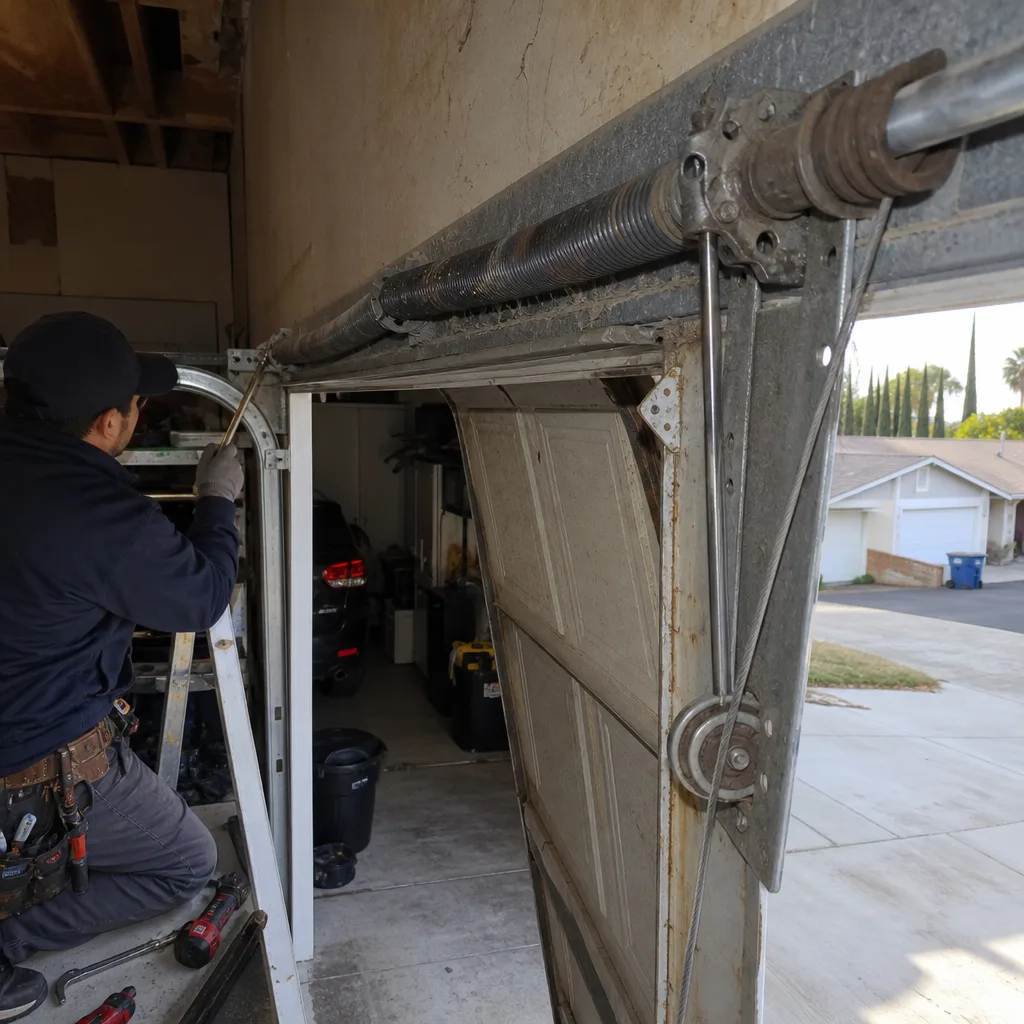 Before
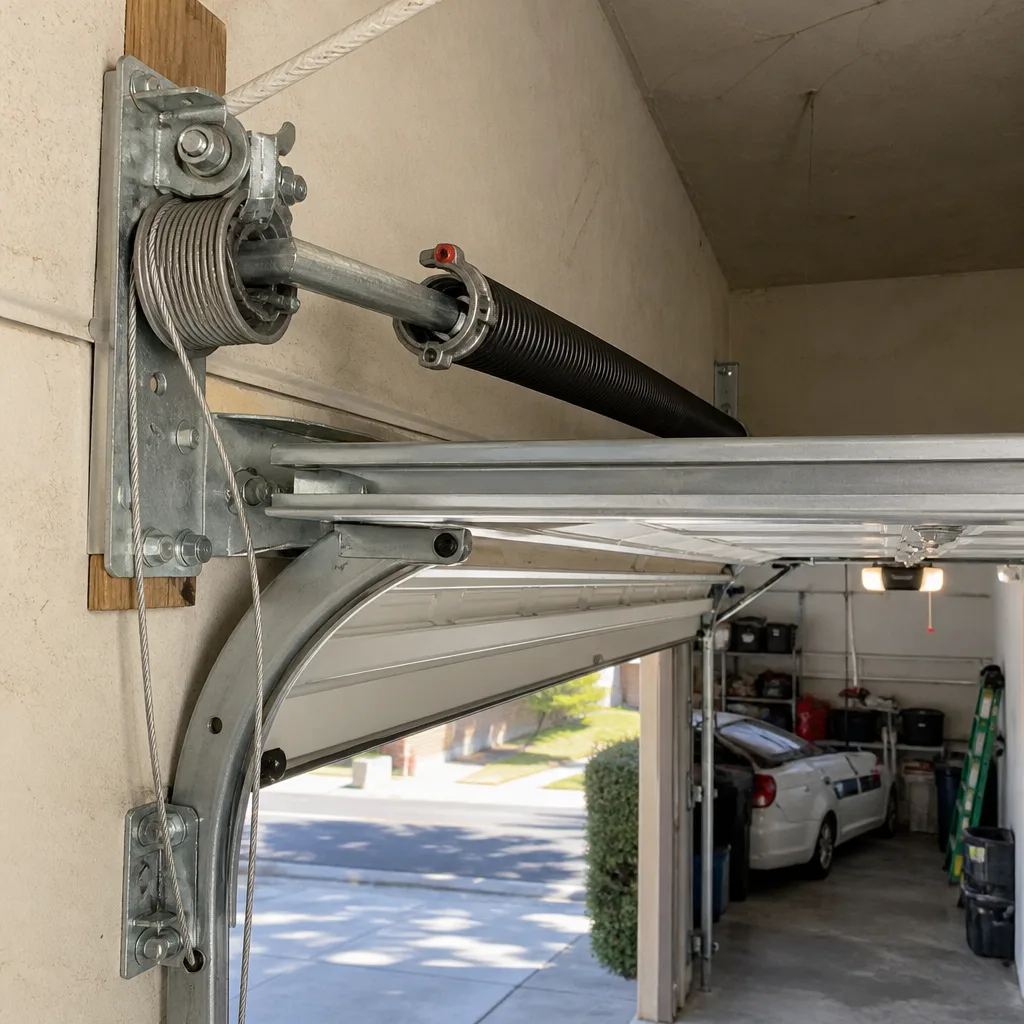 After
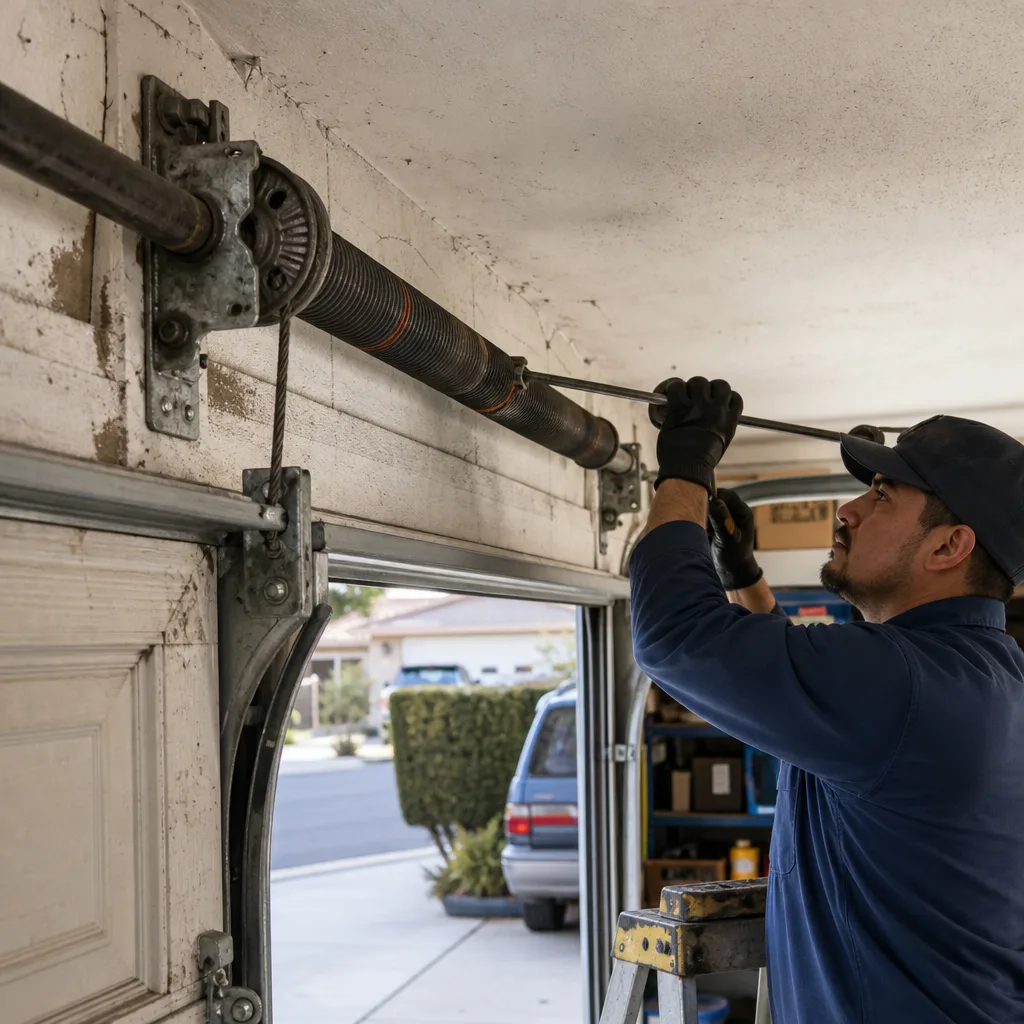 Before
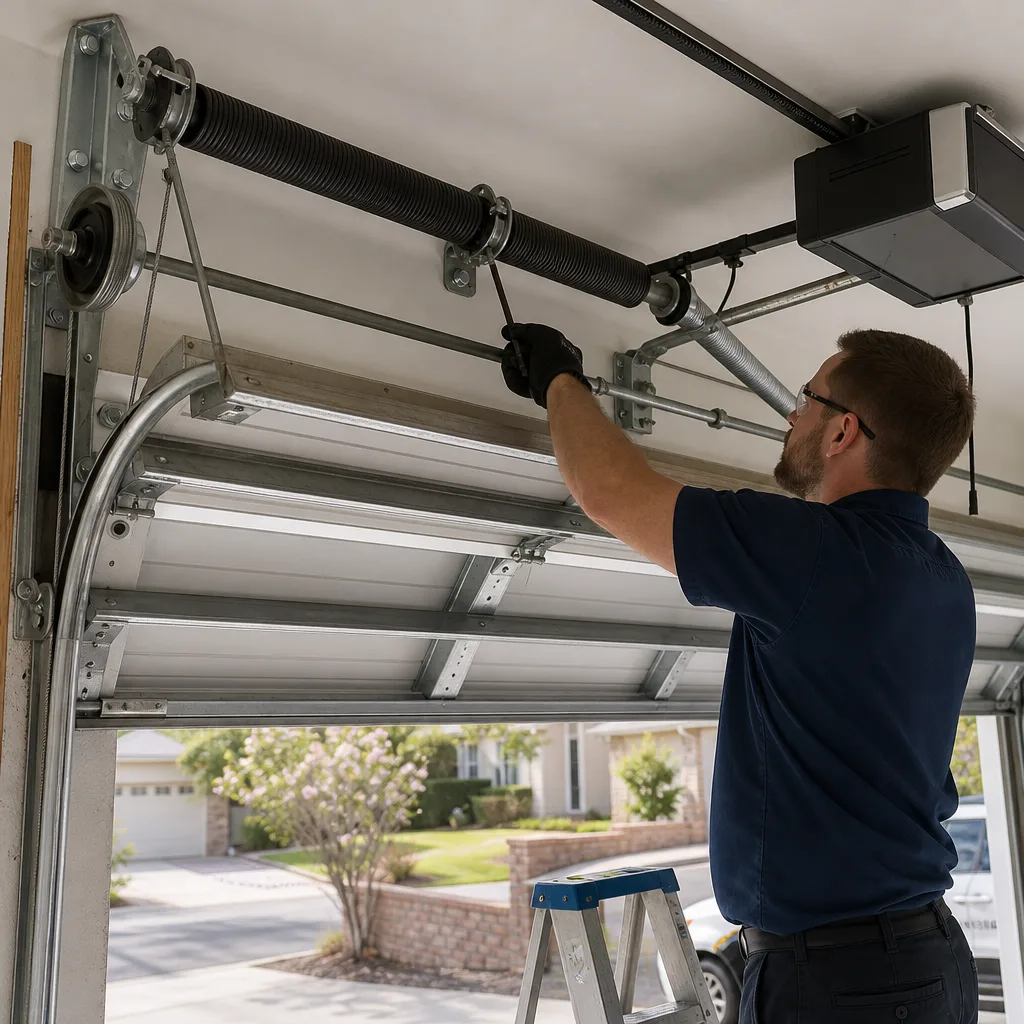 After
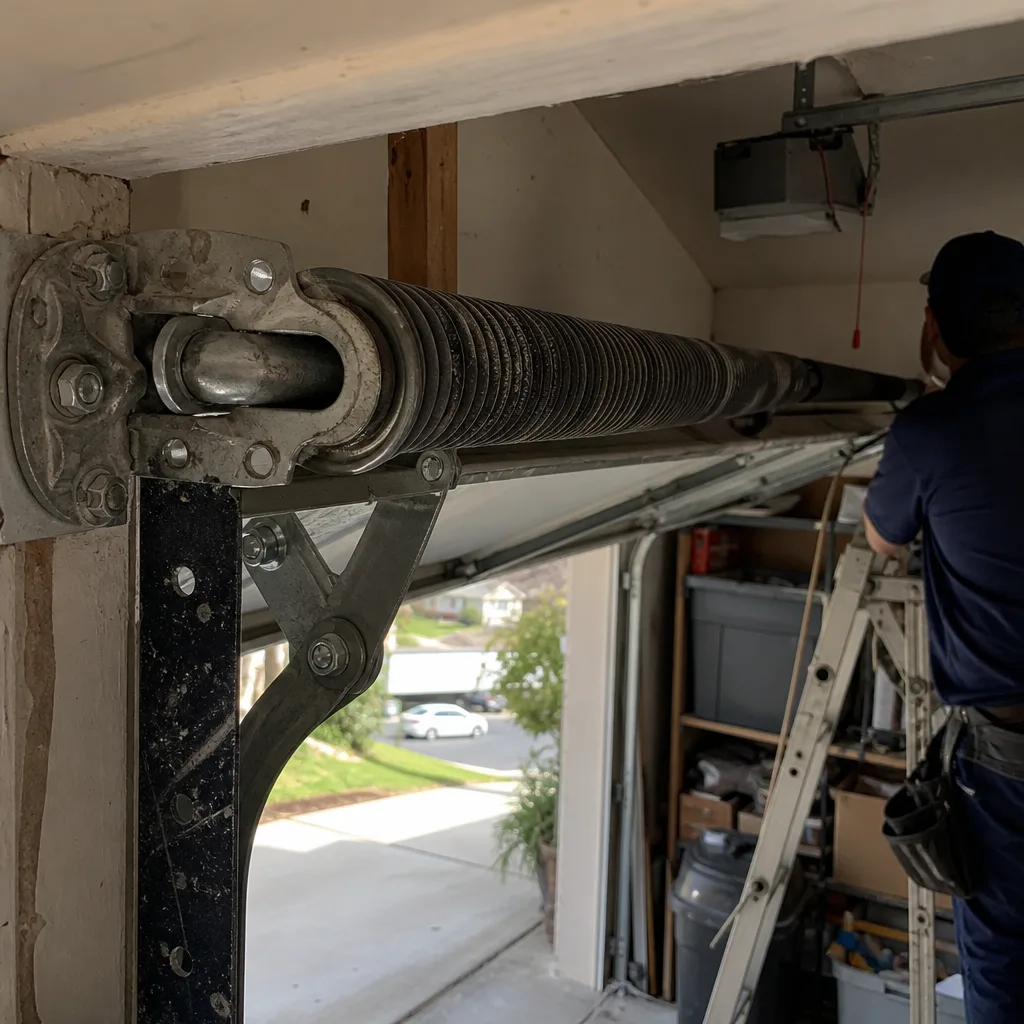 Before
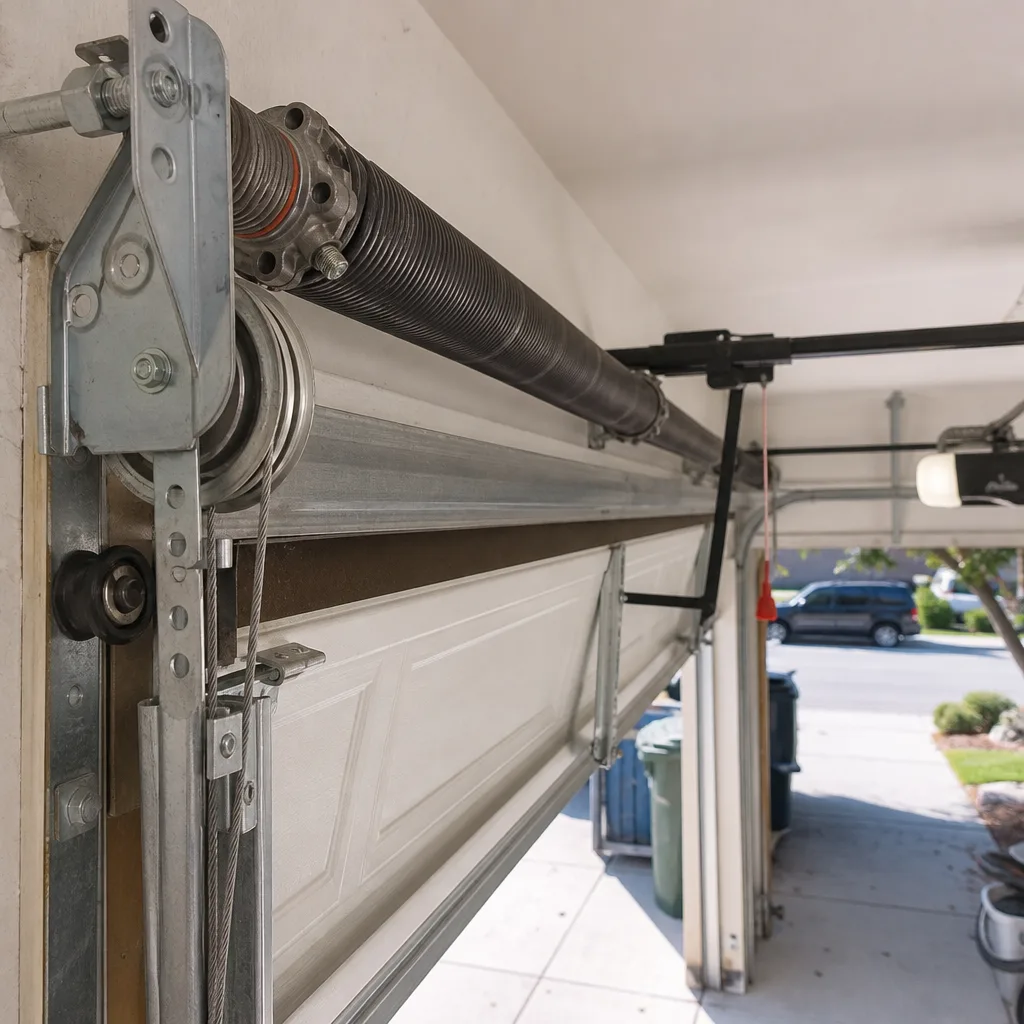 After
When to Call a Professional
Call a garage door specialist when the problem involves spring tension, cable routing, loosening or re-setting tracks, electrical or circuit-board work, or any repair on a door in a fire zone requiring code compliance. Also call when you’re choosing a replacement door and need help with HOA submittals, Title 24 insulation requirements, or brand selection based on local part availability. These aren’t plug-and-play decisions, and San Diego’s regulatory environment adds layers most national guides miss. Admiral Garage Door Repair offers free estimates in San Diego for repair, opener work, and replacement projects. Call (833) 467-4069, and we’ll tell you honestly whether a repair or replacement is warranted, with an upfront price quoted and agreed before any work begins.
Frequently Asked Questions
A typical garage door replacement in San Diego runs between $1,200 and $4,500 installed, depending on door size, material, insulation level, window count, and whether the existing track and hardware are reused or replaced. Single-car doors in base steel start near the bottom of that range, while double-wide insulated doors with windows and decorative hardware land near the top. HOA-required finishes or fire-rated panels add cost above the standard range. Call (833) 467-4069 for a specific quote; estimates are free and come before any work is scheduled.
Garage door spring repair in San Diego typically costs $180 to $450, with the range driven by spring cycle rating, door weight, and whether one or both springs need replacement. Both springs usually wear at the same rate, so replacing both at once is often the more economical long-term choice. The price is quoted and agreed before any work starts. Call (833) 467-4069 for a same-day or next-day appointment.
We service openers from LiftMaster, Chamberlain, Genie, and Craftsman, plus the operator lines associated with Clopay, Amarr, Wayne Dalton, and Raynor systems. Opener repair is its own diagnosis, separate from door-panel or spring work, and our technicians open with the correction of the common misdiagnosis: a failing operator that’s actually a door-balance problem. Call (833) 467-4069 with your opener’s brand and model number and we’ll tell you what’s realistic.
Yes, particularly in master-planned communities like Rancho Santa Fe, Carmel Valley, 4S Ranch, and Otay Ranch, where garage doors are visible street elevation elements and architectural committees treat them that way. Panel style, color, and window pattern changes all commonly face scrutiny, and approval can take four to eight weeks. Pull your community’s written guidelines before choosing a door, and submit a rendered mockup of the door on your actual home.
Fire-rated or wildfire-hardened garage doors are required in mapped High and Very High Fire Hazard Severity Zones, which cover backcountry and foothill areas including Ramona, Alpine, Valley Center, Jamul, and portions of Poway. The requirement applies when a replacement requires a building permit. Homes outside the mapped zones but within a mile or two of open chaparral should still consider fire-hardened panels as insurance against ember intrusion. We can check your parcel against the current zone map and advise.
If your garage door fails in the middle of the night and the failure leaves the home open, call us. Broken springs, off-track doors, and snapped cables have caused preventable overnight theft in San Diego. Tip: many homeowner policies cover burglary from a failed garage door only if the failure is documented and you took reasonable steps to secure the property. Contractors offering emergency repair in San Diego include Admiral Garage Door Repair; call (833) 467-4069 at any hour to coordinate a repair that doesn’t wait until morning.
The Bottom Line
San Diego’s garage door environment is shaped by salt air, HOA jurisdiction, and wildfire geography, and those three forces decide what material, brand, and opener make sense for your home. Coastal homes need corrosion-conscious panels; covenant communities need pre-approved, elevation-matched designs; backcountry homes need fire-rated construction that satisfies the Sacramento-adopted code. With eight major brands in our working inventory and service area, the practical answer is usually available quickly, priced fairly, and installed to match the door’s specific San Diego context. Call (833) 467-4069 for a free estimate, or contact us through our site with your HOA packet, current door photos, and property address, and explore more guides & resources for San Diego homeowners. From spring to sensor, that’s the entire system.
Written by the team at Admiral Garage Door Repair, serving San Diego since 2015.