

Last updated October 31, 2026
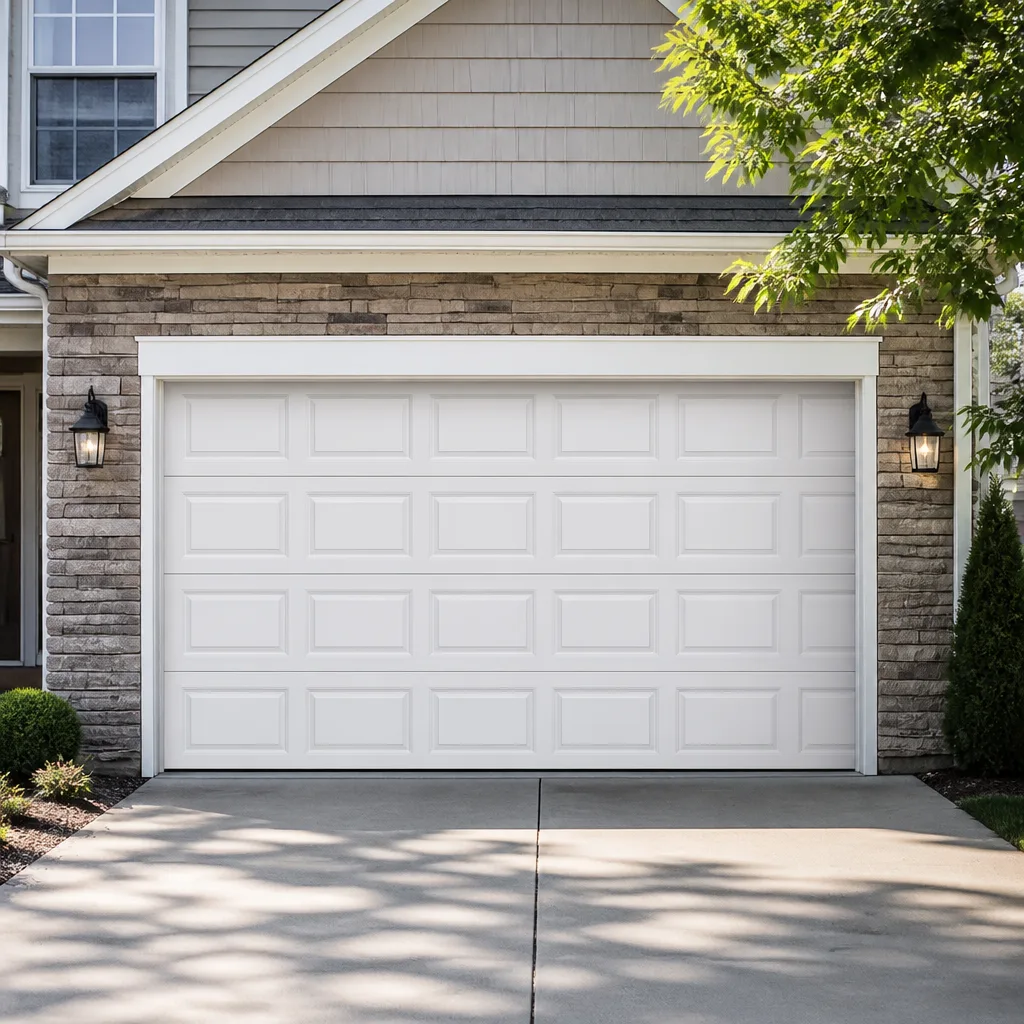 Raised-panel steel
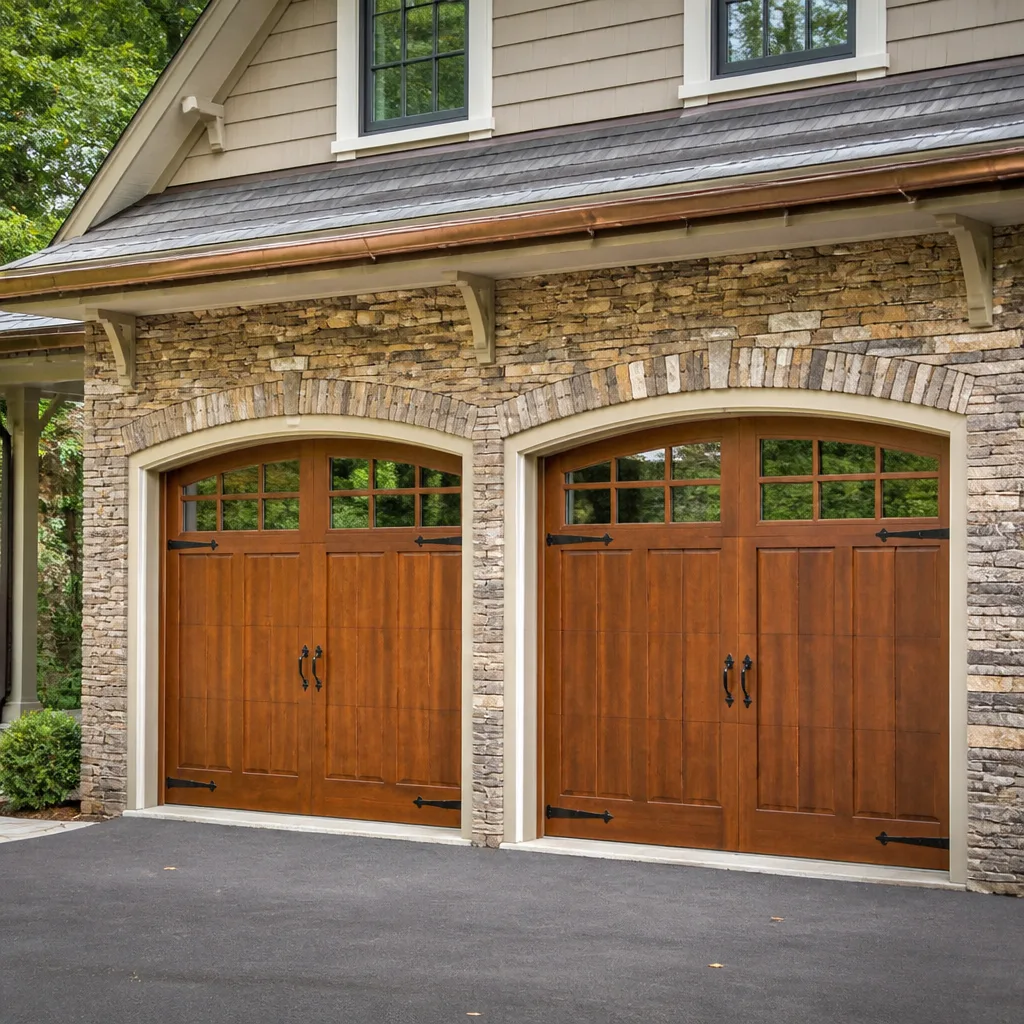 Carriage house
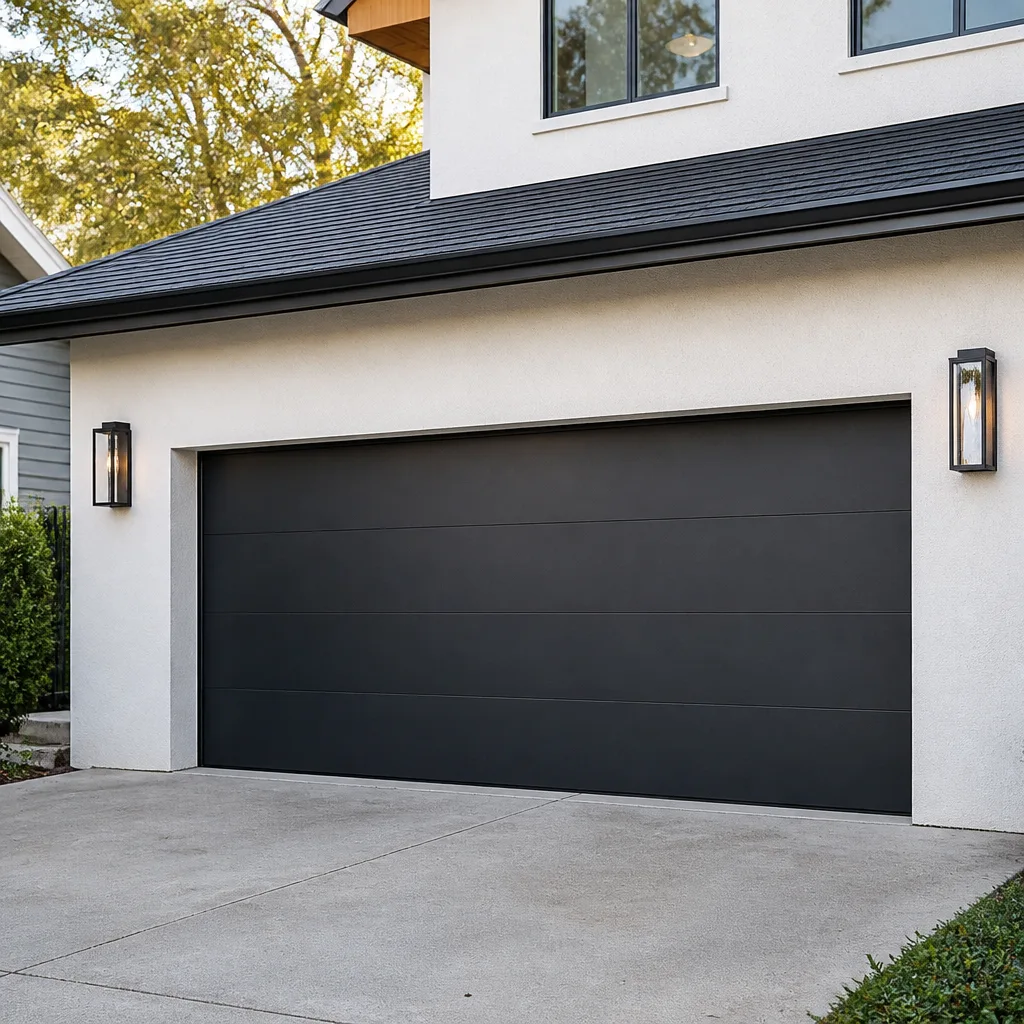 Modern flush
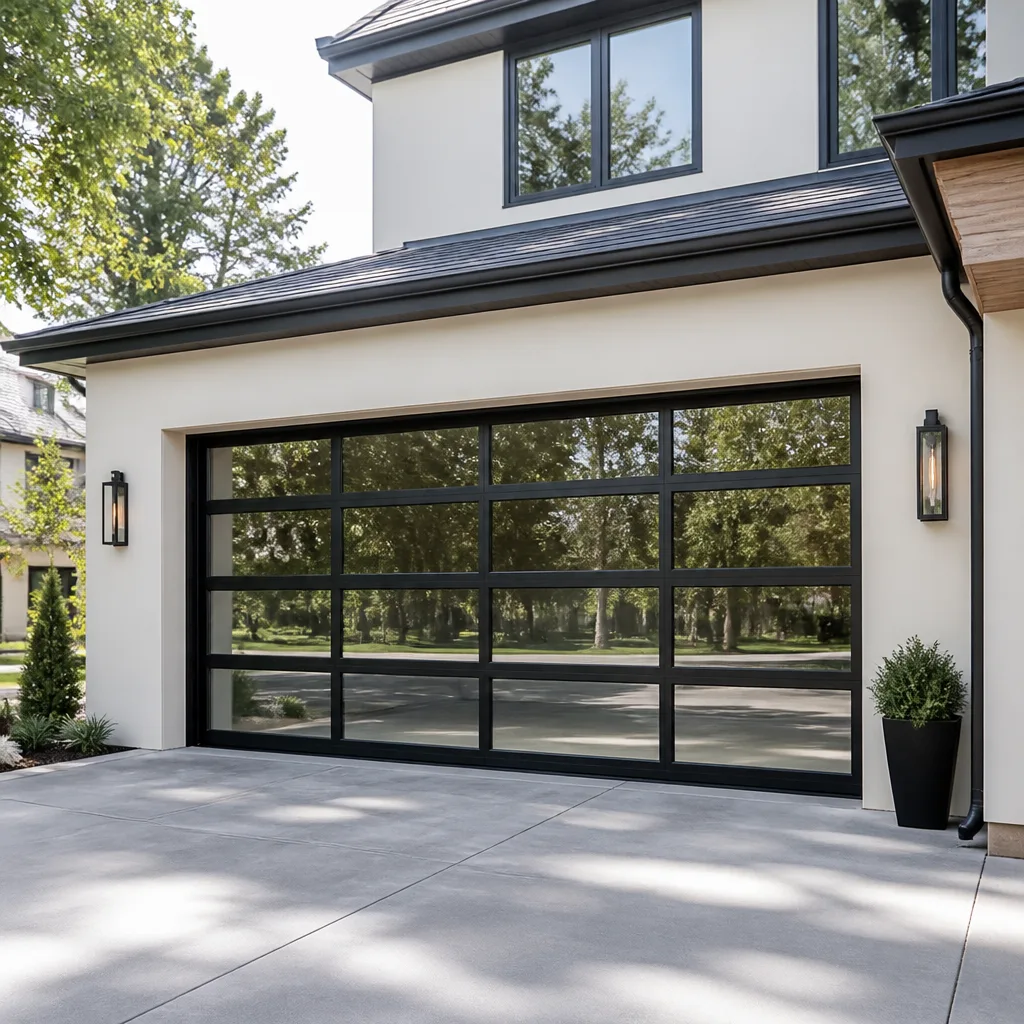 Full-view glass
 LiftMaster openers
 Chamberlain openers
Full 25-point door and opener safety check with every visit - springs, cables, rollers, tracks, and your LiftMaster or Chamberlain opener included
You get a price before we start. It does not change when the truck arrives.
Get your free estimateGarage Door Emergency Preparedness Guide for San Diego Homes
During the 2007 Witch Creek Fire, hundreds of residents in Rancho Santa Fe, Poway, and Scripps Ranch discovered something terrifying: their garage doors had become their evacuation bottleneck. Power outages rendered openers useless. Some doors were frozen mid-track. Others were sealed shut with no obvious manual workaround. Families lost precious minutes at the exact moment minutes mattered most. This guide exists so you never face that moment unprepared. We’re going to walk through four distinct San Diego emergency scenarios, wildfire, earthquake, extended power outage, and the garage door failures each one creates. By the end, you’ll have a one-page action plan your entire household can execute without thinking, without power, and without needing a phone.
Quick Answer
Garage door emergency preparedness in San Diego means mastering three things before disaster hits: knowing how to manually release your opener (it works differently on LiftMaster, Chamberlain, Genie, and Raynor models), knowing whether your door and opener survived an earthquake undamaged, and having a written plan for fire evacuation that accounts for your garage as the primary exit. The single best day to prepare is a quiet afternoon, not the morning smoke is visible on the horizon.
Styles & brands we work with
Table of Contents
- Wildfire Evacuation: The Garage Door Sequence
- Earthquake Protocol: Inspect Before You Operate
- Battery Backup Openers and California’s SB 969
- Manual Release Operation for Every Major Brand
- The One-Page Garage Emergency Card
- Extended Power Outages During Santa Ana Conditions
- Common Mistakes to Avoid
- When to Call a Professional
- Frequently Asked Questions
Wildfire Evacuation: The Garage Door Sequence
San Diego’s fire season is no longer a season. It’s a condition. The Santa Ana winds that push flames through canyons and into neighborhoods like Del Cerro, Tierrasanta, and the backcountry east of Escondido also knock out power lines hours before an evacuation order arrives. When the order comes, you may have ten minutes. Here’s the sequence we recommend, drawn from what works and what has failed in real evacuations around San Diego County.
The order matters. Before loading anything, open the garage door fully. Not halfway. If power fails mid-open, you’ll have a vehicle-width gap and a decision to make. Open it completely, then load. Keep the door open while you load. This is counterintuitive to people worried about embers, but in an evacuation scenario your exit matters more than your property. A door that is fully open cannot trap you. A door that is closed and then loses power can.
Back your vehicle into the garage the night before if a Red Flag Warning is active for your zone. Backed-in means you drive straight out. Loaded from the rear hatch means you’re not weaving around boxes. In Rancho Santa Fe and Olivenhain, where driveways are long and garage space is generous, this habit costs nothing and saves critical seconds.
Here’s a step-by-step evacuation sequence we teach San Diego homeowners:
- Open the garage door fully before anything else. If you have a battery backup, verify it’s engaged. If you don’t, pull the manual release immediately so the door stays open on its own.
- Back the vehicle in the night before any Red Flag Warning. You want a straight-line exit.
- Load through the rear hatch or side doors. Keep the walkway clear. The garage is not a staging area, it’s an artery.
- Send one person to the front door to do a final sweep of pets, medications, documents. That person exits through the house door, not the garage, to avoid traffic.
- Leave the garage door open when you go. If fire reaches the house after you depart, a closed door can trap heat and create a pressure explosion. An open door also signals to first responders that the home was evacuated. This is a deliberate choice made by San Diego fire officials, not an oversight.
One thing we hear from homeowners who’ve been through this: they wish they’d practiced. Not just read about it. Physically pulled the release cord, lifted the door manually, timed themselves. In San Diego, where evacuation corridors narrow quickly in places like Alpine and Jamul, practice is what separates the people who got out with their vehicles from the people who abandoned cars and walked.
If you’re in a newer home or have replaced your door recently, check whether your Garage Door Installation in Rancho Santa Fe included a battery backup. Many builders skip it to save cost. We can evaluate what you have and what you’d need.
Earthquake Protocol: Inspect Before You Operate
San Diego sits close enough to the San Jacinto and Elsinore fault zones that a 6.0 or larger event in the region is a matter of when, not if. A March 2026 understanding of earthquake risk includes a detail most garage door guides miss: the door that opens fine after a tremor is not necessarily safe. Tracks can twist, spring brackets can loosen, and cables can slip off drums during even moderate shaking. Operating the opener under those conditions can pull the door off its tracks entirely, dropping hundreds of pounds onto your vehicle, your belongings, or you.
After any earthquake that you can clearly feel, roughly magnitude 4.0 or higher in your area, do this before touching the opener button:
- Visually inspect both vertical tracks from the garage floor up. Look for gaps between the roller and track, obvious bends, or track that has pulled away from the wall.
- Check the horizontal tracks overhead. They should be parallel and level. If one sags or angles, something shifted.
- Look at the torsion spring above the closed door. If it’s broken into two pieces, you’ll see a visible split. Do not attempt to operate the door manually or with the opener. The counterbalance is gone and the door is dead weight.
- Inspect the cables on both sides for fraying, slack, or a cable that has jumped off its drum. A slack cable with a live spring is extremely dangerous.
- If everything looks intact, press the opener button and watch the door’s entire travel. Listen for grinding, scraping, or popping. Stop immediately if the door hesitates, binds, or goes crooked.
This is the point where we have to be direct: torsion springs and lift cables are under extreme tension. They can cause serious injury or death if mishandled. The inspection steps above are visual and safe. Anything beyond that, adjusting, re-cabling, replacing hardware, is a job for a trained professional. We say this not to protect our business but because we’ve seen what a snapped cable can do to a hand, a face, or a car hood. For safe DIY steps, check our Garage Door Repair Troubleshooting: Common Problems and How to Fix Them.
In parts of San Diego with older housing stock, think parts of Normal Heights, North Park, and coastal La Jolla, doors installed in the 1970s and 80s often lack the reinforcement and safety systems of modern units. These doors are more vulnerable to earthquake-related track damage. If your door predates the 1990s, it’s worth having the track brackets and mounting hardware evaluated before the next quake, not after.
Our team handles earthquake-related garage door damage across San Diego. When homeowners call after a quake, the most common issue is misaligned track, followed by sheared mounting bolts. Both are repairable. Both get worse if ignored and operated.
Battery Backup Openers and California’s SB 969
Since July 2019, California law requires that all newly installed residential garage door openers include a battery backup system. The law, SB 969, was a direct response to the state’s wildfire-driven power shutoffs, including the events that stranded San Diego homeowners during fire weather. If your opener was installed after that date, you likely have a backup battery. If it was installed before, you may not.
Here’s the practical reality: the law applies to installations, not retroactively to existing openers. Tens of thousands of San Diego homes, particularly in older neighborhoods like Clairemont, La Mesa, and Chula Vista, still run openers with no battery support. When SDG&E cuts power during Santa Ana conditions, those openers are dead. Full stop. No amount of pressing the wall button changes that.
If you do have a battery backup, you should test it twice a year. Here’s how:
- Unplug the opener from the ceiling outlet.
- Press the wall button or remote once. The door should open at full speed on battery power.
- Close the door the same way, then plug the unit back in.
- If the door moves slowly, beeps continuously, or won’t operate at all on battery power, the battery is degraded and needs replacement.
Battery life varies by brand and usage. Most Garage Door Opener Repair in Rancho Santa Fe calls we handle for backup batteries involve batteries that died quietly during normal operation. The owner didn’t know until an outage hit. Twice-a-year testing prevents exactly that.
Which models meet the current standard? LiftMaster’s 84501 and 87504 units, Chamberlain’s B970 and B2405, Genie’s 7155-TKV, and Raynor’s Navigator series all include battery backups compliant with SB 969. If you’re considering replacing your opener, any of these four brands, all of which we service, gives you code-compliant backup capability. Make sure your installation also follows Garage Door Permits, Codes & Inspections in CA: What You Need to Know. We work on all of them daily, and brand-specific quirks matter for installation and repair alike.
Manual Release Operation for Every Major Brand
This section is the core of preparedness. If you know nothing else, know this: the red cord hanging from a bracket on the center rail of your garage door opener is the manual release. Pulling it disconnects the door from the opener carriage so you can lift the door by hand. Here’s how it works on the models most common in San Diego garages.
LiftMaster and Chamberlain openers use an identical mechanism, since Chamberlain Group manufactures both. The red release handle hangs below the rail, within arm’s reach when the door is closed. To release: pull straight down firmly. You’ll hear a clunk as the carriage disengages. Then grip the door handle, not the panels themselves, and lift. In a power outage, the door should open smoothly if the spring is intact. If it feels heavy or won’t lift, stop. That’s a spring problem, not a power problem.
Genie openers use a similar red cord arrangement, but the release mechanism on newer models disengages upward push movement rather than a direct pull-and-release. Pull the cord toward the door to release, then lift the door by its handles. Some Genie models light a red warning indicator when the carriage is disengaged. When power returns, aligning and re-engaging a Genie carriage requires either moving the carriage by hand to the door arm or pressing the wall button once while the opener is on. We see more re-engagement confusion on Genie units than any other brand.
Raynor openers, less common in San Diego but present in many custom and higher-end homes, follow the standard pull-cord pattern. What distinguishes Raynor is the door hardware itself. Raynor-brand doors run on commercial-style hardware in residential sizes, which means they’re heavier. Manually lifting a Raynor door that has lost power or spring tension is harder than lifting a comparable Clopay or Amarr door. If you own a Raynor, practice the manual release twice. You need to know what to expect.
Once you’ve released the door, two cautions. First, if the door is open when you pull the cord, and the spring is broken or weak, the door can fall hard and fast. Stand to the side, never directly under the door, when you release. Second, when power returns, do not press the opener button without first re-engaging the carriage. An opener running while disengaged will travel its full length and slam into whatever is in its path. To re-engage, run the opener once while manually guiding the carriage to the door arm until it clicks.
Practice this on a quiet weekend. Mark the release cord with a piece of high-visibility tape so any family member can find it in a dark, smoky garage. This one skill, practiced once, is the difference between evacuating in under two minutes and standing in your garage pulling on a cord you don’t understand.
The team at Admiral Garage Door Repair home covers all four brands with factory-familiar training. If your release cord is missing, broken, or you can’t locate it during your practice run, call us. A missing release cord is a one-call fix we handle routinely.
The One-Page Garage Emergency Card
Preparedness fails when it lives in a document on a phone that’s dead, a website that’s down, or a memory that’s stressed. The fix is a single laminated card, mounted inside the garage near the pedestrian door or the wall button, that any family member can read and execute without a smartphone and without internet. Here’s what goes on it.
Face of the card:
- Manual release instructions in five words or less: “Pull red cord. Lift door. Get out.” If different brands exist in the same household (we see this in San Diego homes with a main garage and a carriage house), write the brand name next to each instruction.
- Post-earthquake checklist: Look at tracks. Look at spring. Listen for grinding. If anything looks wrong, use pedestrian door.
- Power outage sequence: If opener has battery backup, press once and go. If no backup, pull red cord and lift manually.
- Emergency phone numbers written in permanent marker: our number at (833) 467-4069, your insurance agent, your neighborhood evacuation coordinator if you have one. No smartphone needed.
Back of the card:
- Evacuation order: open door, back in car, load, leave door open, go.
- A simple map of your evacuation route from your specific San Diego neighborhood, hand-drawn. The freeways that work for normal traffic may be wrong for evacuation traffic. Mark the side-street route you’ve scouted.
- Utility shutoff locations: gas meter, main breaker. In an earthquake, a broken gas line is a separate emergency from your garage door.
Laminate it. Zip-tie it to the opener rail or tape it to the wall beside the pedestrian door. Re-read it every time the family changes smoke detector batteries. This card is the physical manifestation of the whole principle behind this guide: decisions made in advance are faster and better than decisions made in panic.
We’ve helped homeowners in Del Mar and Encinitas create these cards as part of broader home safety planning. If you want a professional walkthrough of your specific door and opener so the instructions on your card match reality, not theory, we’ll do that during a free estimate visit.
Extended Power Outages During Santa Ana Conditions
SDG&E’s Public Safety Power Shutoffs have become a regular feature of life in San Diego’s backcountry and wind-prone corridor communities. An outage during Santa Ana conditions is different from a normal power blip in one critical way: you may be without power for days, and you may be under evacuation warning at the same time. Your garage door becomes a daily-use exit, not just a vehicle opening.
The first 24 hours are manageable. Most openers with working batteries handle a dozen or more cycles. The problem starts when an outage stretches past 48 hours and the battery drains. At that point, every opening and closing is manual. If your spring is healthy, manual operation is straightforward. If your spring is near failure, the added strain of manual cycling can be the thing that breaks it completely.
During extended outages, minimize door cycles. Don’t open the door for small errands you’d normally do by car. If you have an attached garage and an interior pedestrian door, use that door for foot traffic and reserve the garage door for vehicle exits only. This preserves the battery and reduces strain on hardware.
If the outage coincides with an evacuation warning, keep the door closed but released until you’re ready to move. A Garage Door Repair in Rancho Santa Fe service call is not something you can schedule during a power shutoff and a fire warning. Your preparation needs to be complete before that point.
One more local consideration: San Diego’s coastal marine layer and inland heat differential mean that garage doors in places like Carlsbad and Oceanside face salt-corrosion challenges that doors in, say, Santee or El Cajon don’t. During long outages, a salt-corroded track or roller binds sooner than a clean one. Coastal homeowners should have their hardware inspected and lubricated more frequently as a matter of preparedness, not just maintenance.
Common Mistakes to Avoid
- Never pulling the manual release until an emergency. The first time you touch that cord should not be during a fire evacuation. In our experience, about half of San Diego homeowners who’ve never used it pull it wrong, don’t know what to do after pulling it, or can’t locate it in low light. Practice on a calm Saturday.
- Operating the opener after an earthquake without inspecting the door. Tracks shift. Brackets loosen. Cables slip. The opener will happily run a misaligned door right off its rails, turning a repairable $200 track issue into a $1,200 door replacement.
- Assuming battery backup is working because the opener is new. Batteries die quietly. We test dozens of backup batteries in San Diego every month, and a significant number fail the unplug test despite being within their expected lifespan.
- Closing the garage door during fire evacuation to protect the house. Leave it open. Fire officials in San Diego County recommend this. A closed garage door can trap heat, build pressure, and act as a chimney for fire entering through a side wall. Open doors signal evacuated homes to responders.
- Standing under the door while testing manual release. If the spring is weak or broken, the door will drop. That’s 150 to 400 pounds depending on the material. This is how serious injuries happen. Always stand to the side.
- Relying on a smartphone for emergency instructions. Batteries die. Coverage drops. The power goes out and so does your Wi-Fi. The laminated card mounted on the wall solves this permanently.
- Ignoring weird noises in the weeks before storm season. A popping spring or grinding roller is the door telling you something is failing. In San Diego, where we go long stretches without rain and then get hammered by a single storm or wind event, the failure tends to happen exactly when you need the door most.
When to Call a Professional
Some things are homeowner-appropriate. Visual inspection is. Manual release practice is. Battery testing is. Other things will hurt you. Torsion spring replacement is at the top of that list. The spring on your door is wound under enough tension to lift hundreds of pounds, and when it releases unexpectedly, it releases all at once. People lose fingers, hands, and worse. Cable replacement sits right next to spring work on the danger list. Track realignment after an earthquake, opener replacement, and any electrical work on the opener connection are all professional jobs.
If your earthquake inspection turns up anything wrong, bent tracks, a slack cable, a broken spring, call us before operating the door again. If your door won’t lift manually during a practice run, that’s a spring problem and a professional job. If your battery backup fails the unplug test, replacement is straightforward for us and risky for you. Admiral Garage Door Repair offers free estimates in San Diego, call (833) 467-4069, and we’ll tell you exactly what’s wrong and what it costs before any work begins.
Frequently Asked Questions
Pull the red release cord hanging from the opener rail, then lift the door by its handle. The door should open smoothly if the spring is intact. If it feels heavy or won’t budge, the spring has failed and you need professional help. Practice this before you need it.
Yes. California’s SB 969, effective July 2019, requires all new residential garage door opener installations to include a battery backup. Older openers installed before that date are grandfathered and may have no backup capability. Test any backup battery by unplugging the opener and pressing the wall button.
Leave it open. An open garage door keeps your exit available, prevents pressure buildup from trapped heat, and signals to first responders that the home is evacuated. The risk of embers entering the garage is less important than the risk of being trapped or creating a fire hazard.
Visually inspect both vertical and horizontal tracks for bends or gaps, check the torsion spring for cracks or breaks, look at the lift cables for slack or fraying, and listen for grinding when you operate the door. If anything looks damaged, use the pedestrian door and call a professional.
We work on all eight major brands including LiftMaster, Chamberlain, Genie, and Raynor, plus Clopay, Amarr, Wayne Dalton, and Craftsman doors. Opener repair is its own diagnosis, which means we distinguish opener failures from door mechanical failures instead of replacing parts until something works.
Twice a year minimum. Align your tests with daylight saving time changes or smoke detector battery changes. Test the backup battery, practice the manual release, and review the laminated emergency card with everyone in the household. In San Diego, the fire season window means fall testing matters most.
The Bottom Line
Your garage door is the largest moving object in your home, and in an emergency, it’s either your fastest exit or your most dangerous obstacle. San Diego’s specific threats, wildfire, earthquake, wind-driven power outages, don’t allow for learning on the job. The skills are simple: pull the red cord and lift, inspect before operating after a quake, test the battery twice a year, and keep written instructions where everyone can find them. Fifteen minutes of practice on a quiet weekend buys you back the minutes that matter most when they’re gone. If you want a professional evaluation of your door, opener, spring, and backup system, call us, or browse more guides & resources to keep preparing. We’ll walk your garage with you and tell you exactly where you stand.
Call Admiral Garage Door Repair at (833) 467-4069 for a free estimate on opener upgrades, backup battery installation, or any garage door concern in San Diego.
Written by the team at Admiral Garage Door Repair, serving San Diego since 2015.
See the difference
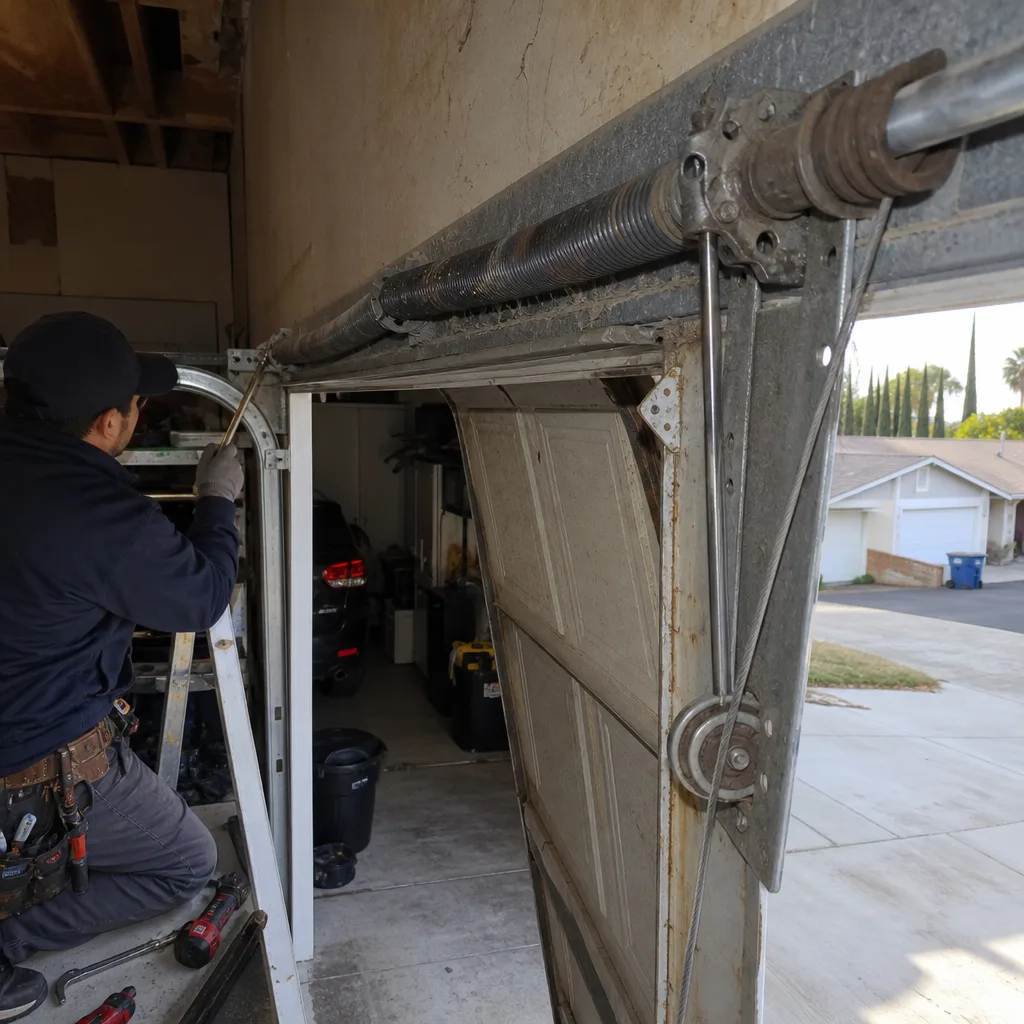 Before
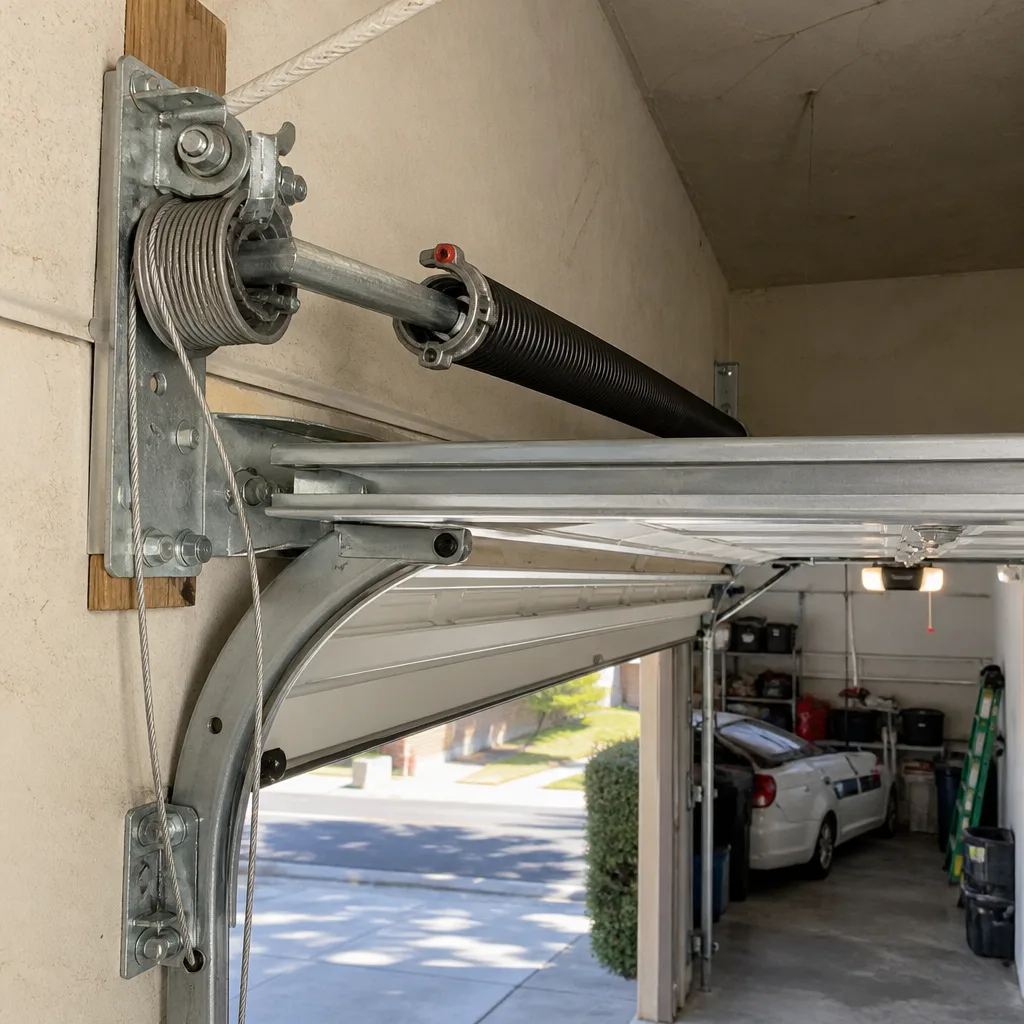 After
 Before
 After
 Before
 After