
Last updated October 31, 2026
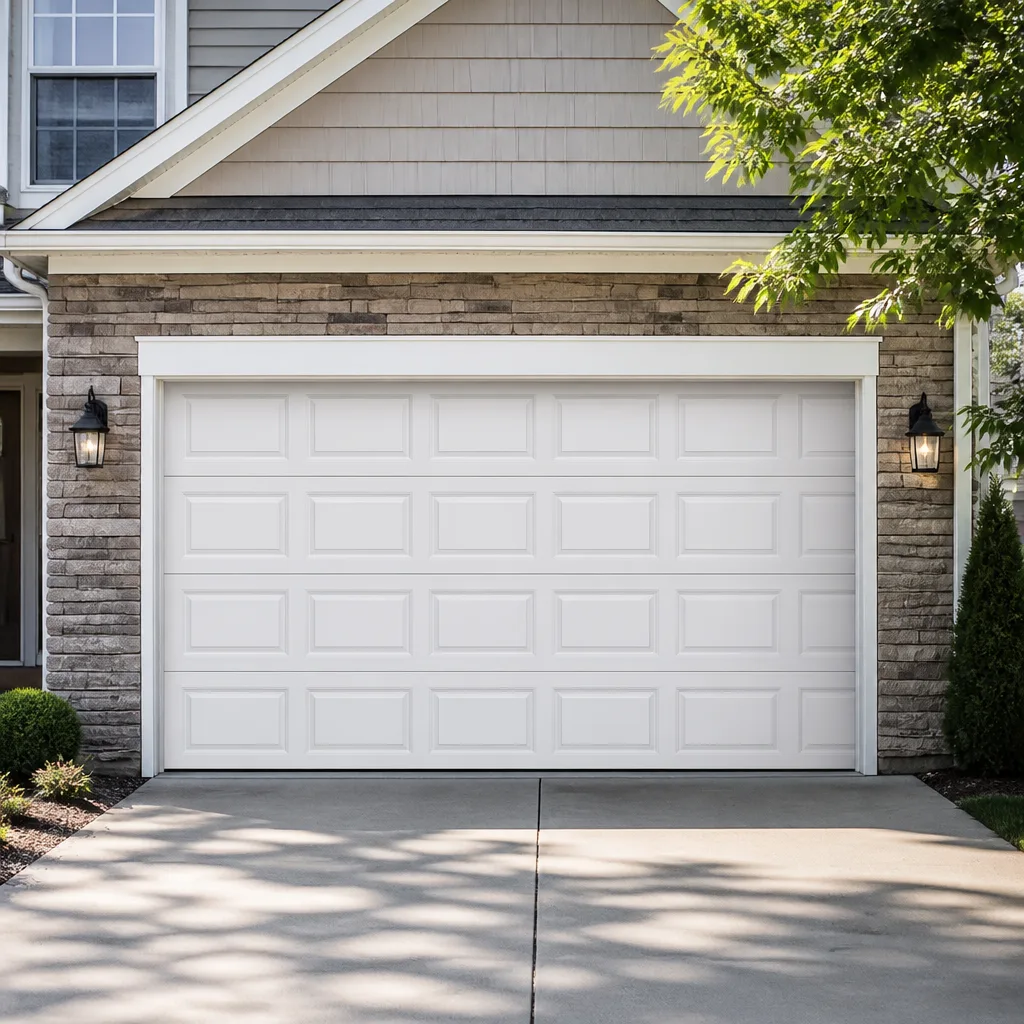 Raised-panel steel
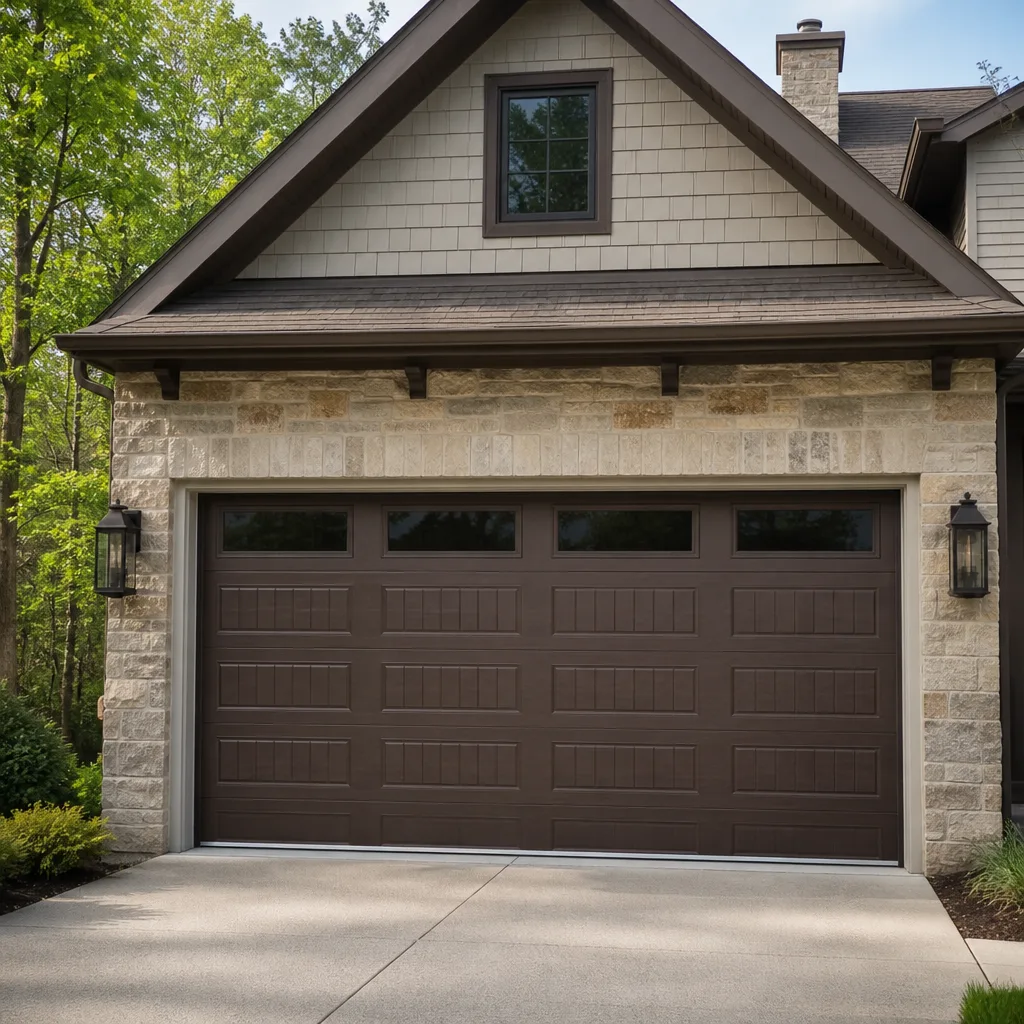
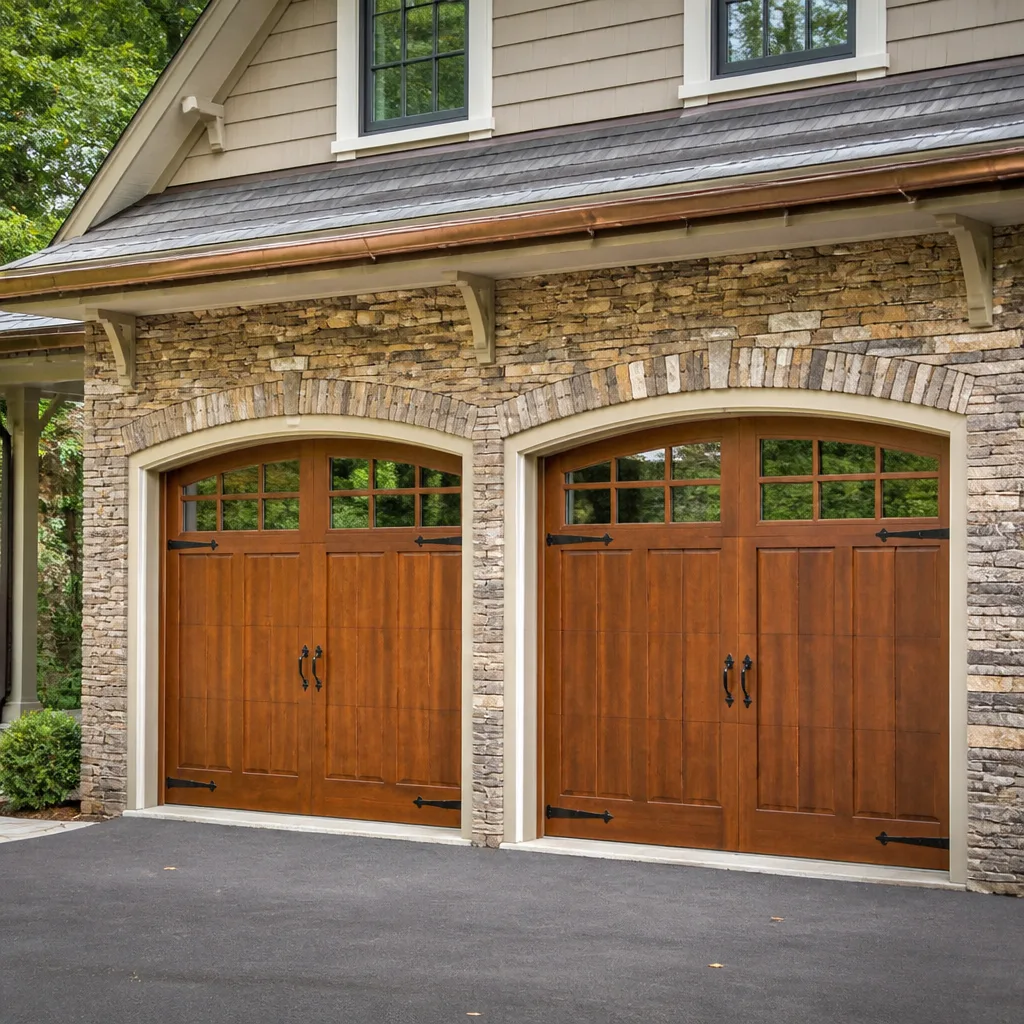 Carriage house
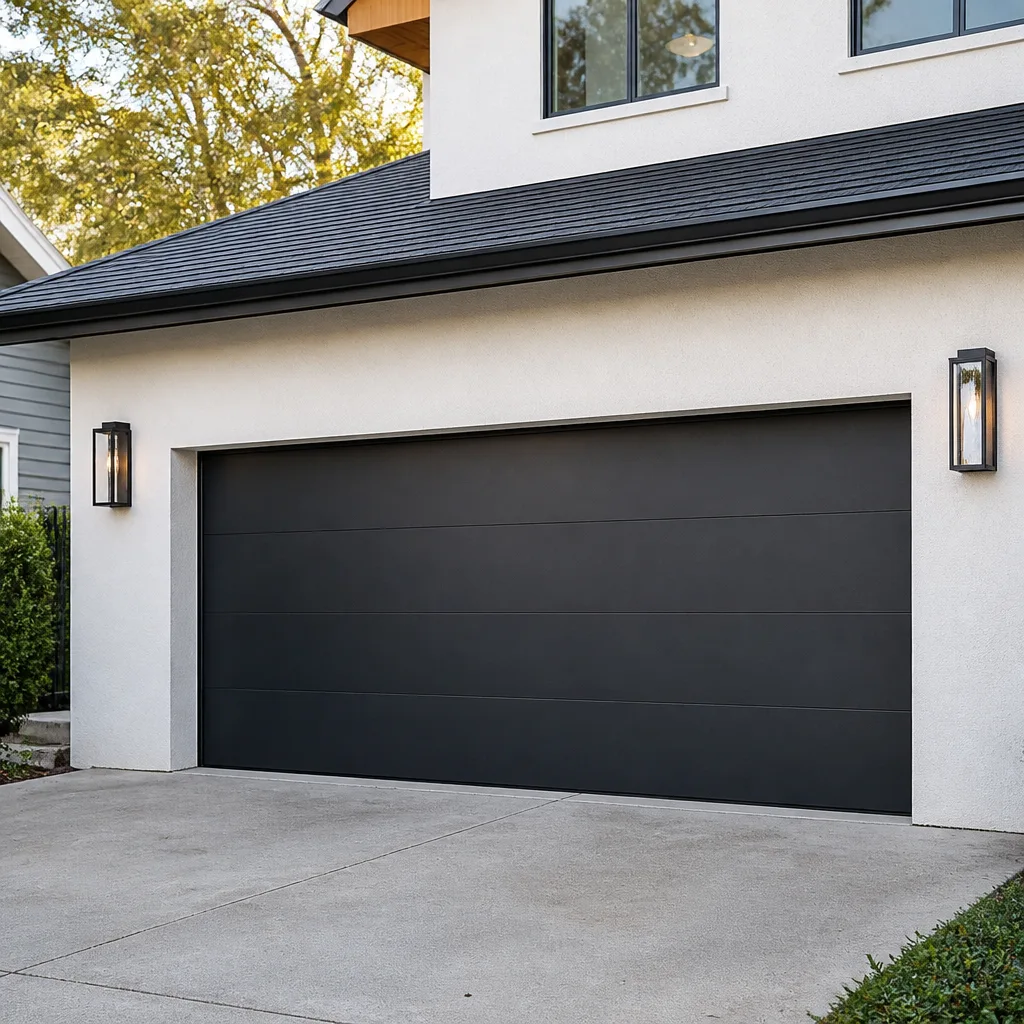 Modern flush
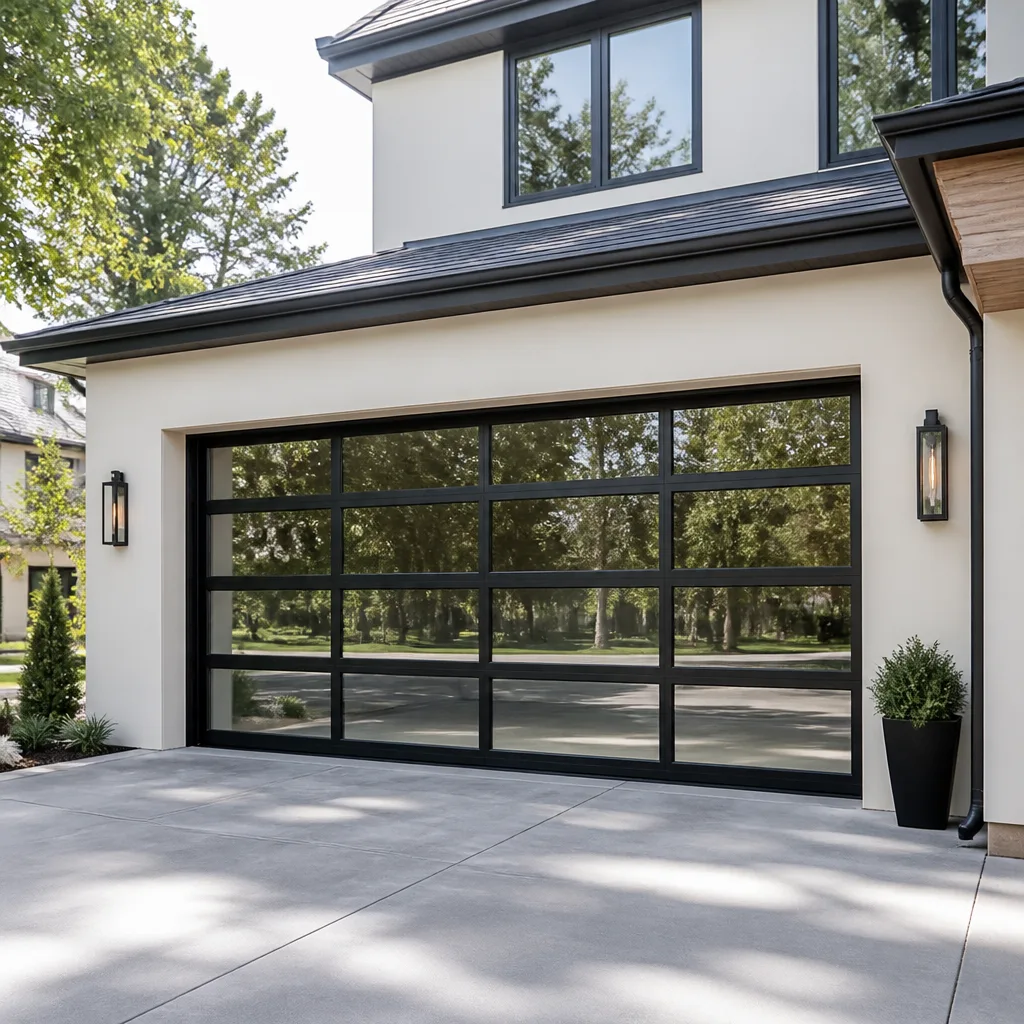 Full-view glass
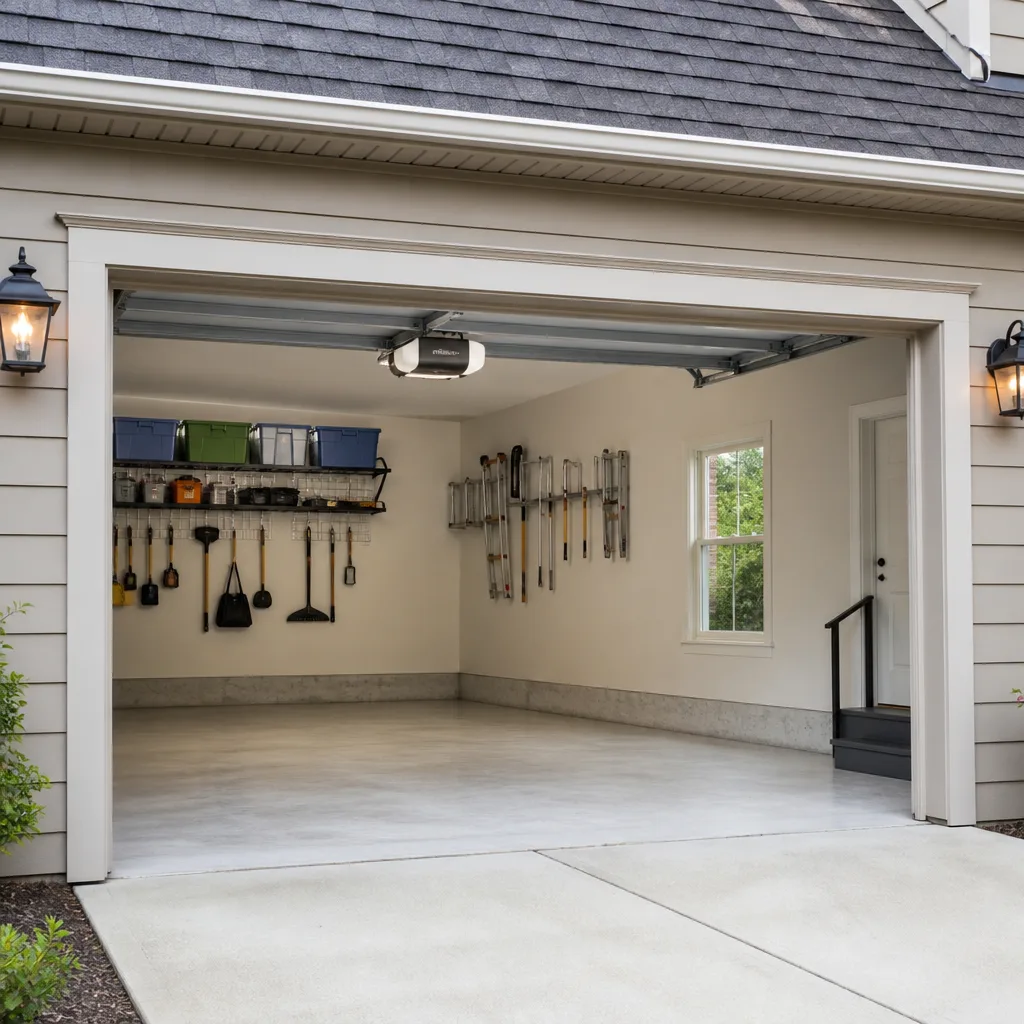 LiftMaster openers
 Chamberlain openers
Full 25-point door and opener safety check with every visit - springs, cables, rollers, tracks, and your LiftMaster or Chamberlain opener included
You get a price before we start. It does not change when the truck arrives.
Get your free estimateGarage Door Repair Maintenance Checklist for San Diego Homeowners
The standard “12-point garage door maintenance checklist” you find online was written for climates with four seasons. San Diego has one, and it’s harder on certain components than most homeowners realize. A garage door in Normal Heights ages differently than one in Minneapolis or Boston. We’re not fighting ice in the tracks or snow load on the panels. We’re fighting salt-laden marine air, relentless UV exposure, and a dry heat that cooks the factory grease out of moving parts faster than any maintenance schedule written for Cincinnati would account for. This guide is the checklist we’ve built from thousands of repair calls across San Diego zip codes, not a template from a national home-improvement magazine. For more guides & resources, explore our blog.
Quick Answer
A garage door maintenance checklist for San Diego should be performed quarterly, not twice a year, with added attention to salt corrosion on all metal parts within five miles of the coast, UV degradation on any sun-facing panel surface, and lubrication of rollers, hinges, and springs using a silicone or lithium-based product that won’t dry out in our low-humidity air. The biggest preventable failures we see in San Diego are rusted bottom brackets, dry rollers that flatten and chatter, and photo-eye sensors knocked out of alignment by wind-blown debris during Santa Ana season.
Styles & brands we work with
Table of Contents
- Understanding San Diego’s Unique Stress Patterns
- The Monthly and Quarterly Checklist
- Lubrication for Low Humidity and High UV
- Salt Air Protocol for Coastal Zip Codes
- UV and Thermal Cycling: Protecting Panels
- Opener Logic Board and Photo-Eye Checks
- A Month-by-Month Task Calendar for San Diego
- Common Mistakes to Avoid
- When to Call a Professional
- Frequently Asked Questions
Understanding San Diego’s Unique Stress Patterns
A garage door in San Diego lives a different life than one almost anywhere else in the country. We average 266 sunny days a year. That sounds pleasant, and it is, for people. For a garage door, it means the paint, the weatherstripping, the nylon rollers, the rubber on the bottom seal, and the insulation inside the panels all take UV radiation day after day with almost no break. UV doesn’t just fade paint. It breaks down the molecular structure of rubber and vinyl. What looks like a cosmetic issue on a Clopay or Amarr steel door in Tierrasanta or Mira Mesa is usually the early stage of a material failure that will let water into places it should never go.
The marine layer is the second factor homeowners underestimate. June Gloom isn’t just a tourist complaint. That low cloud sitting over Ocean Beach, Point Loma, Pacific Beach, La Jolla, and Coronado every morning carries fine salt particles off the Pacific. Salt plus moisture equals corrosion. Hinges rust from the inside out. Torsion springs get surface pitting that reduces their fatigue life. The steel reinforcing struts on a Wayne Dalton door a mile from the beach can look worse after five years than the same door in El Cajon looks after fifteen. Our Garage Door Repair in Rancho Santa Fe team sees the difference every week; inland, the failure mode is dry heat. West of Interstate 5, it’s salt and humidity cycling that never quite dries.
The third pattern is thermal cycling without temperature extremes. It rarely freezes in San Diego, so we never see the dramatic cold-weather failures that destroy doors in the Midwest. What we get instead is slow, repetitive expansion and contraction. Steel panels heat to 130 degrees on an August afternoon in Santee, then cool to 60 at night. That’s a 70-degree swing on metal that expands and contracts at a different rate than the wood or aluminum framing it’s mounted to. Over years, fasteners loosen, seams develop hairline gaps, and the alignment of the track shifts. None of that is dramatic. All of it contributes to wear that a four-season checklist never addresses.
The Monthly and Quarterly Checklist
We recommend San Diego homeowners do a quick visual and functional check every 30 days, and a more involved inspection every three months. The monthly pass takes ten minutes and catches failures before they strand you outside or, worse, before a loaded door falls on a family member. The quarterly pass takes under an hour and prevents most breakdowns entirely.
Monthly: 10-Minute Visual and Functional Check
- Open and close the door one full cycle. Stand where you can see both tracks and listen. A smooth, even hum with no grinding, scraping, or rhythmic thumping is what you want. Any new noise is a component telling you something.
- Watch the door edges as it moves. The gap between the door and the track on both sides should stay consistent. If the door shifts left or right, or you see daylight between the panel and the weatherstrip on one side, the door is off balance.
- Check the bottom seal. With the door closed, look at the rubber seal along the floor. It should touch the concrete or asphalt evenly along the entire width. Gaps let in dust, pests, and in coastal San Diego, damp salt air.
- Test the auto-reverse. Place a roll of paper towels flat under the door and close it. The door should reverse within two seconds of contacting the object. This is the single most important safety feature on your door. Test it monthly, not yearly.
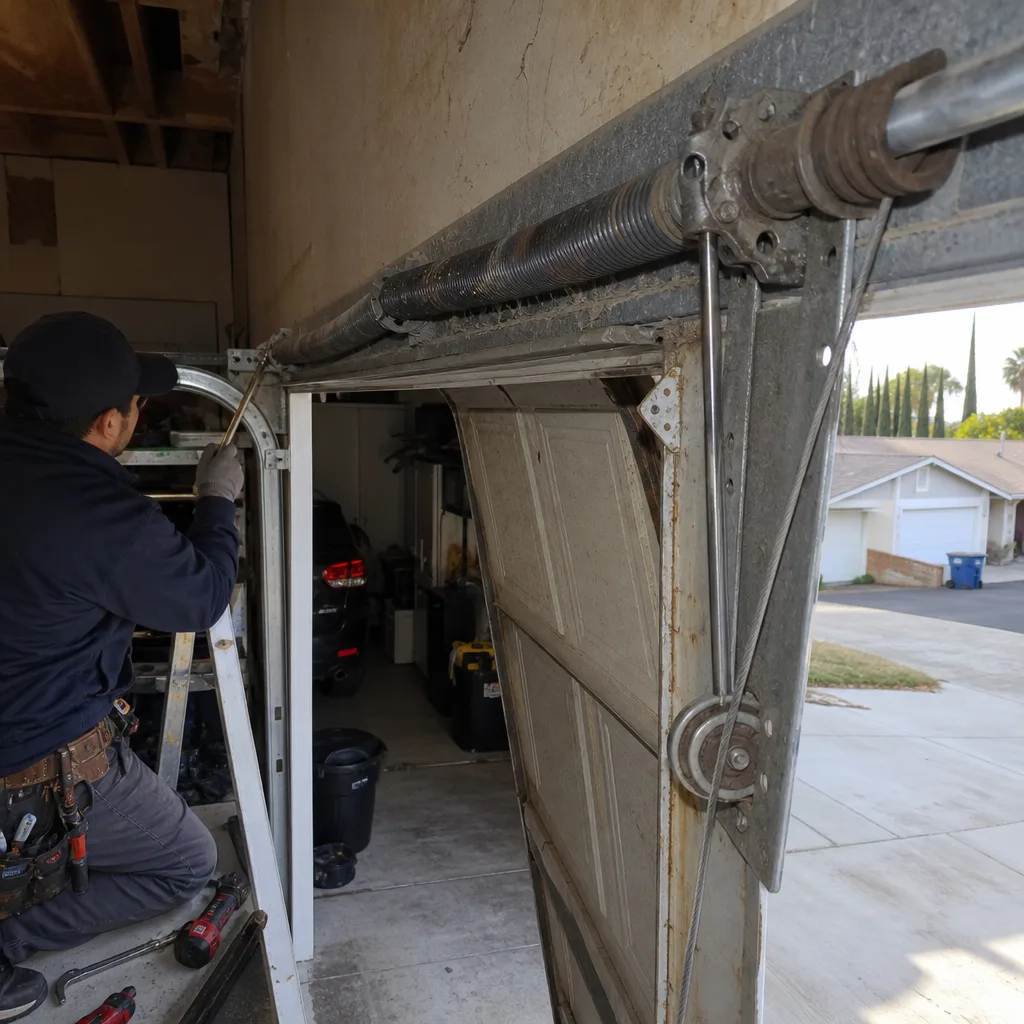
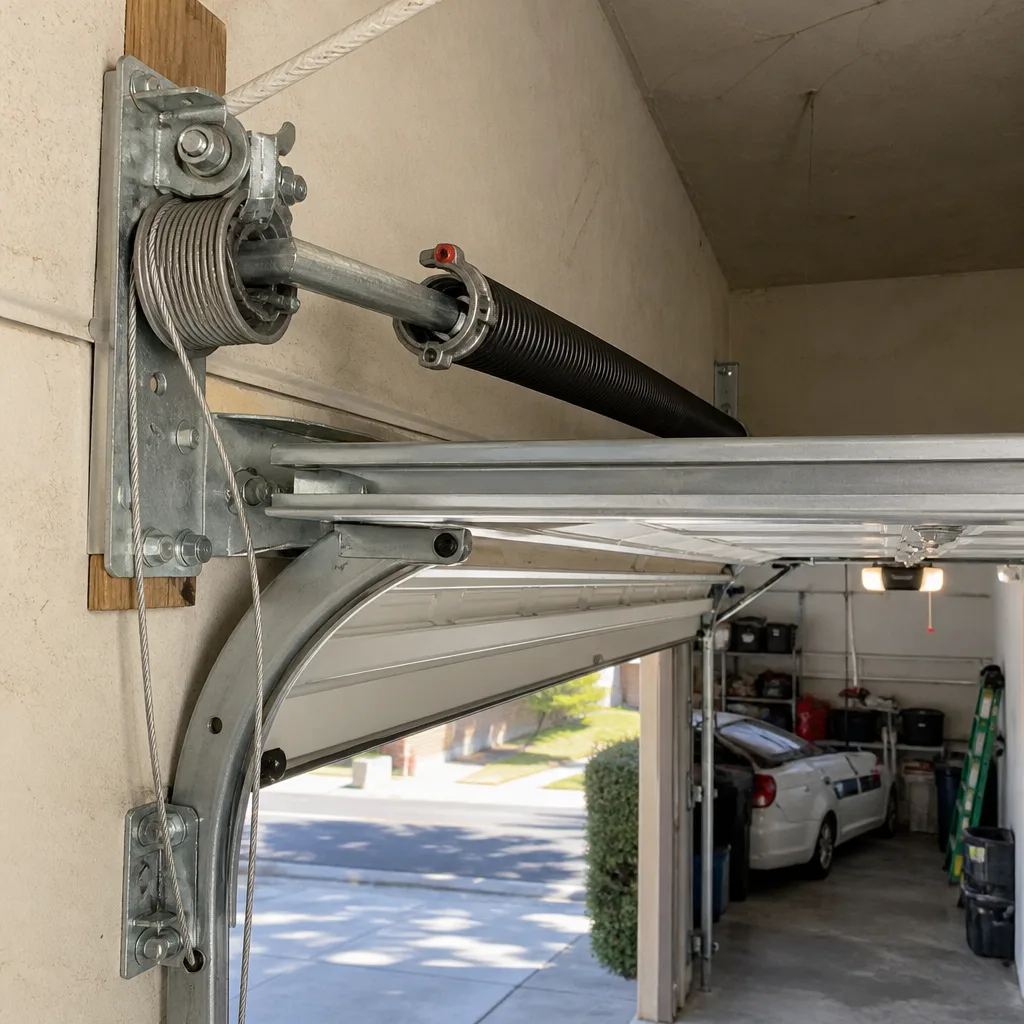
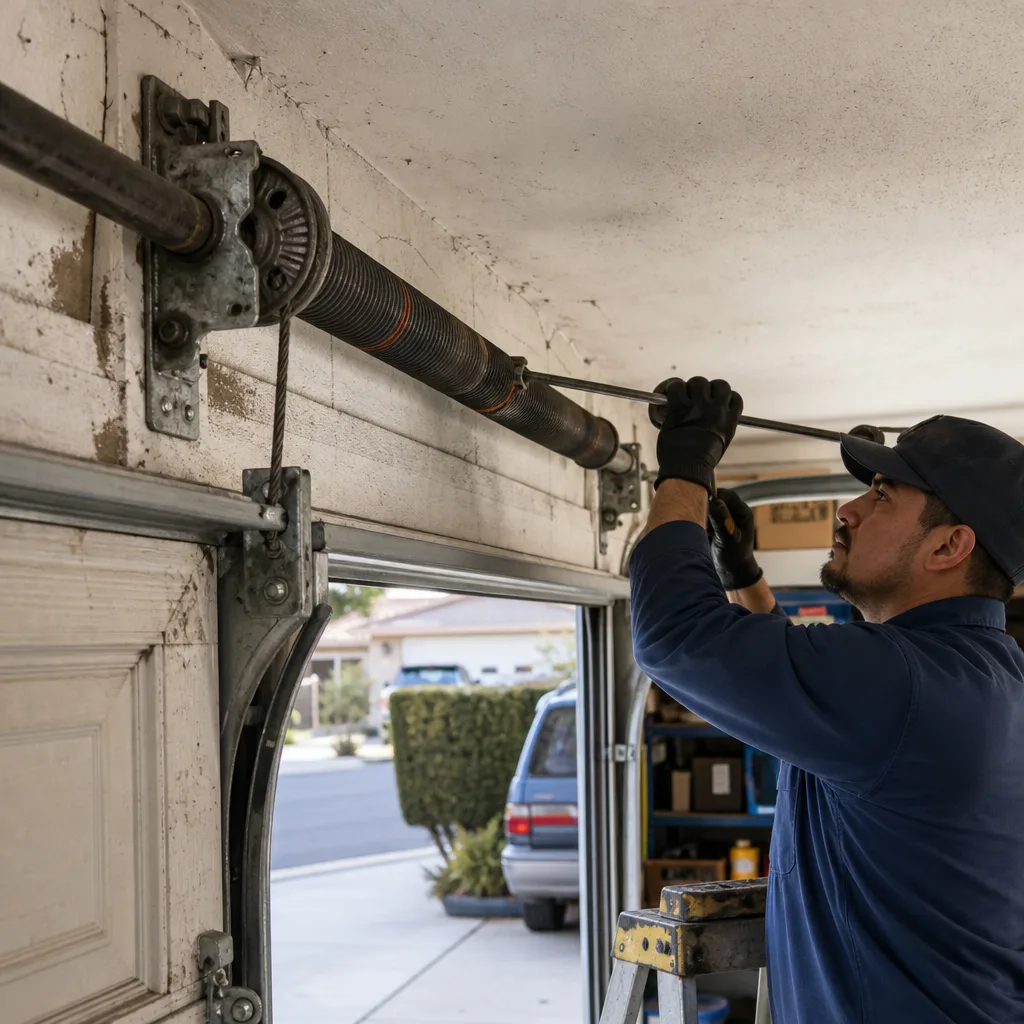
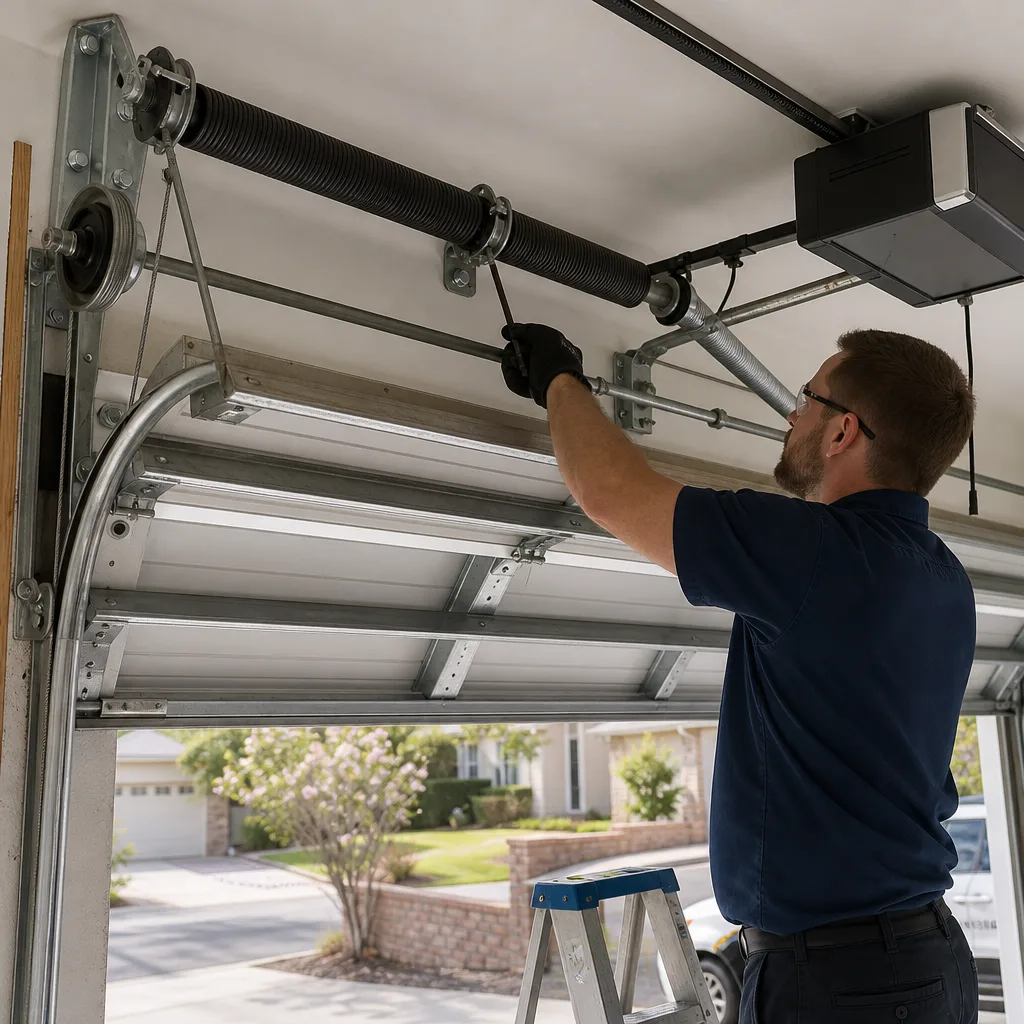
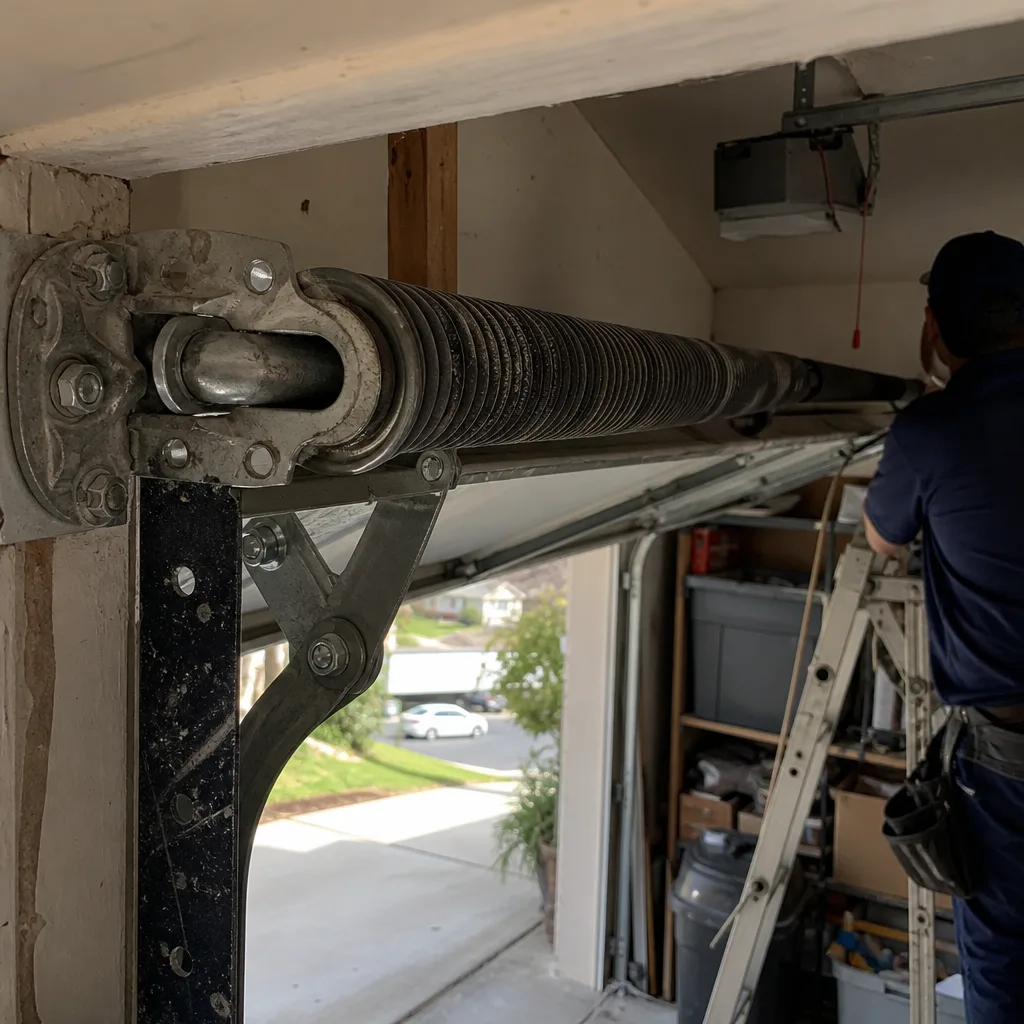
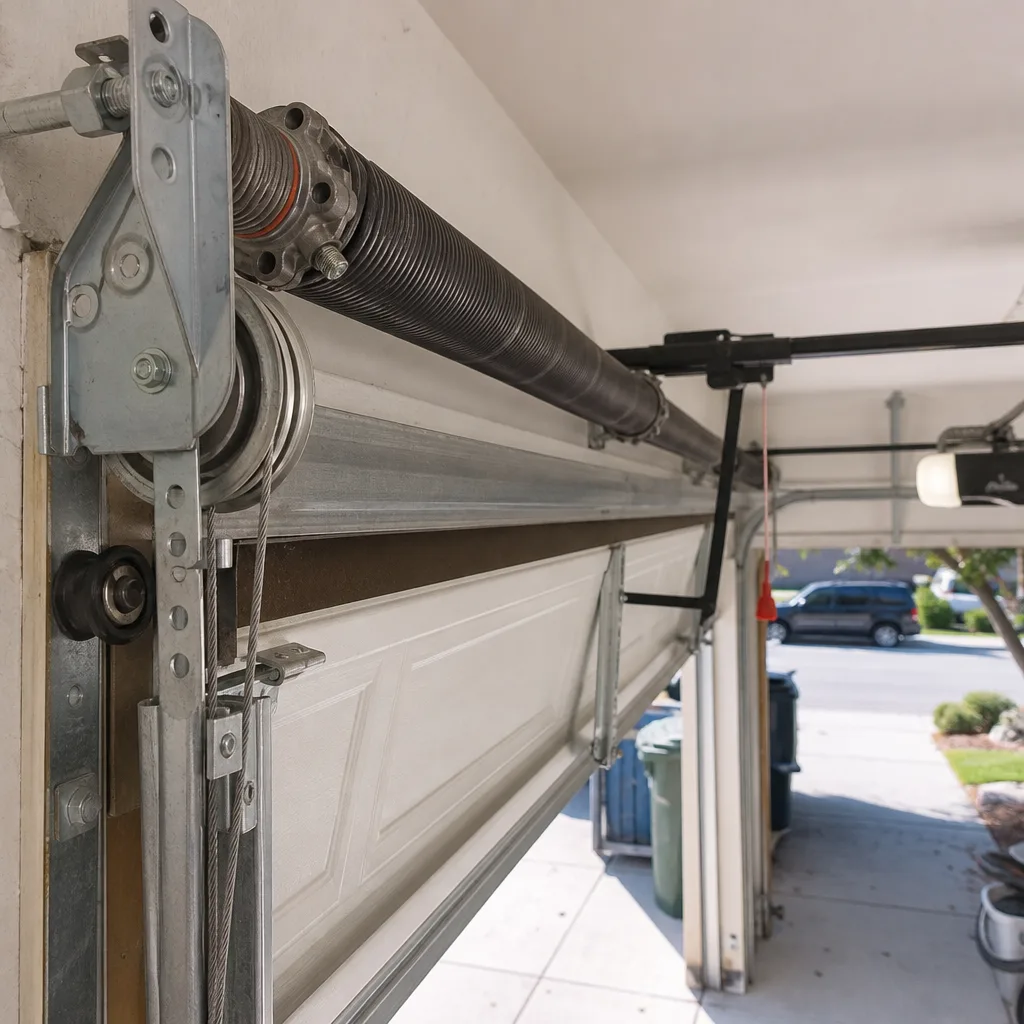
- Look at the springs. With the door closed, check the torsion springs above the opening. Surface rust, a visible gap in the coil, or one spring that looks looser than the other are all warning signs. Do not touch the springs; just look. Spring failure is not a DIY fix. A torsion spring under tension holds enough energy to kill or maim. If you see damage, call a professional the same day.
- Check the photo-eye sensors. At the bottom of both tracks, the two sensor units should face each other with steady indicator lights. If a light is blinking or dark, the sensors are misaligned or blocked. More on this below, because in San Diego these are a frequent failure point.
Quarterly: The 45-Minute Inspection
- Lubricate all moving parts. Rollers, hinges, the lock, the torsion spring, and the opener chain or screw. Use a silicone-based or white lithium spray. Skip this in San Diego’s dry months and the rollers will flatten within a year or two. We cover exact products and technique in the next section.
- Inspect roller condition. Nylon rollers wear faster than steel in our heat. Look for flat spots, cracks in the nylon wheel, and excessive play where the roller meets the stem. Replace any roller that doesn’t spin freely.
- Tighten all visible hardware. Use a socket set on the track brackets, the hinge bolts, and the opener mounting bolts. Thermal expansion from San Diego’s daily temperature swings loosens hardware faster than in inland, more stable climates.
- Clean and condition the weatherstripping. Wipe the bottom seal and side seals with a mild soap solution, then apply a rubber protectant like 303 Aerospace Protectant. This adds months of life in high UV exposure.
- Check the manual release function. Pull the red release cord while the door is closed. The door should lift manually with moderate effort. If it feels heavy and won’t stay up, the springs are worn and need professional attention.
- Examine panel surfaces for UV damage. On any side that faces the afternoon sun, look for paint fading, chalking, bubbling, or moisture penetrating the seams. Address these early and you preserve the panel. Wait, and you replace the panel.
Lubrication for Low Humidity and High UV
The manufacturer’s recommendation to lubricate garage door parts every six months assumes a climate with regular rain and moderate UV. San Diego’s dry air and intense sun mean that oils and greases oxidize and evaporate faster. We recommend quarterly lubrication, and more often in the inland valleys where summer temperatures routinely pass 90 in El Cajon, Lakeside, and Santee. A dry roller doesn’t roll; it skids. Every skid is metal filing away against a surface it was never supposed to touch. That’s the grinding noise people bring to us, and by then the fix is a replacement, not a spray.
The right product matters more than most people think. WD-40 is not a garage door lubricant. It’s a solvent that temporarily loosens grime and then dries, leaving parts with less lubrication than they had before. We tell homeowners to use a white lithium grease in an aerosol can or a dedicated garage door lubricant like 3-IN-ONE Professional Garage Door Lube or Blaster Garage Door Lubricant. These products leave a dry film that doesn’t trap dust the way heavy grease would. Here’s the sequence we use:
- Spray the torsion spring along its entire length while the door is closed. Move the spray in a consistent, even pass. You want a light film, not a dripping coat.
- Lubricate each roller at the point where the shaft meets the wheel. Do not lubricate the roller where it runs inside the track. The track should stay clean and dry; lubricant there only attracts dirt and causes the door to bind.
- Apply a small amount to each hinge. The point of the hinge pin is where metal meets metal. One short spray per hinge is enough.
- Lubricate the opener rail. For a chain drive, spray the chain lightly. For a screw drive, apply white lithium grease along the screw’s full length. For a belt drive, wipe the belt with a dry cloth and leave it alone; belts do not need lubrication, and adding product shortens the belt’s life.
- Spray the lock mechanism if your door has one, and work the key in and out a few times.
- Wipe away any excess with a rag so it doesn’t drip onto the track or the door face.
One note on springs: a torsion spring failure is dangerous and not a DIY repair. These springs are wound under hundreds of pounds of tension. The steps above describe how to lubricate the outer surface, not how to service the spring itself. If a spring breaks, you’ll hear it. It sounds like a gunshot in the garage. Leave the door alone, don’t try to open it manually, and call for service. At Admiral Garage Door Repair, we work on springs for Genie, Chamberlain, Clopay, Amarr, and other leading brands every day, and even with proper training and tools, respect for that stored energy is always the operating rule. For more guidance, see our Garage Door Repair Troubleshooting: Common Problems and How to Fix Them. For urgent spring failures, call us at (833) 467-4069 to schedule a same-day assessment.
Salt Air Protocol for Coastal Zip Codes
If you live west of Interstate 5 in San Diego, the air you breathe contains sodium chloride particles small enough to slip past weatherstripping and settle on metal surfaces. Ocean Beach, Mission Beach, Pacific Beach, La Jolla Shores, Del Mar, Encinitas, Carlsbad, and Oceanside all share this microclimate, and the effect on garage door hardware is measurable. Hinges rust in half the time. Bottom bracket bolts seize. The steel backing plates behind roller brackets develop surface rust that spreads under the paint and lifts it like a blister. The door still opens and closes, so homeowners don’t notice until a bracket snaps at an inconvenient moment, which is every moment when a bracket snaps.
Our coastal inspection protocol is different from the inland one. For properties within about five miles of the ocean, we recommend monthly attention to these specific points:
- Hinges and hinge pins. Look for orange-brown discoloration starting at the edges. Early rust can be removed with a wire brush and a light coat of rust converter before the part is compromised. Advanced rust means replacement; the hinge has lost structural integrity.
- Bottom seal brackets. The metal bracket that holds the rubber bottom seal is usually the first piece to rust on a coastal door because it sits near the ground where moisture collects. Check the screws and the bracket body. If the screws are seized, don’t force them; you’ll strip the heads or snap the screw. We replace these brackets on coastal doors routinely.
- Track surface and mounting brackets. Surface rust on the track itself is cosmetic if caught early. But rust where the track bolts to the wall is structural. Watch for expansion of the rust between the bolt head and the track; that’s a sign the metal underneath is degrading.
- Spring surfaces. Torsion springs on coastal doors develop a fine surface rust that, if left, creates pits. Pits are stress concentration points. Springs fail early most often because of pitting, not because the door is used more. A rust-inhibiting spray applied quarterly adds meaningful life to coastal springs.
- Exposed cable and pulley surfaces. The steel cables that lift the door run on pulleys behind the tracks. In salt air, the cable can develop rust where it wraps the pulley. A frayed or rusted cable will fail under load. If you see any broken strands, stop using the door immediately.
For homeowners in Del Mar or La Jolla who want a full coastal corrosion inspection, our team handles the same brands we service everywhere in San Diego: Clopay, Amarr, Garage Door Opener Repair in Rancho Santa Fe covers northern coastal and inland communities with the same protocols, and we bring the same brand-specific knowledge to every call.
UV and Thermal Cycling: Protecting Panels Before Paint Failure Becomes Panel Failure
The sun-facing side of a garage door in San Diego takes more UV over a decade than a door in Portland takes in twenty years. Learn to spot trouble early with our Garage Door Warning Signs: A San Diego Homeowner’s Reference Guide. For homes with west-facing or south-facing garage doors in neighborhoods like Clairemont, North Park, University City, or Chula Vista, the door is the most sun-exposed large surface on the property. The failure progression is predictable: paint fades first, which is cosmetic. Then the surface starts chalking, which is the resin in the paint breaking down. Then fine spider cracks appear. Then the panel surface, now unprotected, begins to absorb moisture from morning marine layer and release it through the day’s heat. That cyclic wetting and drying, over a season or two, causes the steel to rust under the paint or the wood to swell and split at the seams. By the time the homeowner sees bubbling paint, the panel is usually too far gone to repaint; it needs replacement.
The check is simple. Every three months, stand at the sun-facing side of your door at mid-morning and run your hand over the surface. Chalking feels powdery. Cracked paint breaks the smooth finish. Bubbling means corrosion underneath. Any of these signs means the protective layer has failed, and the clock on the panel is running. A professional repaint before rust takes hold will cost a fraction of a panel replacement. Put another way: a quart of good exterior paint and an afternoon’s work can save a Clopay or Amarr door that costs four figures to replace.
Thermal cycling is the other half of the panel story. Garage doors are mounted so the panels can move slightly as they expand and contract. The tracks are designed to accommodate this. But over years of San Diego’s daily temperature swings, the fasteners that hold the track brackets to the frame can loosen. A track that’s a sixteenth of an inch out of plumb causes the rollers to bind slightly. The door gets heavier with every cycle, which wears the springs faster, which changes the balance, which wears the opener motor faster. It’s a chain reaction that starts with loosened hardware and ends with a service call. Tighten the track bracket bolts quarterly. It takes five minutes and breaks the chain before it starts.
For homeowners considering a door replacement, the panel material matters in this climate. Wood looks beautiful but demands the most maintenance under San Diego’s sun, especially within sight of the water. Steel with a quality factory finish from Clopay or Amarr holds up better. Aluminum avoids rust but dents more easily. We run through these trade-offs with every customer because the right choice depends on the house, the exposure, and how often the owner is willing to do maintenance. Garage Door Installation in Rancho Santa Fe starts with these conversations, and our installers match the panel, the insulation level, and the finish to the specific street exposure, not just the zip code.
Opener Logic Board and Photo-Eye Checks Before Santa Ana Season
Santa Ana winds in San Diego don’t bring rain. They bring hot, dry air from the east and, with it, airborne dust, leaves, palm fronds, and shredded paper from recycling bins that were fine twenty minutes earlier. All of that debris ends up somewhere, and a surprising amount of it ends up on the threshold of a garage door, right where the photo-eye sensors live.
The photo-eye sensors are the two small units mounted near the floor on each side of the garage opening. They project an invisible beam. If the beam is interrupted while the door is closing, the door reverses. It’s a safety feature on every opener made since the early 1990s, including every openers we service from Chamberlain, Genie, and LiftMaster. When the sensors get bumped out of alignment or covered in wind-blown dust, the beam doesn’t connect, the sensor light blinks, and the opener refuses to close. From the homeowner’s perspective, the door suddenly “doesn’t work.” In reality, the safety system is working exactly as designed; the issue is alignment or obstruction.
Before Santa Ana season kicks in, which in San Diego typically runs from September through November, we recommend a specific opener check:
- Locate both sensor units. Wipe each lens with a soft, dry cloth. Dust on the lens can scatter the beam even when the units are perfectly aligned.
- Check that each sensor is mounted securely. Over time, vibration from the opener and normal door movement loosens the mounting brackets. Give each a gentle push; if it moves, tighten the bracket screw until it sits firmly.
- Check the aiming. Both units should face each other directly. A sensor that’s been knocked so it points slightly up, down, or sideways will fail to connect. Adjust the angle until the indicator light comes on steady.
- Check the wire connections. Each sensor has a low-voltage wire running to the opener’s logic board. A loose wire at the terminal strip or a chewed wire (rodents love garage interiors) will disable the sensor. Look for visible abrasion or loosening at the connection point.
- Test the door. Close it with the wall button and wave your hand through the beam while it’s closing. The door should stop and reverse immediately. If it doesn’t, the sensors are not active, even if the light is on.
Logic boards fail in a different way. They’re electronic, and they’re mounted inside the opener housing where they’re exposed to temperature swings and vibration. Symptoms of a failing board include intermittent operation, a door that starts then stops, or an opener that only works with one of the two remotes. We get calls for “the opener is acting weird” and often the written diagnosis is a component-level failure on the board, not a dead motor. Opener repair is its own diagnosis, and it’s one of the three services we specialize in at Admiral Garage Door Repair. A generalist will often swap the whole opener because it’s simpler. We trace the fault to the board, the capacitor, the gear, or the sensor because we work on Chamberlain, LiftMaster, and Genie openers every week and know their failure patterns. Opener repair should always start with a real diagnosis, not a replacement quote.
A Month-by-Month Task Calendar for San Diego
Most maintenance checklists organize by calendar season. San Diego’s actual seasons are June Gloom, summer heat, Santa Ana, and the brief winter rain that occasionally surprises us. Here is the calendar we give homeowners, structured around what actually happens and when:
- January – February (rain window): Test the bottom seal for water intrusion after any rain. Clear debris from the track. Check all outdoor hardware for rust now that it’s been wet; January rust is easier to stop than August rust. Tighten track bracket bolts. Inspect the weatherstripping on all four sides for cracking after the first cold snaps; yes, 45 degrees counts as a cold snap here and it’s enough to split old rubber.
- March – April (transition to dry): This is the best time for a complete lubrication pass. Doing it now sets the door up for the dry season. Inspect cables and pulleys carefully after winter. Test the manual release and door balance; the door should stay in place when opened halfway.
- May – June (marine layer peak): Coastal homeowners should do a full salt-air inspection now. Inland, start checking panel surfaces on sun-facing doors for UV chalking. Clean photo-eye lenses more frequently; morning condensation mixes with dust to make a film that scatters the beam.
- July – August (peak heat and UV): Lubricate again. Inland, in particular, the dry heat is cooking lubricant faster than fall-winter-spring. Look for any signs of drying or cracking in the weatherstripping. Check panel surfaces again; this is the month when paint failure accelerates. If you’ve used the door more than usual this summer, it’s also worth a roller inspection.
- September – October (Santa Ana): The opener check described above belongs here. Clean sensor lenses weekly if you’re in a windy canyon. Inspect the door’s outer surface for impact damage from airborne debris. Re-tighten all hardware after the first big wind events; the vibration works fasteners loose.
- November – December (wind-down): Inspect everything one more time before the holidays. Rollers, hinges, springs, cables, seal, tracks, sensors, opener chain or belt. This is also the right time to have a professional do a full-system assessment if you haven’t had one in a couple of years, before you’re expecting holiday guests parking in the driveway and a garage door that decides to announce a major failure at seven in the morning.
Common Mistakes to Avoid
- Using WD-40 as a garage door lubricant. It’s the most frequent mistake we see. WD-40 is a water displacer and solvent, not a lubricant. It cleans grime off a hinge and then evaporates, leaving the metal drier than it was. Use white lithium or a silicone-based garage door lubricant instead.
- Lubricating the track. The rollers roll along the track’s interior surface; they don’t slide. Adding lubricant there just creates a sticky paste of oil and dust that increases friction. Keep the track clean and dry. Lubricate the rollers, hinges, and spring.
- Ignoring a noisy door because it still works. A garage door that’s suddenly grinding or squealing is not “working fine except for the noise.” The noise is material being removed from a component that will eventually fail. Address it when it starts, not when the door is stuck halfway with your car inside.
- Repainting over panel rust without treating the metal. If bubbled or rusted, the panel needs the surface prepared or the new paint will flake within a season. Half-surface repainting in this sun is a repeated cost, not a saved cost.
- Skipping the auto-reverse test because it took too long last time. The test takes two minutes. It’s the only safety barrier between a closing door and a child, a pet, or an object you forgot was in the door’s path. Test it monthly, no exceptions.
- Assuming a broken spring is a DIY job. We see well-intentioned homeowners in Poway and Tierrasanta attempt spring replacement after watching a video. Torsion springs hold dangerous tension. Do not attempt to repair or replace a spring yourself. The risk is severe injury or death. This is universally a professional job.
- Lubricating on the same six-month schedule as the rest of the country. San Diego’s dry air and sun shorten lubricant life. A spring that runs dry in February won’t wait politely until a June service. Move to a quarterly schedule or accept more wear on every moving part.
When to Call a Professional
Most of the monthly and quarterly tasks above are safe for a careful homeowner. A few are not. Call a professional when you see a broken or visibly damaged torsion spring, when the door is off its tracks, when a cable is frayed or snapped, when the door won’t stay open on its own, or when the opener works intermittently despite clean sensors and fresh remote batteries. Any job involving spring tension or load-bearing cables is a job for a trained technician with the right tools and a healthy respect for stored energy. Admiral Garage Door Repair offers free estimates in San Diego, works on equipment from Chamberlain, Genie, Clopay, and Amarr, and diagnoses the door and the opener separately so you only pay for the actual fix. Call (833) 467-4069 to schedule.
Frequently Asked Questions
Every three months during dry periods, and immediately after any sustained rain, because San Diego’s low humidity and high sun exposure dry out lubricants faster than the standard six-month interval. Use a white lithium or silicone-based garage door lubricant, never WD-40. Call (833) 467-4069 for a free estimate if the door still makes noise after a proper lubrication pass.
Rust on hinges, hinge pins, bottom bracket screws, track mounting bolts, spring surfaces, or cable ends, with the problem most severe within five miles of the coast, indicates salt air corrosion is underway. Coastal San Diego homeowners should inspect these points monthly even if the door operates fine, because rust on load-bearing hardware is a structural issue, not a cosmetic one.
Clean both photo-eye lenses with a dry cloth, ensure the sensors are securely mounted and facing each other, check the wire connections at the opener terminal, and then test the beam by waving your hand through it while the door closes. If the door still won’t close or the sensor light stays off, the issue may be a failing logic board, which requires professional opener diagnosis.
Grinding usually indicates dry rollers or hinges, debris in the track, or a roller that has flattened from heat and is dragging instead of rolling. Lubricate all moving parts first; if the noise continues, a roller or hinge is likely worn past the point of service and should be replaced before the damage extends to the track or the panel.
Yes, UV breaks down paint’s protective resin, leading to chalking and micro-cracks, which then allow moisture from San Diego’s morning marine layer to penetrate and rust the steel beneath or swell wood panels. The panel failure follows in one to three years once the paint is compromised; repainting before rust appears is the only way to stop the progression.
Clean and align the photo-eye sensors, secure their mounting brackets, inspect all sensor wiring, test the auto-reverse, and clear all loose debris from the door tracks and threshold in September or early October, before Santa Ana winds start pushing dust and tumbleweeds into the sensor path. Call (833) 467-4069 for an exact quote, estimates are free.
The Bottom Line
San Diego’s garage door maintenance is a quarterly discipline built for salt, sun, and wind, not a twice-a-year routine imported from a snow-belt magazine. Check moving parts monthly, lubricate quarterly, watch coastal corrosion, monitor sun-facing panels, and keep the sensors and opener in working order before Santa Ana season. These habits catch failures while they’re still small and fixable. When something’s beyond a homeowner’s safe reach, our Garage Door Repair services provide the brand-specific training and full tool inventory needed to handle it safely. Admiral Garage Door Repair works on Chamberlain, Genie, Clopay, and Amarr equipment, and free estimates are available at (833) 467-4069.
Written by the team at Admiral Garage Door Repair, serving San Diego since 2015.
See the difference
 Before
 After
 Before
 After
 Before
 After