

Last updated October 31, 2026
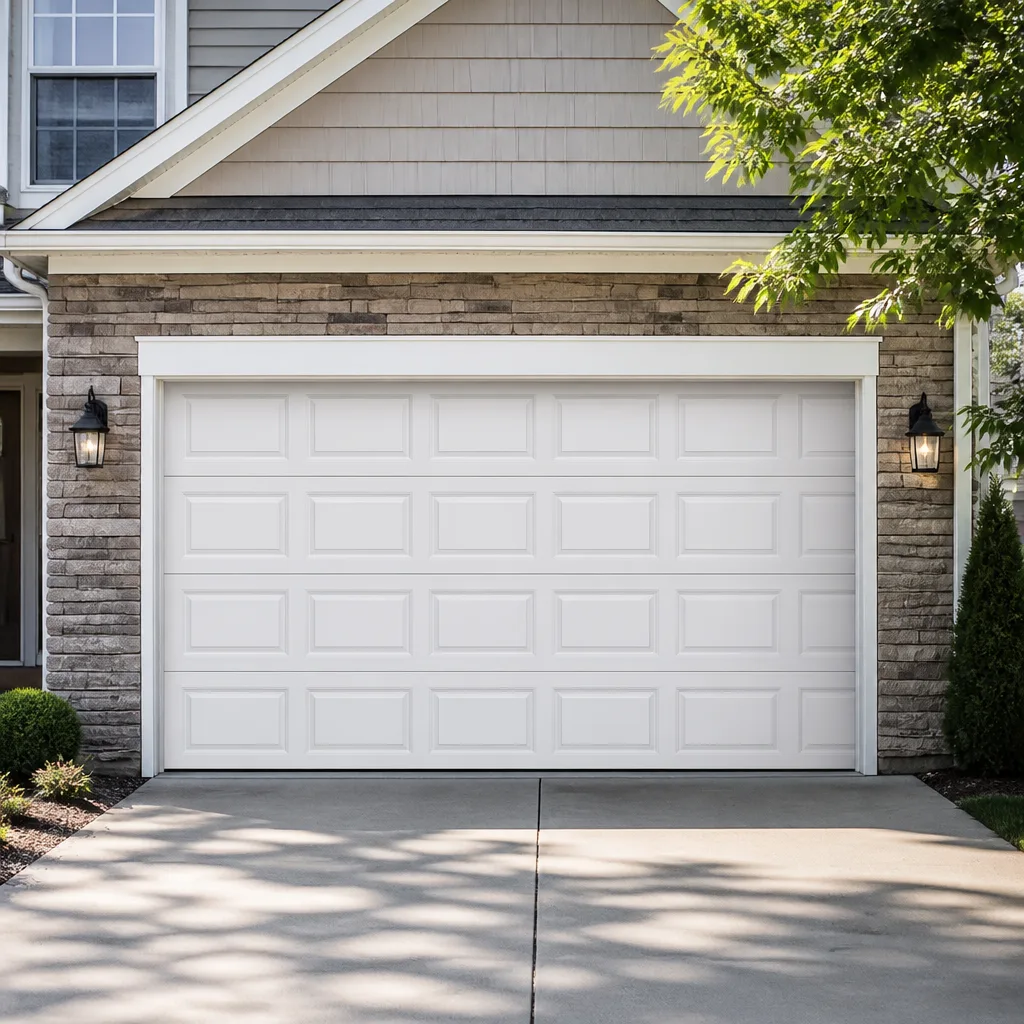 Raised-panel steel
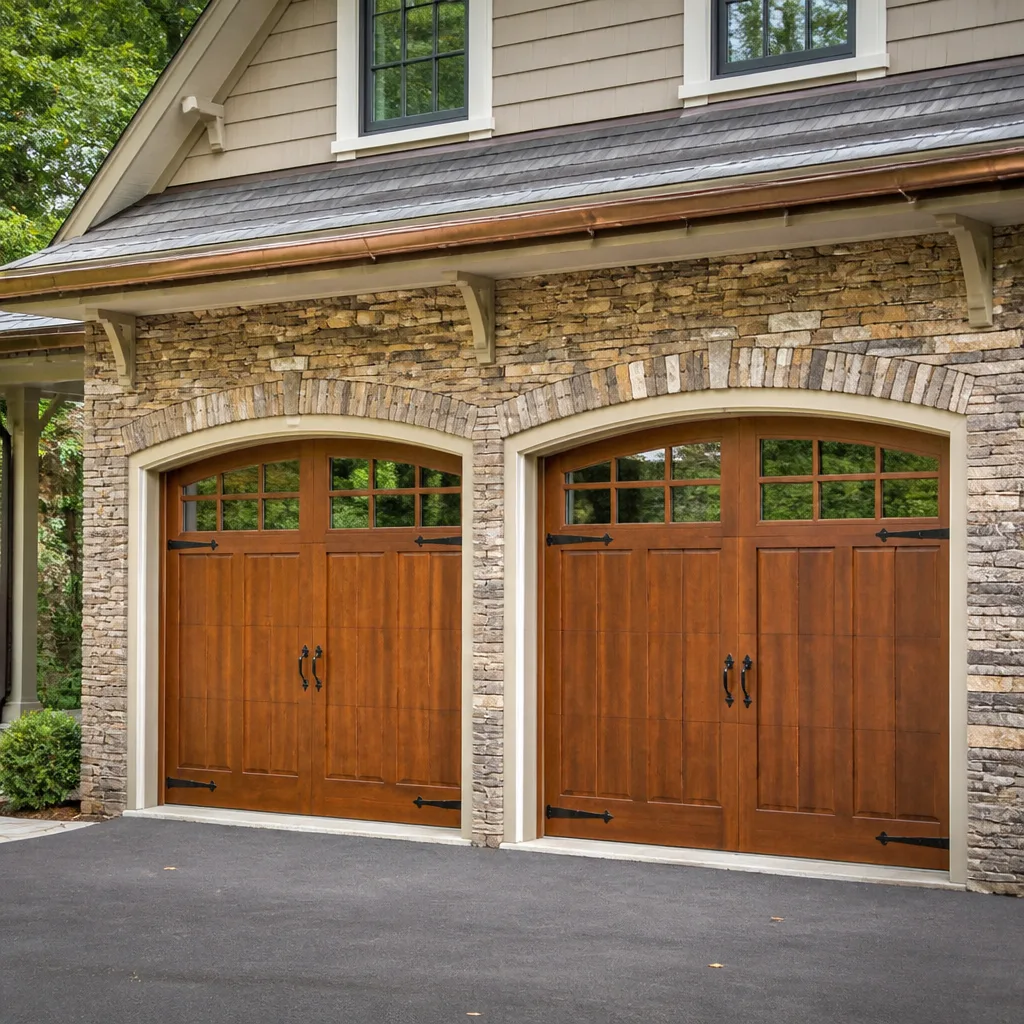 Carriage house
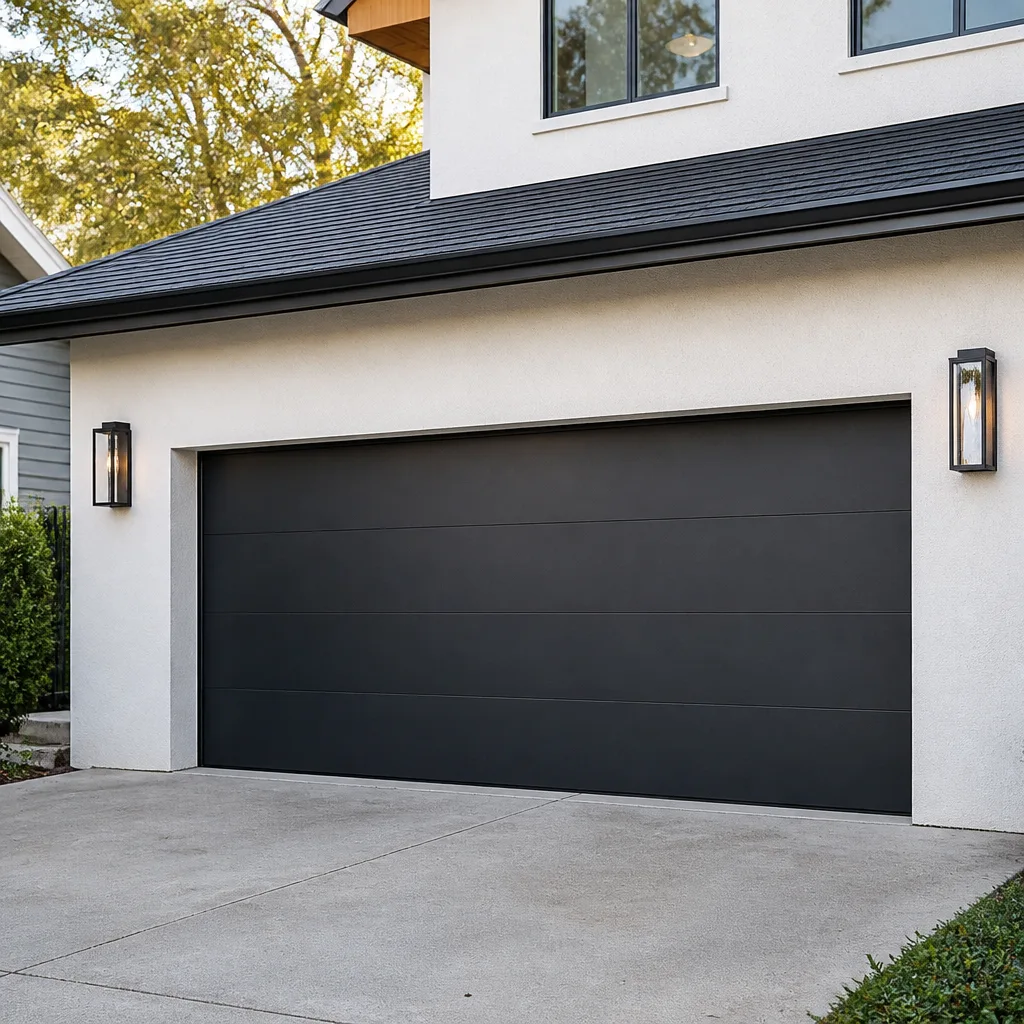 Modern flush
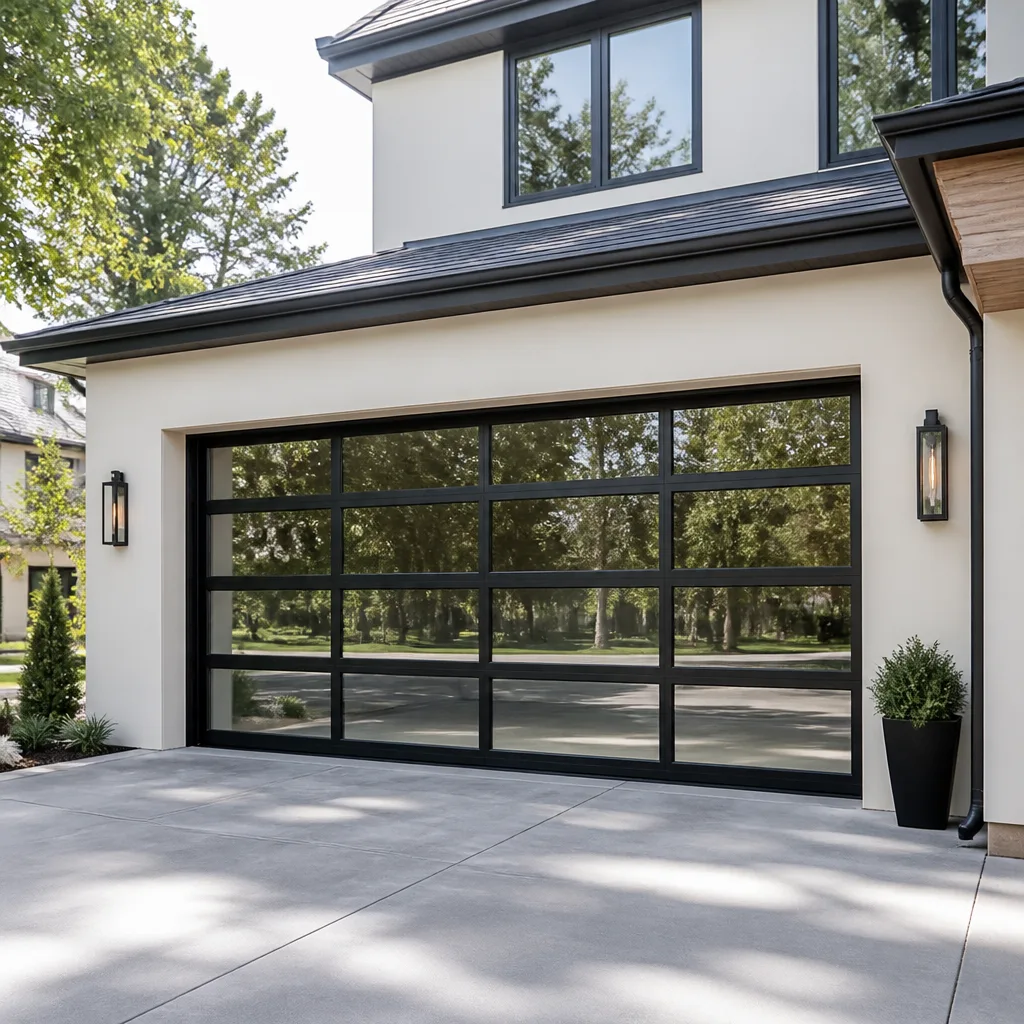 Full-view glass
 LiftMaster openers
 Chamberlain openers
Full 25-point door and opener safety check with every visit - springs, cables, rollers, tracks, and your LiftMaster or Chamberlain opener included
You get a price before we start. It does not change when the truck arrives.
Get your free estimateGarage Door Warning Signs: A San Diego Homeowner’s Reference Guide
Here’s something that surprises most San Diego homeowners: a garage door that fails catastrophically has usually been broadcasting its condition for weeks. The average garage door cycles up and down roughly 1,500 times a year. Each cycle stresses the springs, cables, rollers, and hinges in predictable ways. The sounds and movements you notice are not random. They are a diagnostic language. This guide teaches you to read it. By the time you finish, you’ll know which warning signs mean “schedule service this month” and which mean “do not operate this door again until a professional looks at it.”
Styles & brands we work with
Quick Answer
Most garage door problems in San Diego announce themselves through specific sounds (grinding, squealing, popping), movement changes (uneven travel, drift, hesitation), and visual cues (frayed cables, cracked springs, rust streaking). The key distinction to learn is whether a sign indicates routine wear that can wait a few days or an imminent failure that could drop a 150 to 400 pound door. When in doubt, stop using the door and call a specialist.
Table of Contents
- Sound-Based Diagnosis: What Your Garage Door Is Telling You
- Movement Pattern Red Flags: Reading Travel Speed, Drift, and Resistance
- Visual Inspection Points You Can Safely Assess from the Ground
- San Diego-Specific Accelerated Wear: Coastal Salt, UV, and Heat
- The Failure Urgency Matrix: Monitor vs. Stop-Use
- Opener Failure vs. Door Failure: Why the Diagnosis Changes Everything
- What Your Brand Tells Us Before We Arrive
- Common Mistakes to Avoid
- When to Call a Professional
- Frequently Asked Questions
- The Bottom Line
Sound-Based Diagnosis: What Your Garage Door Is Telling You
A garage door that’s a little loud and a garage door that’s three cycles from a broken spring sound almost identical to an untrained ear. But the physical difference is diagnosable from the ground. We’ve listened to thousands of doors across San Diego, from Point Loma to La Mesa, and the sounds break down into categories that point to specific components.
Here’s what we listen for when a homeowner describes a noise over the phone:
Grinding or metal-on-metal scraping
A grinding sound that follows the door as it travels usually points to rollers. Garage door rollers are either steel, nylon, or steel with ball bearings. Steel rollers wear against the track over time and produce a rasping sound that gets progressively worse. In coastal neighborhoods like Ocean Beach or Pacific Beach, salt air accelerates this process because the rollers pit and corrode faster than they would inland. That grinding is the roller surface degrading against the track. Left unaddressed, a worn roller can seize entirely, which yanks the door off balance mid-cycle.
Squealing during operation
A high-pitched squeal that occurs while the door is moving typically indicates a dry bearing or hinge. Hinges connect the door panels and pivot every time the door bends through the curve of the track. When the hinge bearings lose lubrication, they squeal. This is the most benign sound on this list. A silicone-based lubricant on the hinge pivot points often resolves it. But if the squeal persists after lubrication, the hinge has play and needs replacement before the panel corners start cracking.
Popping or snapping during operation
A sharp pop is a different animal altogether. This is a spring under stress releasing tension in sudden increments. Torsion springs, the kind mounted above the door opening, hold enormous mechanical force. When a spring starts to fatigue, the coil may shift fractionally on the shaft and produce an audible pop. Multiple pops over a short period mean the spring is nearing failure. Do not stand under the door when it is moving. Do not continue operating it. A spring that releases without a containment cable can cause serious injury.
Cable-related sounds
Cables that are beginning to fray make a brushing or whisking sound as they pass through the pulleys. You might hear it as a soft, rhythmic scrape at a specific point in the travel. Frayed cables are a stop-use condition. The cable carries the full lifting force of the spring. When a frayed cable parts, the door weight transfers unevenly to the remaining cable, which typically fails immediately after. The door then drops or slams into the track.
Rattle or vibration when the opener runs
A rattle that occurs only when the opener motor is running, but not when the door is moved manually, comes from the opener itself. Loose mounting bolts on the opener unit, a worn drive belt, or a failing sprocket on a chain-drive model all produce vibration noise. This is an opener-specific symptom, not a door problem. We treat opener diagnosis as its own specialty because replacing door components will not fix an opener rattle. On LiftMaster and Chamberlain units particularly, we see the rubber drive belts stretch over time and slip on the sprocket, producing a chatter at the top of the travel.
Movement Pattern Red Flags: Reading Travel Speed, Drift, and Resistance
Sound is only half the diagnostic picture. How the door moves tells you where the problem lives. You can perform these observations from a safe distance, ideally standing several feet to the side of the door, never directly underneath it.
Uneven travel speed
Watch the door as it travels from fully closed to fully open. A healthy door moves at a consistent speed through the entire range. If you see the door surge faster in one section and slow in another, something is altering the balance. The usual suspects are a spring losing tension or a roller binding in the track. In a balanced door, the spring does most of the lifting work. When spring tension drops, the opener motor has to work harder at the bottom of the travel and the door accelerates once momentum builds. This uneven speed is a sign that the spring is failing, not the opener.
Door drift on release
This is a test you can perform safely. Close the door completely. Pull the emergency release cord, which is the red handle hanging from the opener rail. This disconnects the door from the opener carriage. Now lift the door halfway and let go. A properly balanced door stays in place at the midpoint. If it drifts downward, the springs have insufficient tension. If it drifts upward, the springs are oversized or incorrectly wound. Both conditions force the opener to fight the door’s natural movement, which burns out opener gears over time. We see this frequently on older Craftsman and Genie openers in San Diego, where the original springs on 20-year-old homes have quietly lost their charge and the opener has been compensating for years.
Resistance during auto-reverse testing
Every garage door opener manufactured after 1993 is required to include an auto-reverse mechanism, the safety feature that stops and reverses the door when it meets resistance. Testing it is a routine maintenance step, but the results can also diagnose a larger problem. Place a 2×4 board or a roll of paper towels on the floor under the door’s path. Close the door. It should stop and reverse within two seconds of contacting the object. If the door reverses before touching the object, the opener’s force sensitivity setting may be too high, or the door itself is resisting normal travel because of a roller or hinge problem. If the door does not reverse at all, stop using the opener immediately and operate the door manually until it is serviced. That is a safety failure, not a nuisance.
Hesitation or stutter at the first few inches
A door that hesitates, stutters, or shudders in the first several inches of lifting often has a problem at the bottom panel or the bottom brackets. In San Diego, bottom panels take abuse from driveway moisture, salt in coastal air, and occasional contact with cars. When the bottom panel is water-damaged or the bottom bracket is loose, the door flexes at the lift point, causing the hesitation. Ignoring this condition leads to panel corner cracks, which spread, and eventually the bottom section needs full replacement instead of a bracket repair.
Visual Inspection Points You Can Safely Assess from the Ground
You do not need to touch any hardware to perform a meaningful visual inspection. In fact, you should not touch the hardware, especially the springs, cables, and bottom brackets. Those components carry stored mechanical force. The goal here is to look, not to adjust.
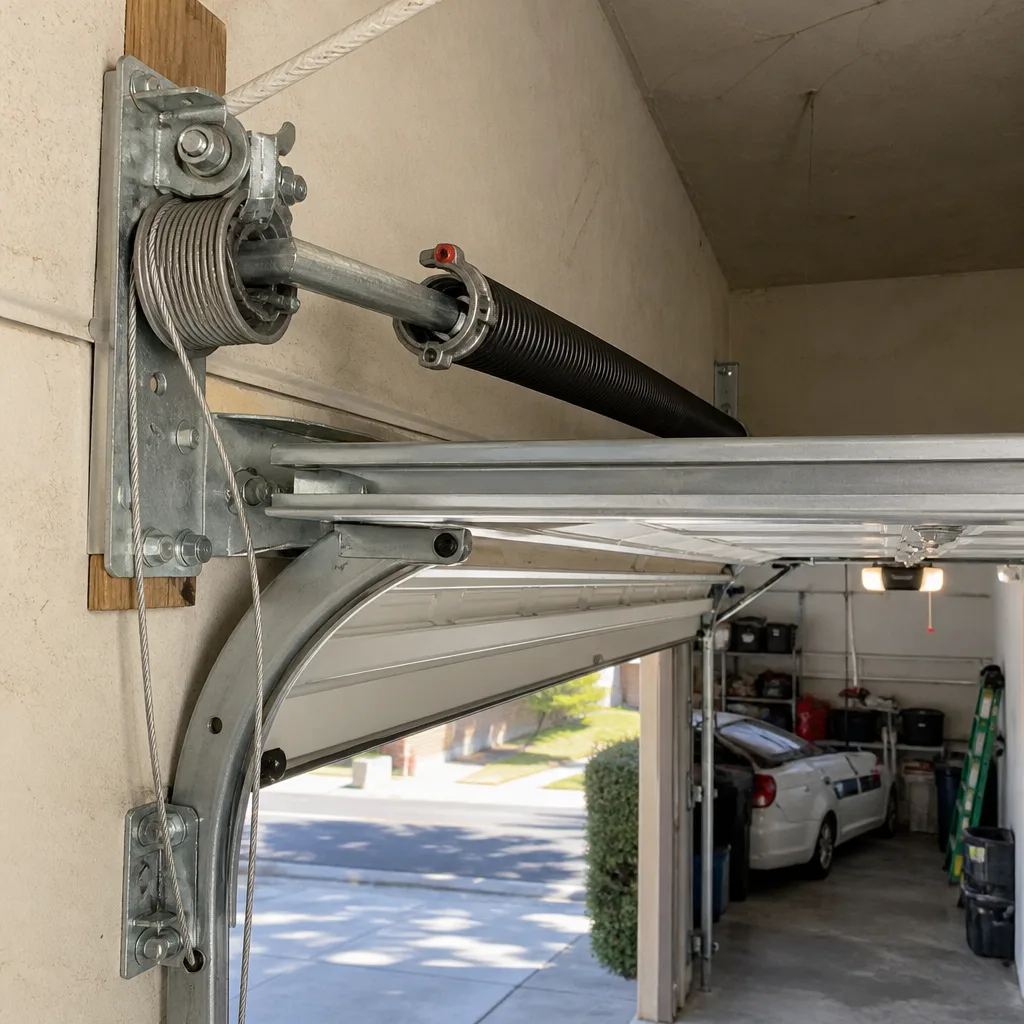
Cable coil spacing on the drum
Stand inside the garage and look up at the torsion spring system above the closed door. At each end, you will see a cable drum, a grooved spool that winds the lifting cable. The cable should wrap evenly in its groove. If you see the cable crossing over itself, riding up on the drum lip, or sitting slack in any portion, that is a cable seating problem. A cable that slips off the drum while under tension can cause the door to drop suddenly.
Spring gap visibility
Inspect the torsion spring itself. A healthy spring is one continuous coil. If you can see a visible gap between two sections of the coil, the spring has fractured. This is an immediate stop-use condition. The door may still open because the opener motor is powerful enough to lift it even with a broken spring, but that is precisely the danger. The opener is now doing all the work that the spring should share, and the cable tension is uneven. A broken spring can also make a sound like a gunshot when it snaps, but sometimes the failure is quiet if the coil breaks under a containment cable. Look for the gap.
Panel corner stress cracks
Walk around the inside face of the door panels and examine the four corners of each panel. Hairline cracks that radiate outward from the hinge mounting points indicate stress concentration. On steel doors, these cracks form because a hinge is loose or because the door has been out of balance for a long time, forcing the panel to absorb force it was not designed to carry. On wood doors common in older San Diego neighborhoods like Mission Hills and Kensington, corner cracks are often moisture-related. Either way, a crack at a hinge point is structural. It will propagate.
Track alignment from floor to ceiling
Stand back and sight down the vertical track on each side. The two tracks should be parallel and the gap between the track and the door edge should be consistent from floor to ceiling. If one track leans inward or outward, or the gap widens at one point, the track has shifted. Common causes in San Diego include minor earth movement, a vehicle bump against the track, or fasteners pulling out of the drywall or jamb. A shifted track forces the rollers to bind, which then accelerates roller wear.
Weather seal condition at the bottom and sides
Sunlight matters for seals in San Diego. The bottom seal, the rubber strip along the floor edge of the bottom panel, lives in some of the harshest conditions of any door component. West-facing doors in neighborhoods like Point Loma or Sunset Cliffs get direct afternoon sun. The rubber hardens, cracks, and loses flexibility. When the seal is stiff and the door closes, it no longer compresses against the floor. You will see daylight under the door. That gap lets in dust, pests, and in the fall, Santa Ana wind-driven debris. It also signals that the seal is no longer protecting the bottom panel from moisture, which accelerates rust on steel doors.
San Diego-Specific Accelerated Wear: Coastal Salt, UV, and Heat
San Diego’s climate is famously mild, which is why homeowners are often surprised that their garage door components wear out faster here than in many other parts of the country; our seasonal garage door care guide explains how to stay ahead of it. But the wear pattern is real and we see it consistently across the county.
Rust streaking on hardware in coastal homes
Homes within roughly three miles of the coast live in a salt-laden air environment. That salt settles on steel hinges, brackets, and tracks and combines with morning marine layer moisture to create a corrosive film. The visual signature is rust streaking, thin orange-brown drips running down from hinges or track bolts. In neighborhoods like Del Mar, Solana Beach, and Encinitas, we find steel rollers and hinges corroded to the point of seizure on doors that are only five or six years old. Nylon rollers are not immune either, since the bearing races inside them are steel. The fix is usually straightforward: replace the corroded hardware and, in coastal zones, switch to components with sealed bearings or stainless steel where available.
UV-bleached seal brittleness
San Diego averages over 260 sunny days a year. That ultraviolet exposure breaks down the polymer chains in rubber and vinyl seals. A seal that started life dark gray and flexible turns chalky, faded, and brittle within three to five years on a west or south-facing door. The first place this shows is the finger shield, the rubber strip between the door panels. On Clopay and Amarr doors with factory weatherstripping, you may see the panel seals start to crack and separate at the ends before the bottom seal shows the same wear. The practical consequence is moisture intrusion and heat loss, which matters more than people expect in San Diego’s inland areas where summer temperatures regularly pass 90 degrees.
Panel face delamination on west-facing doors
Steel garage doors are built in layers: a steel skin, an insulating core, and sometimes a second steel skin on the interior face. The adhesive that bonds these layers breaks down under sustained heat and UV exposure. On a west-facing door without shade, the exterior panel surface can reach 150 degrees on a summer afternoon. When the adhesive fails, you will see what looks like bubbles or ripples in the panel face. This is delamination. It is mostly cosmetic at first, but delaminated panels warp over time, and a warped panel binds against the track. We see this most on doors in newer inland developments like Otay Ranch or Scripps Ranch, where homes have minimal tree cover and direct afternoon exposure.
Track expansion and contraction noise
San Diego’s temperature swings are not extreme, but they are enough to matter for metal tracks. A 40-degree overnight difference between inland winter mornings and afternoon highs causes the steel track to expand and contract. If the track bolts were overtightened during installation, this movement produces creaking and popping that sounds like a structural problem but is actually thermal expansion. It is more common in East County communities like El Cajon and Santee, where the daily temperature swing is more pronounced than coastal areas. The presence of thermal popping is not a failure by itself, but it indicates the track was installed without proper allowance for movement, and repeated stress cycles can loosen fasteners over time.
The Failure Urgency Matrix: Monitor vs. Stop-Use
Not every warning sign demands immediate action, but some do. These classifications come from the failure modes we have documented across thousands of service calls in San Diego. The principle is simple: any condition that risks sudden loss of door support or spring force release is a stop-use condition. Everything else is a monitor condition, though monitor does not mean ignore.
Stop-use conditions: do not operate the door
- Visible spring gap or a loud snap from the spring area. The spring is no longer containing its stored force predictably. The door can drop or the spring can release the remaining force without warning. Call a professional before using the door again.
- Frayed or kinked lifting cable. A frayed cable can part under load. If one cable parts, the door weight shifts to the remaining cable, which then parts. The door falls. Do not operate the door until cables are replaced.
- Door falls rapidly when released at midpoint. If your drift test shows a door that drops quickly rather than drifting, the springs are failing or no longer adequate for the door weight. The opener is the only thing holding the door up, and openers are not designed for that role.
- Door comes off the track or binds mid-travel. A door that has left the track can shift unpredictably. Further operation can dislodge additional rollers and make the door unstable.
Monitor conditions: schedule service this month
- Grinding rollers or persistent squeal after lubrication. These are wear signals. The door will continue to operate, but every cycle compounds the wear and moves you closer to a seized roller or a cracked panel corner.
- Uneven travel speed with no drift. The spring is losing tension gradually. This is a scheduled repair, not an emergency, but waiting months transforms it into a stop-use condition when the spring finally breaks.
- Rust streaking on coastal hardware. Corrosion is progressive. Hardware that is rusting today will be seized in a year. Coastal homeowners in San Diego should treat rust as an early warning to replace hardware with corrosion-resistant components.
- UV-damaged seals and cracked weatherstripping. Cosmetic at first, but seal failure leads to panel edge damage and insulation loss. Replace seals before the rainy season, when the damage accelerates.
- Opener rattle or vibration. An opener that is shaking its mountings or chattering on the belt is working harder than it should. The issue will not fix itself, but the door remains operable in the short term.
Opener Failure vs. Door Failure: Why the Diagnosis Changes Everything
One of the most common and most expensive mistakes we see in San Diego garages is the misdiagnosis of an opener problem as a door problem, or vice versa. A generalist technician who does not specialize in garage doors will often replace door rollers when the actual issue is a failing opener gear. Or they will replace the opener when the real culprit is a worn spring that forced the opener to overwork until its gears stripped. The result is a repair that does not resolve the problem, and a homeowner who pays twice.
Opener repair is its own diagnosis at Admiral. The opener is an electric motor with a drive mechanism, a logic board, safety sensors, and a travel limit system. The door is a collection of mechanical parts: springs, cables, rollers, hinges, and panels. These are two separate systems that work together. Here is how to distinguish which one is failing:
Signs the opener is the problem
- The door does not respond to the wall button or remote, or responds intermittently.
- The opener motor runs but the door does not move. This suggests a stripped gear or a broken drive belt inside the opener unit.
- The door reverses immediately after touching the floor without any obstruction. This is often a limit switch or force sensor issue inside the opener.
- The safety sensors blink or the opener will not close at all, but the door moves fine when operated manually.
Signs the door is the problem
- The door closes unevenly, with one side reaching the floor before the other. This is a cable or spring issue, not an opener issue.
- The door is heavy when operated manually. A properly balanced door should not require significant effort to lift.
- The door drifts downward after release or drifts upward spontaneously. Spring tension is wrong.
- Grinding, scraping, or popping sounds originate from the door itself, not from the opener motor housing.
When both systems show symptoms, which often happens after years of deferred maintenance, the right approach is to fix the door first, then assess the opener. A new opener installed on an out-of-balance door will fail prematurely. We see this on Raynor and Wayne Dalton doors in San Diego that have never had a spring replacement in 10 to 15 years. The spring loses charge slowly, the opener compensates, and eventually the opener’s plastic drive gear strips out. Replacing only the opener without addressing the spring sets the new opener up for the same failure within a few years.
What Your Brand Tells Us Before We Arrive
Garage doors are not interchangeable. The manufacturer of the door and the opener determines the specific parts, tolerances, and failure patterns you are likely to encounter. That is why we maintain factory-level familiarity with the major brands: LiftMaster, Chamberlain, Genie, Clopay, Amarr, Wayne Dalton, Craftsman, and Raynor. We work on your brand, and choosing the right garage door brand matters in diagnosis.
For instance, LiftMaster and Chamberlain openers share a parent company and generally a similar logic board architecture, but the drive mechanisms differ across models. A Chamberlain belt-drive opener that chatters on the rail usually points to a stretched belt. A LiftMaster chain-drive unit with the same symptom more often points to a sprocket issue. Knowing the brand narrows the diagnosis before we even arrive.
On the door side, Wayne Dalton doors use a different torsion spring system than many other manufacturers. The spring is inside a tube rather than exposed on a shaft. When those springs break, the failure often sounds like a softer thud rather than a gunshot, and the visual gap check does not apply because the spring is concealed. Homeowners with Wayne Dalton doors sometimes do not realize their spring has failed until the door becomes too heavy for the opener. That is exactly the kind of brand-specific knowledge that changes the service call.
Craftsman openers, which were manufactured under contract by various companies over the years, present another wrinkle. A Craftsman unit from the early 2000s may share parts with a Chamberlain of the same era, while a newer Craftsman may be a different platform entirely. When we diagnose a Craftsman opener, we trace the unit to its actual manufacturer before ordering parts. Guessing at this step leads to return trips and more downtime.
Common Mistakes to Avoid
- Lubricating a grinding roller instead of replacing it. Lubricant temporarily quietens a worn steel roller but does not restore the bearing surface. The roller continues to degrade and eventually seizes. Replace the roller, then lubricate the new one properly.
- Ignoring a broken spring because the door still opens. The opener is lifting the door without spring assistance. This is the fastest way to destroy an opener. A broken spring is a stop-use condition regardless of whether the opener can still move the door.
- Adjusting the opener force settings to compensate for a heavy door. Increasing the force sensitivity so the opener can muscle the door open masks an underlying spring problem. It also defeats the auto-reverse safety function, which depends on the opener detecting resistance at the correct threshold.
- Replacing the opener when the door is the problem. A door that is out of balance will destroy a new opener’s drive components within a few years. Fix the mechanical door first, then replace the opener if it still needs replacing.
- Ignoring rust streaking on coastal San Diego doors. Salt corrosion is progressive. What looks like cosmetic staining on a hinge is structural weakening underneath. Coastal homeowners should inspect hardware twice a year and replace corroded components proactively.
- Waiting until a panel crack is visible from outside. Panel corner cracks start on the inside face, hidden from curb view. By the time the crack is visible from outside, the panel is typically beyond economical repair and needs replacement. Inspect inside corners quarterly.
- Testing the auto-reverse with a body part or a fragile object. Use a solid object like a 2×4 or a roll of paper towels. Never use a hand, a pet, or a thin box that the door might crush before reversing. The test exists for a reason.
When to Call a Professional
You do not need to diagnose everything yourself. The point of this guide is to help you know when the problem is serious enough to bring in a specialist. You should call a professional when you see any stop-use condition: a visible spring gap, a frayed cable, rapid door drop on release, or a door off its track. You should also call when the sounds or movements persist after basic lubrication, or when you have any uncertainty about the source of the problem; for ongoing education, see our more guides & resources.
Garage door springs and cables carry stored mechanical force that can cause serious injury if mishandled. Do not attempt spring replacement, cable replacement, or any repair that requires disassembling the torsion system. From spring to sensor, these systems are designed to be serviced by someone with specific training and the right tools. Admiral Garage Door Repair offers free estimates in San Diego. Call (833) 467-4069 to schedule an inspection, and we will tell you exactly what the warning signs mean and what the repair will cost before any work begins. The price is quoted and agreed upfront, so there are no surprises on the invoice.
Frequently Asked Questions
A spring going bad shows warning signs before it breaks: a visible gap in the torsion spring coil, popping sounds during operation, a door that feels heavy when you lift it manually, or a door that drifts downward when released at the halfway point. If you observe any of these, stop using the door and call for an inspection. In San Diego, spring fatigue occurs faster on doors that cycle frequently, such as those used as primary home entries. Call (833) 467-4069 and we will diagnose the spring condition on site.
A sudden increase in garage door noise usually means a component has changed state: a roller has begun to seize, a hinge has lost lubrication or developed play, or a spring has shifted. The specific sound matters. Grinding points to rollers, squealing points to hinges, and popping points to the spring. Contact a garage door specialist who can identify which component is making the noise before recommending a fix.
No. Torsion springs store enough mechanical force to cause serious injury or death when released improperly. The winding and unwinding process requires specialized bars and training. This is not a job for a homeowner. Extension springs are less dangerous but still carry significant force. In San Diego, where many homes have high-cycle doors that require specific spring specifications, professional replacement ensures the correct spring rate and cycle life. Garage Door Repair in Rancho Santa Fe covers spring replacement for homes throughout the county.
Once a year is the right interval for most San Diego homes. Annual service includes lubricating rollers and hinges, checking spring balance, inspecting cables for fraying, testing the auto-reverse, and tightening hardware. Coastal homes within three miles of the ocean benefit from inspection every six months because salt corrosion moves faster. For homes in Rancho Santa Fe and other inland communities with larger doors and heavier use, annual service before the rainy season is a practical schedule.
A door that opens partially and stops is usually reporting a resistance problem or a travel limit problem. If the door is out of balance, the opener senses excessive resistance and stops to protect itself. If the travel limit setting is incorrect, the opener stops early because it believes the door is fully open. Both conditions are diagnosable. A technician who understands the difference between door resistance and opener settings will resolve it in one visit. Our Garage Door Opener Repair in Rancho Santa Fe service covers opener travel limit calibration and force setting correction.
Standard torsion springs are rated for roughly 10,000 cycles, which is the number of open and close operations they are designed to perform. At 1,500 cycles per year, that is about seven years. However, San Diego homes where the garage door is the primary entry point may cycle 2,000 to 3,000 times a year, which shortens spring life to three to five years. High-cycle springs rated for 25,000 or 50,000 cycles are available and worth considering if you use the door heavily. We can assess your usage and recommend the right spring rating.
Stop using the door immediately. A frayed cable can part under load without further warning. When one cable parts, the door’s weight shifts to the remaining cable, which then fails. Do not attempt to replace the cable yourself, as the cable is connected to the spring system under tension. Call a garage door specialist to replace both cables at the same time. Fresh cables on both sides ensure even wear and load distribution. For a full garage door system evaluation, our Garage Door Installation in Rancho Santa Fe team can also assess whether the door itself warrants replacement.
The Bottom Line
Your garage door is a mechanical system that talks to you. The sounds it makes, the way it moves, and the condition of its visible components all carry specific meaning. Learning the basics of this diagnostic language helps you catch problems at the repair stage rather than the replacement stage. The three fundamentals: watch for spring gap, cable fray, and door drift as stop-use conditions. Treat grinding rollers, persistent squeals, and rust streaking as scheduled repairs. And remember that opener problems and door problems are distinct, even when they occur together. When in doubt about any warning sign, a professional inspection costs less than the damage an unchecked failure can cause. Admiral Garage Door Repair home is the place to start for garage door service in San Diego.
Written by the team at Admiral Garage Door Repair, serving San Diego since 2015.
See the difference
 Before
 After
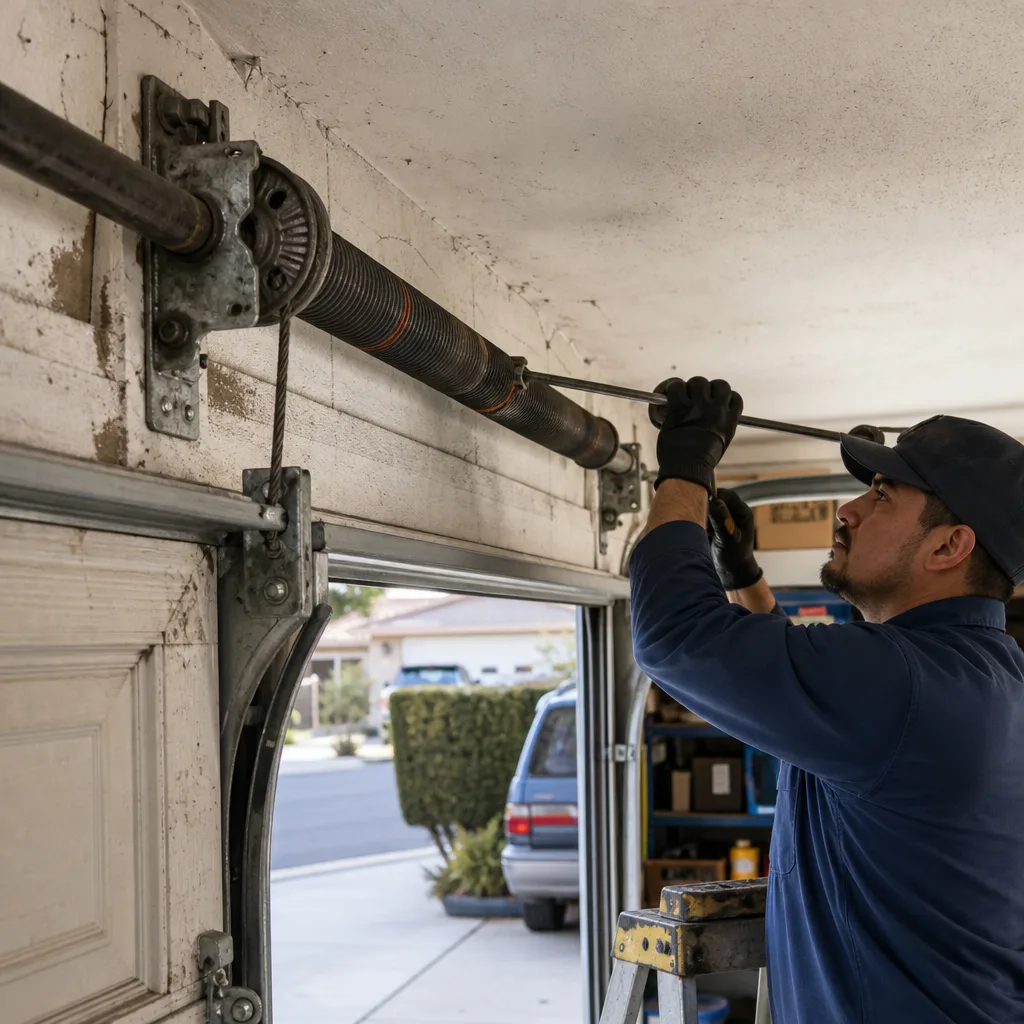 Before
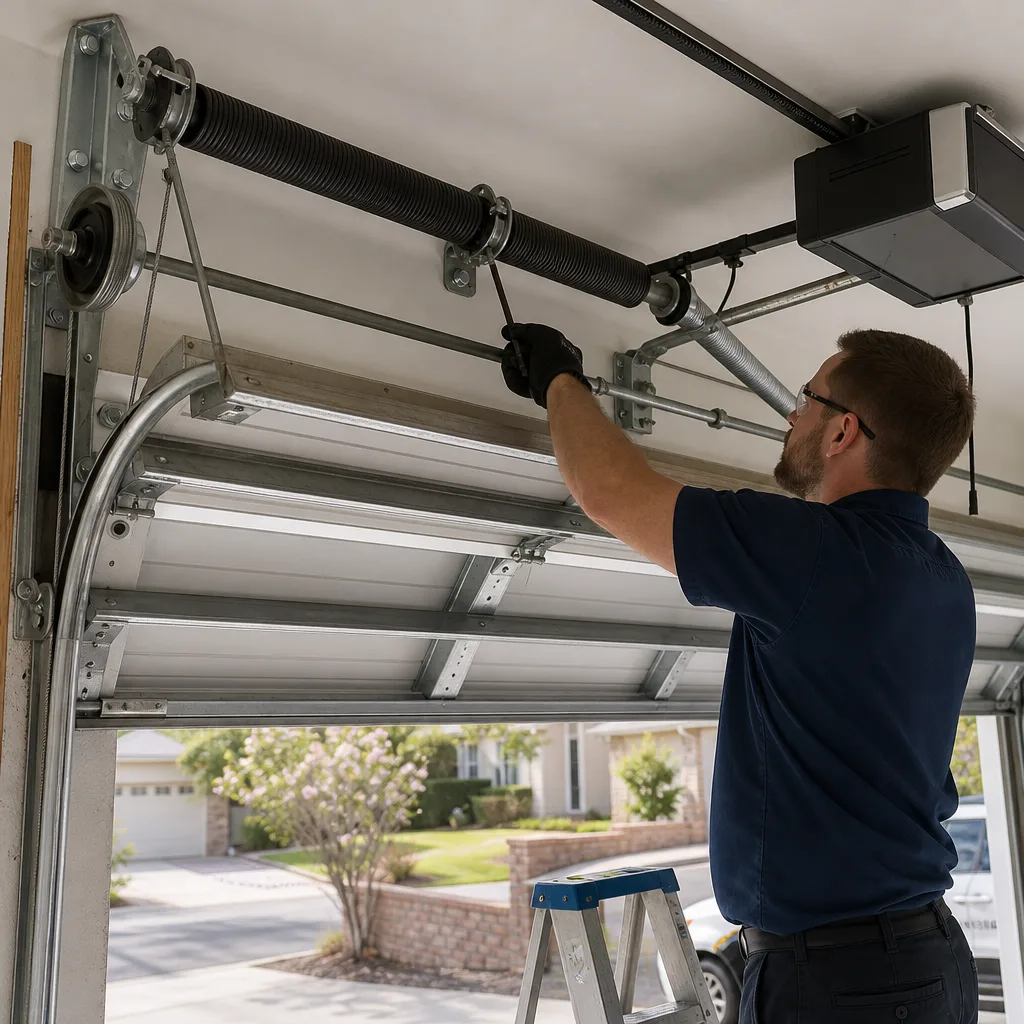 After
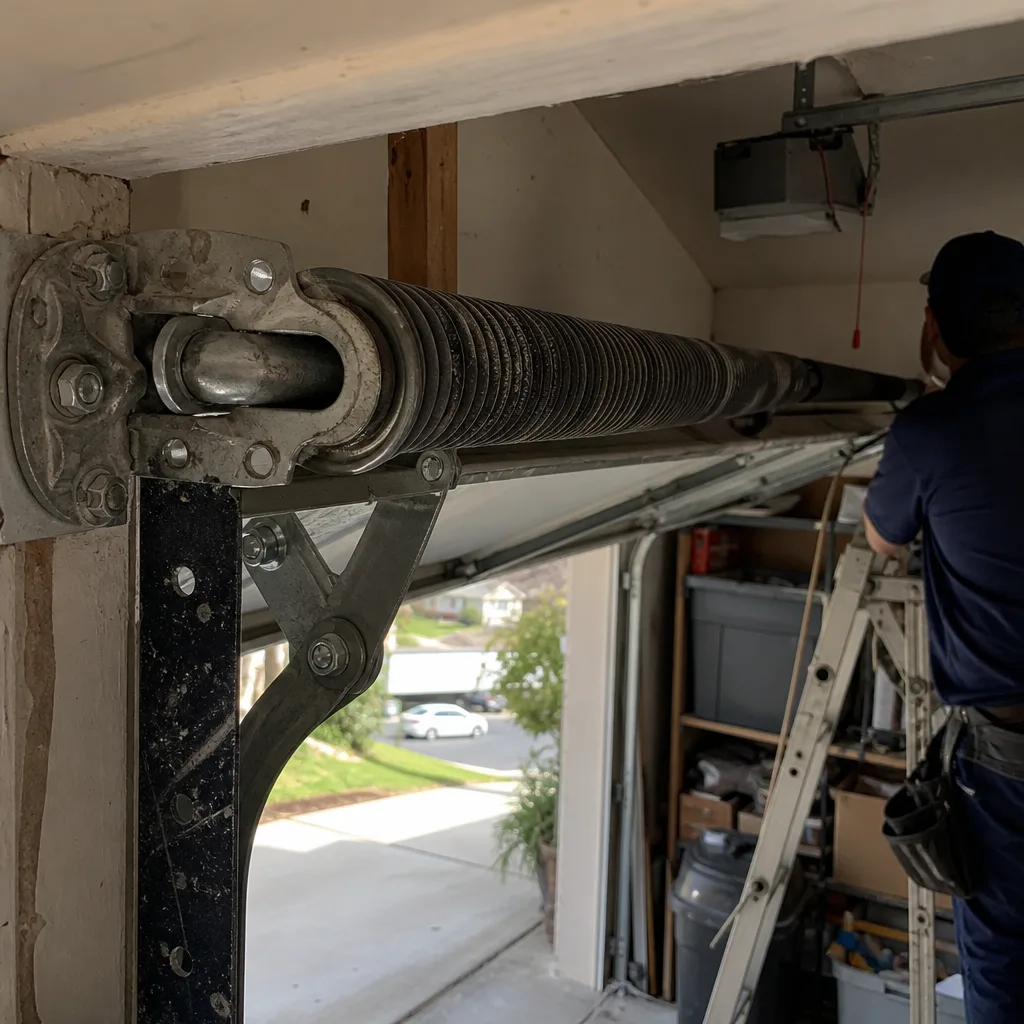 Before
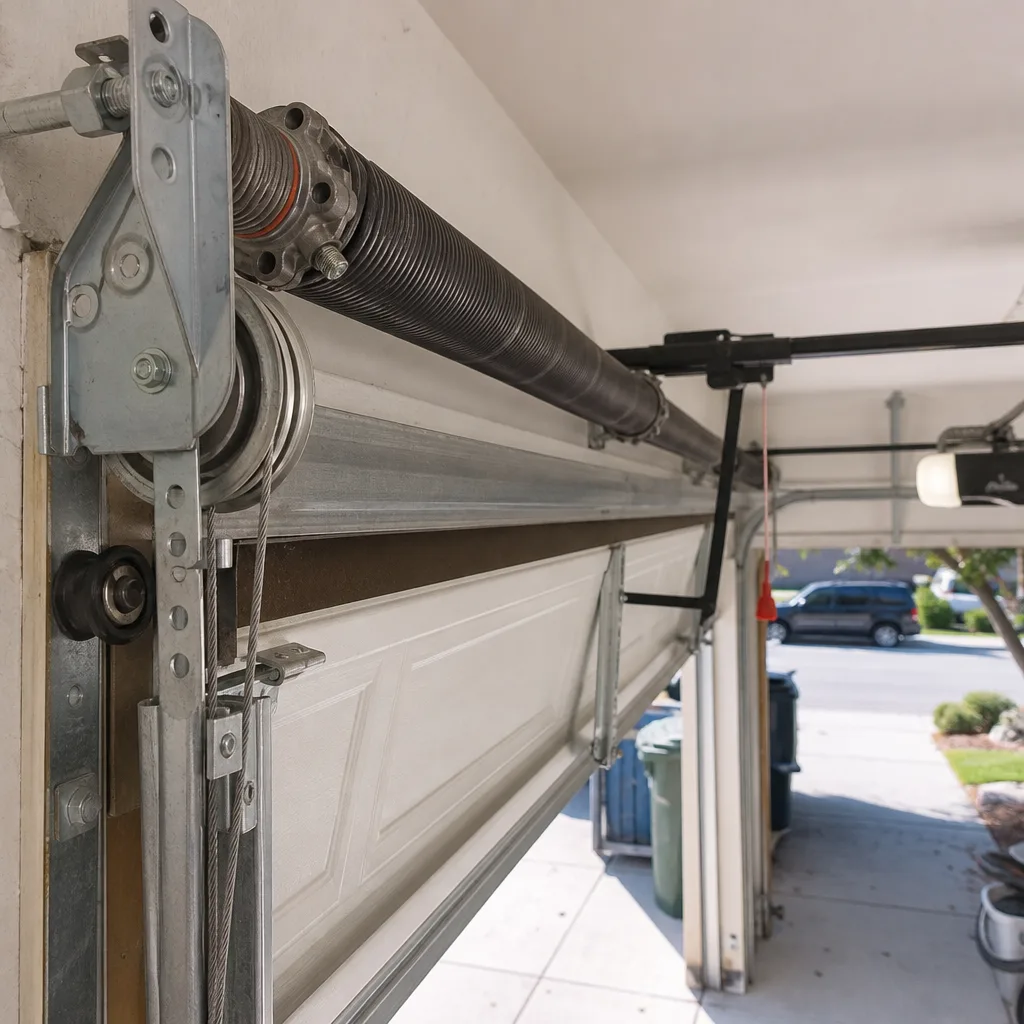 After